 Save
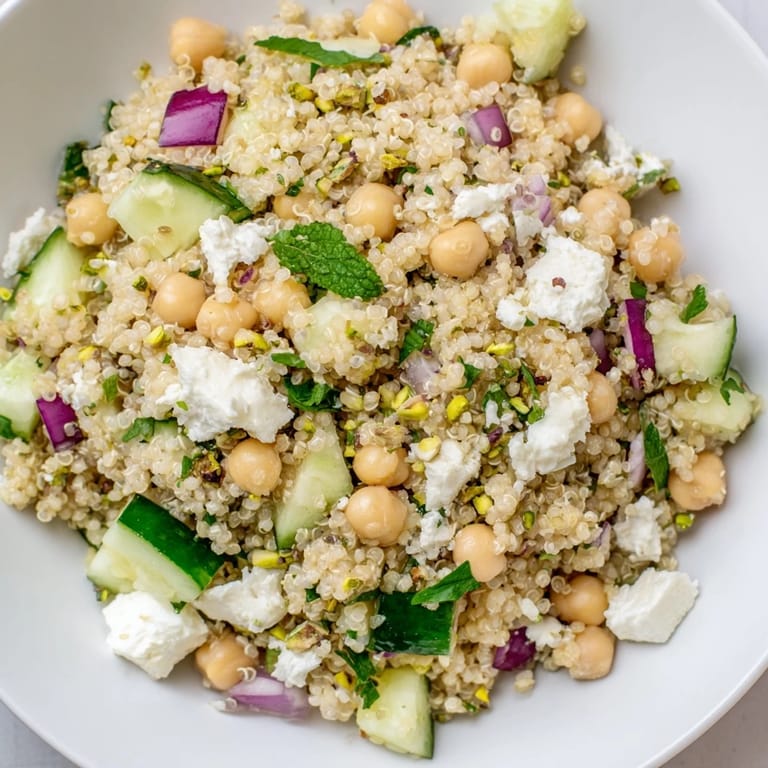
Save The first time I encountered this salad was at a beach house rental where someone left a handwritten index card in the kitchen drawer. No attribution, just a list of ingredients and the mysterious nickname. I made it on a Tuesday evening when the heat had made cooking anything else feel impossible, and something about the cold crunch of cucumber against warm, nutty grains clicked immediately.
I started bringing this to potlucks without mentioning the celebrity name attachment, just calling it grain salad, and watched people go back for thirds. The real moment I understood its power was when my father-in-law, who views salad with suspicion, asked for the recipe.
Ingredients
- 1 cup quinoa or bulgur, uncooked: Bulgur gives a slightly chewier, more substantial texture, while quinoa is lighter and fluffier—both work beautifully
- 2 cups water: For cooking the grains, though I often use vegetable broth for an extra layer of flavor
- 1 can (15 oz / 400 g) chickpeas, drained and rinsed: These are the protein backbone that makes the salad genuinely filling
- 1 large cucumber, diced: English or Persian cucumbers work best because they have fewer seeds and thinner skin
- 1/2 small red onion, finely chopped: Soak the diced onion in cold water for 10 minutes if you find it too sharp
- 3/4 cup (100 g) feta cheese, crumbled: The salty creaminess is non-negotiable for the right balance
- 1/2 cup fresh parsley, chopped: Flat-leaf parsley has better flavor than curly here
- 1/4 cup fresh mint, chopped: This is the secret bright note that makes everything taste alive
- 1/3 cup pistachios or slivered almonds, toasted: Toast them in a dry pan until fragrant, watching carefully so they do not burn
- 3 tbsp extra virgin olive oil: Use your good oil here since it is not being cooked
- 2 tbsp lemon juice (freshly squeezed): Bottled juice does not have the same bright acidity
- 1 clove garlic, minced: Grating the garlic on a microplane distributes the flavor more evenly
- 1/2 tsp sea salt: Adjust based on how salty your feta is
- 1/4 tsp black pepper: Freshly ground makes a noticeable difference
Tired of Takeout? 🥡
Get 10 meals you can make faster than delivery arrives. Seriously.
One email. No spam. Unsubscribe anytime.
Instructions
- Cook the grains:
- Rinse your quinoa or bulgur under cold water until the water runs clear, then combine it with the water in a medium saucepan and bring to a boil. Turn the heat down to low, cover with a tight-fitting lid, and let it simmer gently until the grains are tender and have absorbed the water, about 12 minutes for quinoa or 15 for bulgur. Fluff the cooked grains with a fork and spread them out on a baking sheet or large plate to cool faster.
- Combine the salad base:
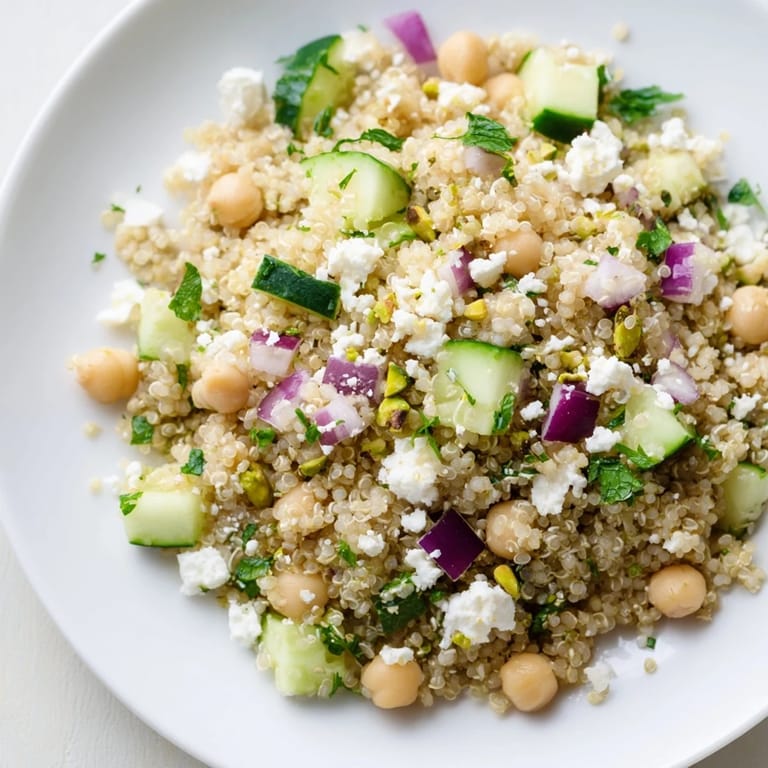
- In a large mixing bowl, add the cooled grains, chickpeas, diced cucumber, chopped red onion, crumbled feta, parsley, mint, and toasted nuts. Toss everything together gently so the ingredients are evenly distributed but not mushed.
- Whisk together the dressing:
- In a small bowl, combine the olive oil, lemon juice, minced garlic, salt, and pepper. Whisk vigorously until the mixture emulsifies into a slightly thickened dressing.
- Dress the salad:
- Pour the dressing over the salad and toss gently to coat everything without crushing the feta or chickpeas.
- Taste and adjust:
- Scoop a small bite and decide whether it needs more salt, lemon, or perhaps a drizzle more olive oil. Serve the salad chilled or at room temperature, knowing it will be even better tomorrow.
 Save
Save This salad has traveled with me to grief meals and celebrations, to beach picnics and desk lunches during impossible weeks. It is the kind of food that feels like taking care of yourself without trying too hard.
Make It Your Own
I have tried endless variations based on what was languishing in the crisper drawer. Diced avocado turns it creamier, sun-dried tomatoes add chewy intensity, and roasted red peppers bring sweetness. The template forgives almost anything.
Serving Suggestions
Sometimes I stuff it into whole wheat pita with hummus for a portable lunch. Other times I serve it alongside grilled fish or chicken and let it be the bright, fresh counterpoint to something rich and hot.
Storage And Meal Prep
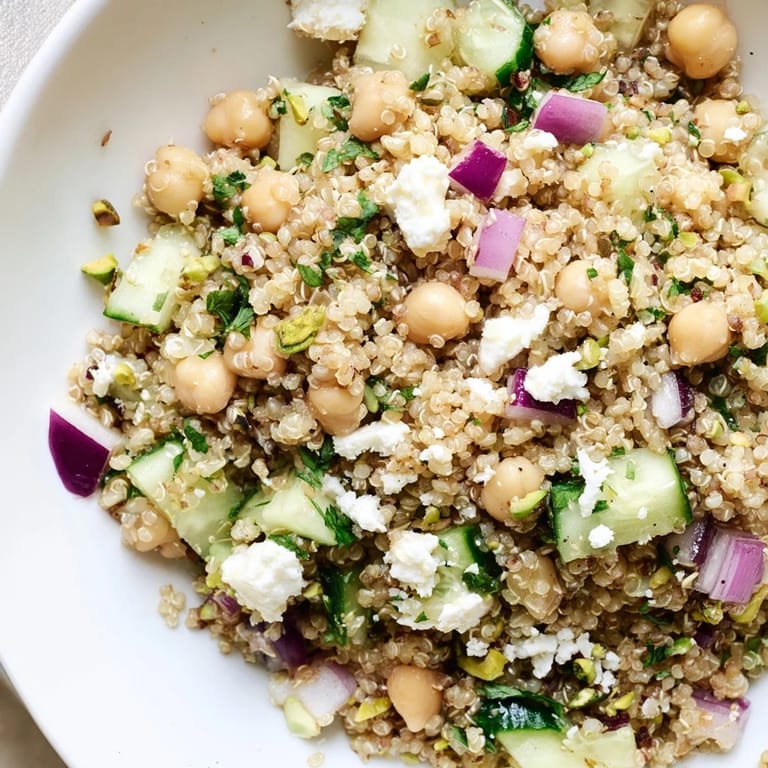
The salad keeps well in the refrigerator for up to four days, though the nuts will lose their crunch over time. I add them right before serving leftovers to restore that crucial texture contrast.
- Store in an airtight container and give it a good stir before serving
- If making ahead, keep the dressing separate until the day you plan to eat it
- For meal prep, portion into individual containers for grab-and-go lunches
 Save
Save This is the recipe I make when I want to feel nourished without spending hours in the kitchen, and it has never let me down.
Recipe FAQs
- → Can I substitute quinoa with another grain?
Yes, bulgur can be used as a wholesome alternative, offering a slightly different texture while maintaining the salad’s hearty quality.
- → What is the best way to toast nuts for added flavor?
Toast nuts lightly in a dry skillet over medium heat until fragrant and golden, stirring often to prevent burning. Cool before chopping into the salad.
- → How should the salad be stored after preparation?
Store the salad covered in the refrigerator for up to two days. The flavors meld nicely, but best enjoyed fresh for optimal texture and taste.
- → Can I make this salad vegan-friendly?
Omit the feta cheese or replace it with a plant-based cheese alternative to keep the salad vegan while preserving its creamy element.
- → Are there suggested additions to vary the salad’s flavor?
Try adding diced avocado, sun-dried tomatoes, or switching nuts to walnuts or pecans for different textures and flavor profiles.