 Save
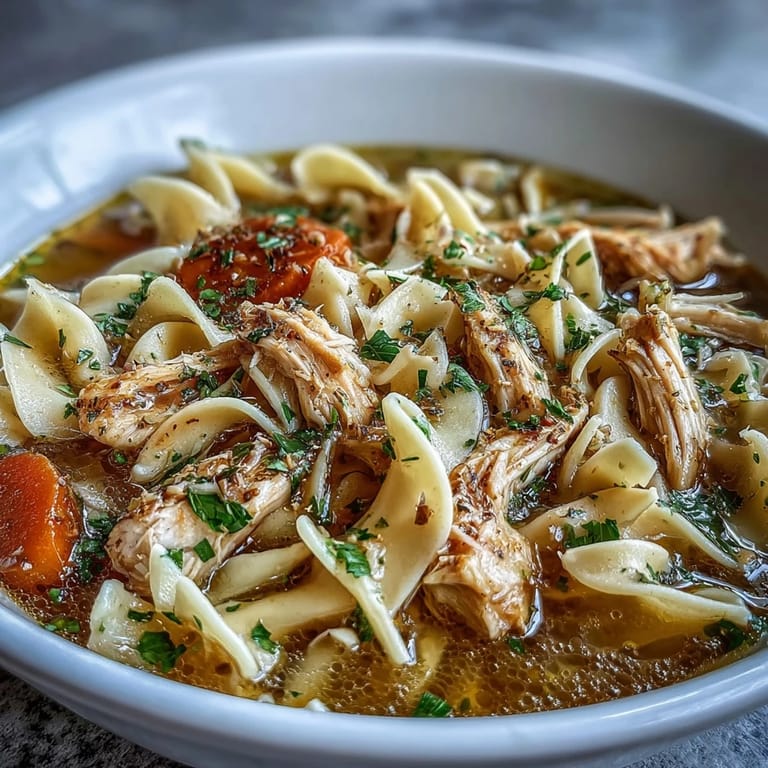
Save The first time I made chicken noodle soup from scratch was during a fierce winter storm that left our neighborhood without power for two days. Our gas stove still worked, and I found myself rummaging through the pantry by candlelight, discovering I had everything needed for this humble pot of comfort. The kitchen windows fogged as the broth simmered, creating a warm sanctuary against the freezing temperatures outside. Something about the gentle bubbling of that golden broth and the aroma of herbs made the power outage feel almost magical.
My daughter caught a terrible cold during her final exams last winter, and I packaged this soup in her favorite thermos before driving to her college apartment. When she called that evening, her voice sounded stronger already, and she swore it was the soup that pulled her through her literature final. We laughed about how her roommates kept finding excuses to visit while she ate, each leaving with a borrowed mugful and promises to return the dishes later.
Ingredients
- Bone-in chicken thighs: These create a significantly more flavorful broth than boneless cuts—I learned after years of shortcuts that the extra few minutes removing bones later pays dividends in taste.
- Yellow onion: The foundation of the soup's flavor profile, developing a subtle sweetness as it softens that balances the savory elements perfectly.
- Egg noodles: Their slightly springy texture and ability to soak up broth while maintaining structure makes them ideal—I once substituted regular pasta and it wasn't nearly as satisfying.
- Fresh parsley: Adds a bright, herbaceous note at the end that wakes up all the flavors that have been simmering together.
- Lemon juice: Just a tablespoon transforms the entire pot, adding dimension without tasting lemony—I accidentally discovered this when trying to brighten an underseasoned batch.
Tired of Takeout? 🥡
Get 10 meals you can make faster than delivery arrives. Seriously.
One email. No spam. Unsubscribe anytime.
Instructions
- Start your broth base:
- Place chicken pieces and broth in a large pot and bring to a gentle boil, then skim off any foam that rises. This initial skimming is what keeps your broth clear and beautiful rather than cloudy.
- Build the flavor foundation:
- Add your onion, carrots, celery, garlic, and herbs, then reduce to a simmer and cover. The kitchen will slowly fill with an aroma that somehow smells exactly like comfort feels.
- Prepare the chicken:
- Once the chicken is cooked through, about 25-30 minutes, remove it from the pot and shred it using two forks. The meat should pull apart easily, almost falling off the bone.
- Reunite and boost:
- Return the shredded chicken to the pot and increase the heat to medium-high to bring the soup back to a gentle boil. This slight temperature increase prepares the broth for the next crucial addition.
- Cook the noodles:
- Add the egg noodles directly to the pot and cook until tender, about 8-10 minutes. They'll absorb some of the broth's flavor while releasing a bit of starch to give the soup body.
- Brighten and finish:
- Stir in fresh parsley and that magical touch of lemon juice if using, then taste for seasoning. These final additions wake up all the flavors that have been melding together.
- Serve with care:
- Remove the bay leaves before ladling the steaming soup into bowls. The first spoonful should catch a bit of everything—broth, chicken, vegetables, and noodles.
 Save
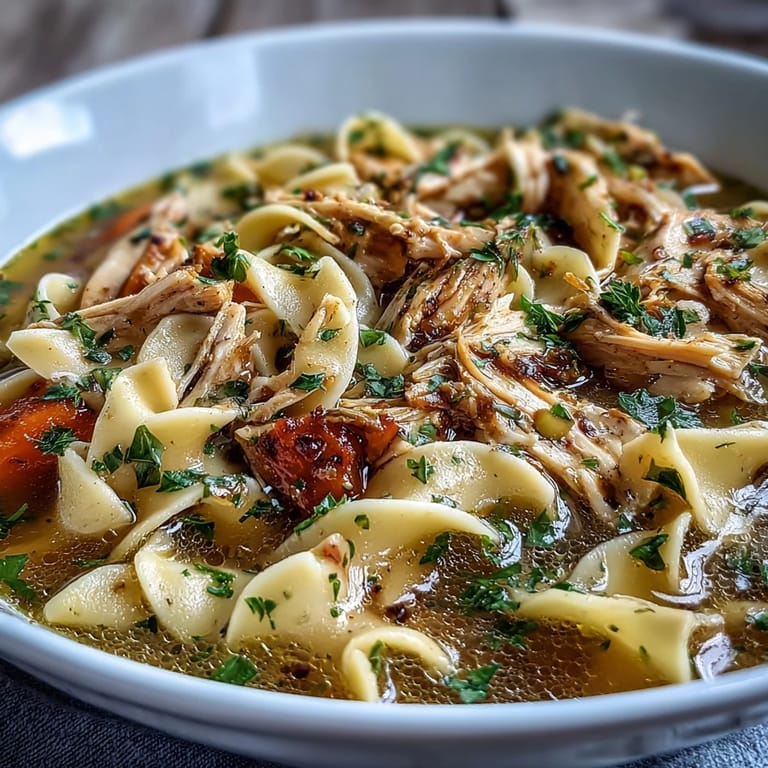
Save Last winter, my neighbor underwent a difficult surgery, and our little community organized a meal train. When I dropped off this chicken noodle soup, her husband later told me she had barely eaten in days but finished a full bowl. He texted a photo of her empty bowl with a simple message: first smile in a week. Sometimes the most basic foods carry the strongest medicine, not in their ingredients, but in the care they represent.
The Art of the Simmer
I've come to believe there's a meditative quality to making chicken soup that you can't rush. The gentle bubbling that's barely visible—what my grandmother called a whisper, not a shout—extracts flavor without toughening the meat. When I first started cooking, I thought a rolling boil meant things were happening, but with soup, the magic occurs in those quiet, patient moments when the pot seems almost still. I now judge my simmer by sound more than sight—it should make a soft, intermittent plink rather than a constant bubble.
Noodle Know-How
The relationship between noodles and broth requires careful attention. If you're cooking for someone with a gluten sensitivity, rice noodles make an excellent substitute but need far less cooking time—about 4 minutes instead of 8-10. When making this for my celiac friend Sarah, I discovered that some brands of rice noodles disintegrate if overcooked even slightly, while others maintain their structure beautifully. My current favorite alternative is Jovial brand brown rice egg noodles, which hold up remarkably well and have a pleasant chew that rivals traditional egg noodles.
Storing and Reviving
The flavor of this soup actually improves overnight as the ingredients continue to release their essence into the broth. I've found that separating components before refrigeration makes all the difference between a refreshed second-day soup and a disappointing mush. When reheating, I add a small splash of fresh broth or even water to bring back the proper consistency.
- Store noodles separately from broth in the refrigerator—they'll continue absorbing liquid and become soggy otherwise.
- Reheat gently on the stovetop rather than microwaving for more even warming and better texture preservation.
- This soup freezes beautifully without the noodles—freeze in portion-sized containers and add fresh noodles when reheating for a just-made taste.
 Save
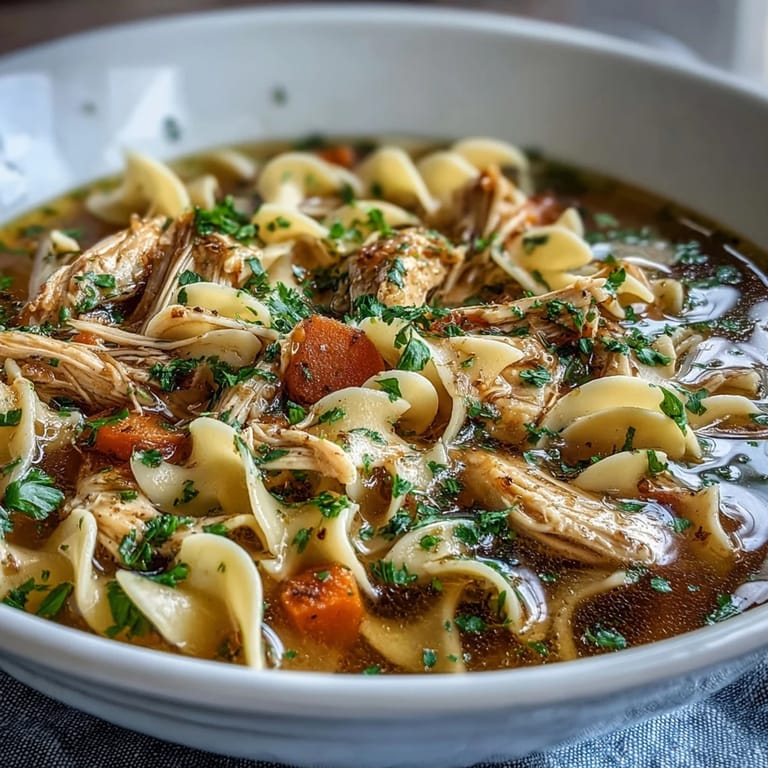
Save This soup has become my version of a handwritten note—something made with intention when words alone don't seem enough. I hope it brings the same comfort to your kitchen that it has to mine.
Recipe FAQs
- → Can I make this ahead of time?
Absolutely. The flavors actually deepen when made a day ahead. Just cool and refrigerate separately, then recombine when reheating. Add fresh noodles just before serving so they don't become mushy.
- → What cuts of chicken work best?
Bone-in, skinless thighs or breasts are ideal because they add richness to the broth while cooking. Thighs provide more flavor and stay tender during simmering. You can also use a whole chicken cut into pieces.
- → Can I freeze this?
Yes, freeze the broth and chicken together for up to 3 months. For best results, cook fresh noodles when reheating rather than freezing them with the soup, as they can become soft and mushy.
- → How do I thicken the broth?
For a heartier consistency, you can mash some of the cooked vegetables against the side of the pot or stir in a tablespoon of cornstarch mixed with water. The starch from egg noodles will also naturally thicken slightly as they cook.
- → What vegetables can I add?
Beyond the classic carrots, celery, and onions, try adding diced potatoes, parsnips, or greens like spinach or kale in the last few minutes. Fresh herbs like dill or basil work beautifully too.
- → Can I use rotisserie chicken?
You can skip the initial chicken cooking step and add shredded rotisserie meat during the last 10-15 minutes. However, you'll want to use high-quality broth or make a quick vegetable stock first to maintain depth of flavor.