 Save
Save My grandmother's kitchen always smelled like borscht on Sunday afternoons—that unmistakable earthiness of beets mingling with simmering beef broth and just a whisper of vinegar. I watched her grate beets with her hands stained deep crimson, unbothered by the mess, while she hummed old Ukrainian songs. She never used a recipe; her borscht was pure instinct, a conversation between her and the vegetables. Years later, I realized that what made her version so remarkable wasn't any secret ingredient—it was the patience, the resting time, and the understanding that borscht deserved to become something greater than the sum of its parts.
I made this for my best friend on the first truly cold day of winter, when she showed up at my door looking exhausted from a long week. As the aroma filled my apartment, she sat at the kitchen counter and just breathed it in, and something shifted—the tiredness seemed to melt away. By the time we sat down with steaming bowls, crowned with sour cream and dill, we were both laughing at old stories. That's when I understood: borscht isn't just soup, it's an invitation to slow down and be nourished.
Ingredients
- Beef chuck or brisket (400g): Use a well-marbled cut that will become tender and flavorful as it simmers; the collagen breaks down and enriches the entire pot.
- Beets (3 medium, grated): Don't be shy with them—they're the soul of this soup and give it that iconic deep crimson color and earthy sweetness.
- Carrots and onion: Sautéing them first with the beets coaxes out their natural sugars and builds a flavor foundation that makes the whole soup sing.
- Potatoes (2 medium, diced): They thicken the broth slightly and add a comforting body that makes each spoonful satisfying.
- Cabbage (1/4 small head, shredded): This is the surprise player—it adds a subtle sweetness and textural contrast that keeps the soup from feeling one-note.
- Tomato paste (2 tablespoons): A concentrated hit of umami that deepens the savory notes without making it taste like tomato soup.
- Sunflower oil, sugar, vinegar, and garlic: These are your flavor adjusters; they balance sweetness, acidity, and richness in ways that matter.
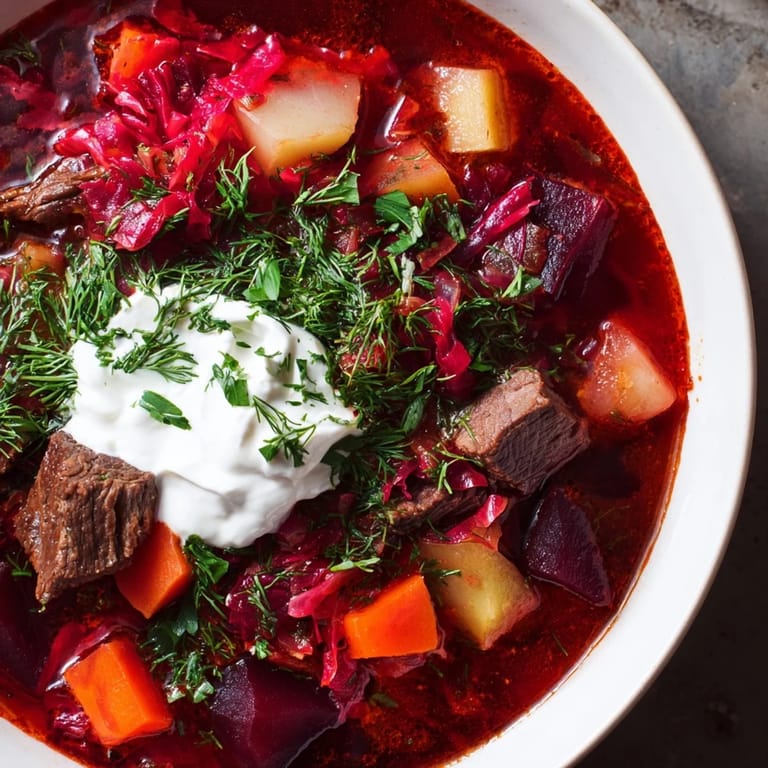
- Sour cream and fresh dill: Never skip the garnish—the cool creaminess and bright herb notes are what make borscht feel like a hug in a bowl.
Tired of Takeout? 🥡
Get 10 meals you can make faster than delivery arrives. Seriously.
One email. No spam. Unsubscribe anytime.
Instructions
- Simmer the beef gently:
- Place beef in cold water with bay leaves, peppercorns, and salt, then bring to a boil and immediately drop the heat. Let it bubble softly for 45 minutes, skimming the grey foam that rises—this keeps your broth clean and clear. The beef will be fork-tender and the water will have transformed into liquid gold.
- Build flavor in the skillet:
- While the beef works, sauté onions until they turn translucent and sweet, then add grated carrots and beets. Watch them soften and deepen in color as you stir in tomato paste, sugar, and vinegar—this step is where the magic happens, and your kitchen will smell absolutely incredible. Let this mixture cook until the vegetables are tender and the oil gleams with beet color.
- Combine beef and broth:
- Fish out the beef, set it aside, and pour your hot broth back into the pot. If you prefer a cleaner look, strain it first, but I always keep the natural cloudiness—it tastes richer that way.
- Add potatoes and time:
- Potatoes go in first because they need about 10 minutes to soften; this gives them a head start while you prepare the next additions.
- Finish with cabbage and aromatics:
- Stir in your shredded cabbage and that beautiful sautéed beet mixture, then simmer everything together for about 10 minutes until the vegetables are genuinely soft. Shred or cube your beef and return it to the pot along with minced garlic—taste as you go, adjusting salt and pepper until it sings.
- Let it rest and develop:
- This is the step people skip, but it's essential: turn off the heat and let your borscht sit for 15 to 20 minutes. The flavors meld, the broth deepens, and you'll taste the difference immediately.
 Save
Save There's a moment in every pot of borscht when you realize you've made something worth sharing—when the kitchen is warm, the smell wraps around you like a blanket, and you suddenly understand why this soup has endured for generations. It's food that teaches you patience and rewards it abundantly.
The Secret of Sour Cream
Never stir the sour cream directly into the pot—always dollop it on top of each serving. The temperature contrast creates a cooling effect that makes every spoonful refreshing, and the visual contrast of white against deep crimson is just as important as the taste. I learned this the hard way when I once stirred it all in at the end and lost both the textural surprise and that beautiful presentation. Now I set out a small bowl at the table and watch people customize their own swirl, which somehow makes them enjoy it even more.
When to Make It Vegetarian
If beef isn't your choice, swap the beef broth for a deeply flavored vegetable broth and follow the same technique—you'll lose none of the soul. Some people add extra potatoes or chickpeas for protein and heartiness, while others keep it purely vegetable and find the beets themselves provide enough body to make it feel complete. The magic isn't in the meat; it's in the beets, the balance of flavors, and the ritual of making it.
Serving and Pairing
Borscht is best served piping hot, but I've also loved it at room temperature on warm days with a different kind of freshness. Rye bread is traditional and absorbs the broth beautifully, but crusty white bread works just as well. If you want to be adventurous, a squeeze of fresh lemon juice brightens the whole bowl, and some people finish with a grind of black pepper or a single perfect dill frond.
- Always taste and adjust seasoning just before serving—salt and vinegar are your final tweaks.
- Make a double batch; borscht freezes beautifully and tastes even better when reheated days or weeks later.
- Serve with something fresh on the side—a simple salad or pickled vegetables add a textural contrast that feels right.
 Save
Save Borscht is proof that simple ingredients, respect for timing, and a willingness to rest and let flavors meld can create something genuinely extraordinary. Make this soup for someone you care about, and watch what happens.
Recipe FAQs
- → What cut of beef works best for borscht?
Beef chuck or brisket are ideal for tender, flavorful broth when simmered slowly.
- → Can the broth be strained before adding vegetables?
Yes, straining helps remove impurities for a clearer, cleaner broth.
- → How can I enhance the soup’s color and sweetness?
Grated beets give vibrant color, and a touch of sugar balances their earthiness.
- → What herbs complement this dish best?
Fresh dill and parsley provide fresh, bright flavors that finish the dish beautifully.
- → Is it better served immediately or after resting?
Allowing the soup to rest for 15–20 minutes intensifies the flavors and melds ingredients.
- → Are there vegetarian adaptations available?
Replace beef with vegetable broth and omit meat for a rich vegetarian variation.