 Save
Save I pulled this recipe out on a cold November evening when I wanted something that would fill the kitchen with warmth and make the whole house smell like a holiday. The lamb shanks were on sale, and I figured if I was going to spend three hours cooking, it should be worth it. Halfway through, my neighbor knocked to ask if everything was okay because the rosemary and garlic smell had drifted into the hallway. I invited her in for a glass of the wine I was using, and by the time the timer went off, we had a plan to make this a tradition.
I made this for a small dinner party once, and one of my friends, who claimed she didnt like lamb, went completely silent after her first bite. She later texted me asking for the recipe and admitted shed been wrong about lamb her whole life. That moment taught me that slow-roasting with the right herbs can win over even the skeptics. Now I make it whenever I want to surprise someone or just treat myself to something special.
Ingredients
- Lamb shanks: Look for shanks that are roughly the same size so they cook evenly, and dont skip trimming the excess fat or the sauce will be greasy.
- Carrots and celery: These add sweetness and body to the braising liquid, and they become incredibly soft and flavorful after hours in the oven.
- Onion and garlic: Smashing the garlic releases more flavor, and slicing the onion thick keeps it from dissolving completely.
- Fresh rosemary and thyme: Fresh herbs make all the difference here, the woody rosemary perfumes the meat and the thyme adds a subtle earthiness.
- Red wine: Use something youd actually drink, it doesnt have to be expensive, but avoid anything labeled cooking wine.
- Beef or lamb stock: A good quality stock gives the sauce depth, and if youre gluten-free, just check the label to be safe.
- Olive oil: This is for searing, so use regular olive oil, not your fancy finishing oil.
- Salt and pepper: Season generously, the meat needs it, and kosher salt is easier to control than table salt.
Tired of Takeout? 🥡
Get 10 meals you can make faster than delivery arrives. Seriously.
One email. No spam. Unsubscribe anytime.
Instructions
- Preheat and Prep:
- Set your oven to 160 degrees Celsius and give the lamb shanks a good pat with paper towels so they sear properly instead of steaming. Season them all over with salt and pepper, more than you think you need.
- Sear the Lamb:
- Heat olive oil in your heaviest pot until it shimmers, then sear each shank on all sides until deeply browned, about 8 minutes total. The caramelized crust is where the flavor starts, so dont rush this step.
- Soften the Vegetables:
- Toss the onions, carrots, celery, and smashed garlic into the same pot and let them cook in the leftover oil and browned bits for 4 to 5 minutes. Theyll pick up all that savory flavor from the pan.
- Build the Braise:
- Nestle the lamb shanks back in, tuck the rosemary, thyme, and bay leaves around them, then pour in the wine and stock. Bring everything to a gentle simmer and scrape up any stuck-on bits from the bottom.
- Roast Low and Slow:
- Cover the pot tightly with a lid or foil and slide it into the oven for 2 and a half to 3 hours, flipping the shanks once halfway through. Youll know theyre done when the meat pulls away from the bone with barely any effort.
- Finish the Sauce:
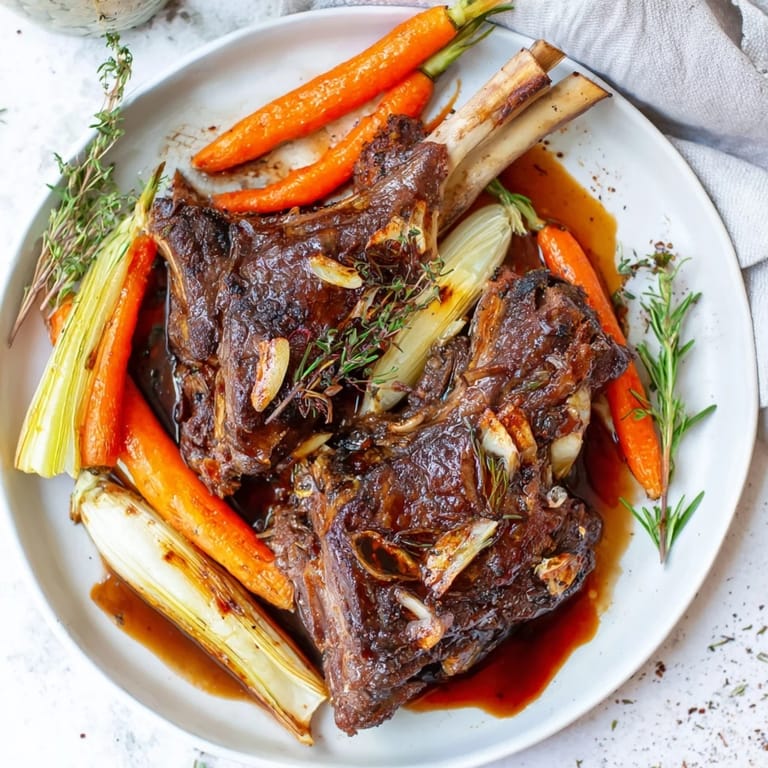
- Lift the lamb and vegetables onto a platter, then skim off any excess fat floating on top of the sauce. If the sauce seems thin, simmer it on the stovetop for a few minutes until it coats the back of a spoon, then spoon it generously over the meat.
 Save
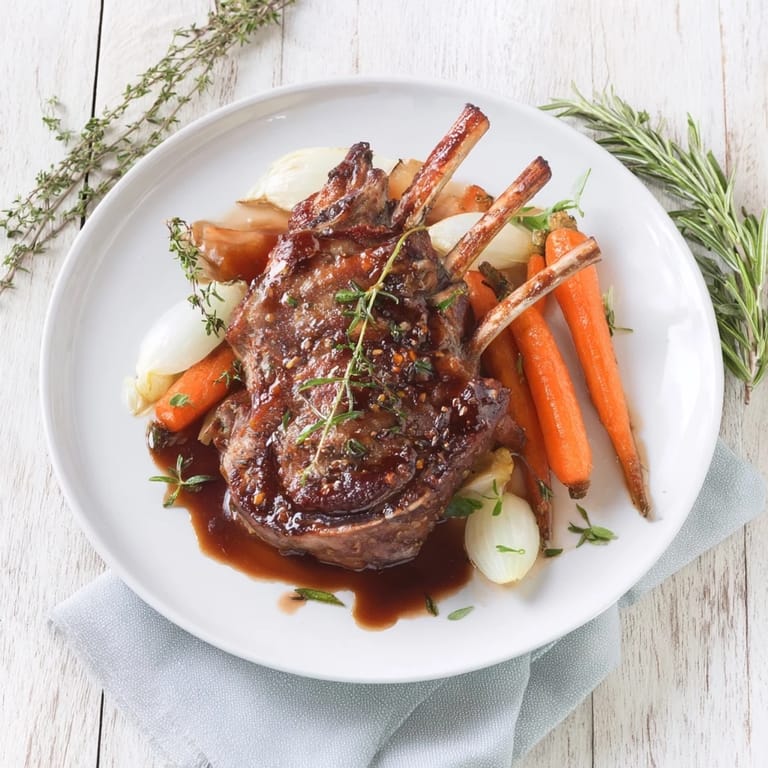
Save The first time I served this, I was so nervous about the timing that I kept opening the oven to check. My mom, who was visiting, finally told me to trust the process and pour myself some wine. She was right, of course, and when we pulled the lamb out, it was perfect. We sat around the table for hours that night, and I realized that the best meals are the ones that give you time to be together while they cook.
Serving Suggestions
I love serving this over creamy mashed potatoes that soak up all the sauce, but polenta works just as well if you want something a little lighter. A simple green salad with a sharp vinaigrette cuts through the richness beautifully. Once, I served it with roasted root vegetables on the side, and everyone went back for seconds.
Make-Ahead Magic
This is one of those dishes that tastes even better the next day because the flavors have time to marry and deepen. I often make it a day ahead, let it cool completely, then refrigerate it overnight. When youre ready to serve, just reheat it gently on the stovetop or in the oven, and the fat will have solidified on top, making it easy to skim off.
Flavor Twists and Variations
If you want to experiment, try adding a strip of orange zest to the braising liquid for a subtle citrus note, or a splash of balsamic vinegar for a touch of sweetness and tang. I once added a cinnamon stick by accident, thinking it was a spice blend, and it turned out surprisingly wonderful. You can also swap the red wine for white if thats what you have, though the flavor will be lighter.
- Use lamb shoulder chops if you cant find shanks, just reduce the cooking time by about 30 minutes.
- Add a can of diced tomatoes for a richer, more stew-like sauce.
- Throw in some Kalamata olives or capers during the last 30 minutes for a briny kick.
 Save
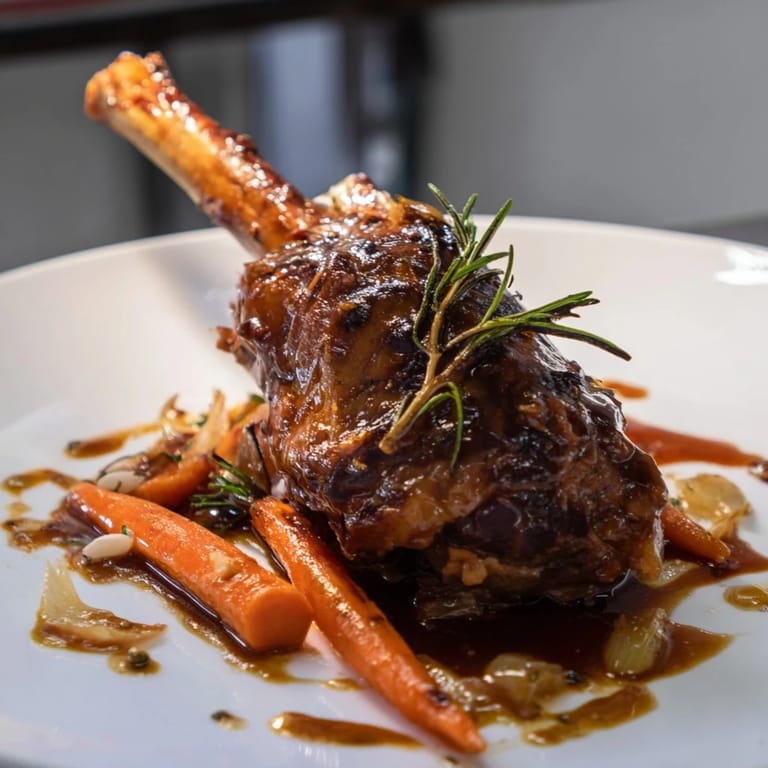
Save This recipe has become my go-to whenever I want to slow down and enjoy the process of cooking, not just the eating. I hope it brings you the same kind of warmth and comfort it has brought to my table.
Recipe FAQs
- → How do I ensure the lamb shanks become tender?
Slow roasting the lamb at a low temperature for several hours breaks down connective tissues, resulting in melt-in-your-mouth tenderness.
- → Can I prepare the dish ahead of time?
Yes, flavors deepen if prepared a day early and reheated gently before serving.
- → What is the role of red wine in this dish?
Red wine adds acidity and richness, helping tenderize the meat and enhancing the overall flavor profile.
- → Which vegetables complement the lamb during cooking?
Carrots, celery, onions, and garlic absorb the braising juices and add natural sweetness and depth.
- → How can I thicken the sauce after roasting?
Simmer the strained braising liquid on the stovetop to reduce and concentrate the flavors for a luscious sauce.