 Save
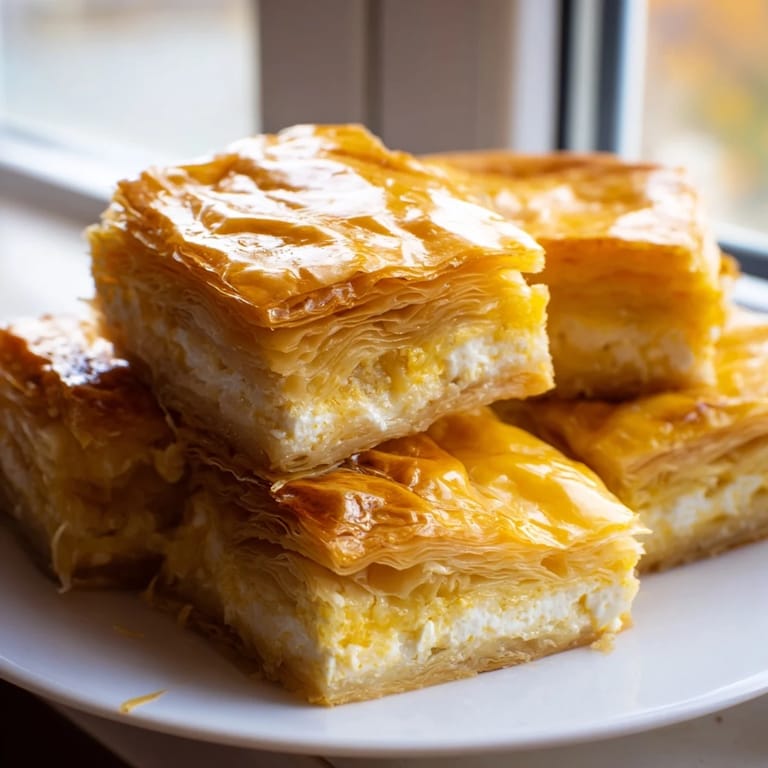
Save My aunt's kitchen in Belgrade always smelled like butter and cheese the moment you walked in, but it was the sound of phyllo sheets crackling between her fingers that told me she was making gibanica. I watched her layer those delicate sheets with the precision of someone who'd done it a thousand times, each brush of oil creating golden possibilities. One afternoon, she let me handle the filling—a mysterious mixture that seemed almost too silky to be made from cottage cheese and feta—and I realized this wasn't just a recipe, it was architecture made edible.
I made this for a potluck once, nervous that a Serbian dish would seem out of place among casseroles and pasta salads. When I pulled it from my bag, still warm, the whole room went quiet—not in judgment, but in anticipation. By the time dessert came around, people were still talking about those crispy corners and how something so elegant could come from such humble ingredients.
Ingredients
- Cottage cheese (300g): The foundation of the filling—it needs to be smooth and creamy, so don't skip the mixing step.
- Feta cheese (200g), crumbled: This is where the sharp, salty character comes from; don't use pre-crumbled if you can help it.
- Eggs (4 large): They bind everything together and create that custard-like richness when baked.
- Plain yogurt (100ml): A touch of tanginess that makes the filling taste less heavy and more alive.
- Sunflower oil (50ml in filling, plus 2 tbsp for brushing): It keeps the filling moist and the phyllo impossibly crispy.
- Sparkling water (50ml): This is the secret—it adds air to the filling and prevents it from being dense.
- Salt and black pepper (1/2 tsp and 1/4 tsp): Taste as you go because feta is already salty.
- Phyllo dough (500g, about 12 sheets): Keep it thawed but cold; warm phyllo tears, cold phyllo shatters beautifully.
- Egg yolk (optional, for glazing): Beaten with a splash of water, it gives the top a restaurant-quality golden sheen.
Tired of Takeout? 🥡
Get 10 meals you can make faster than delivery arrives. Seriously.
One email. No spam. Unsubscribe anytime.
Instructions
- Prepare your workspace:
- Preheat the oven to 180°C and grease your baking dish generously—this pie will thank you for it. Have your oil ready in a small bowl and your pastry brush within arm's reach.
- Build the filling:
- In a large bowl, combine the cottage cheese, feta, eggs, yogurt, oil, and sparkling water, then season with salt and pepper. Mix until smooth and creamy, but don't overwork it; you want it soft enough to spread but still textured.
- Start the foundation:
- Lay one phyllo sheet in the baking dish and brush it lightly with oil—think of it as giving the sheet a gentle kiss of moisture, not drowning it. Repeat with two more sheets, brushing each one.
- Begin the layers:
- Spread 3–4 tablespoons of the cheese filling over the phyllo base, then add 2–3 more phyllo sheets, brushing each with oil. The rhythm here matters: phyllo, oil, cheese, phyllo, oil.
- Keep building:
- Continue this layering pattern—phyllo sheets brushed with oil, then a generous spread of filling—until you've used most of your filling and phyllo, finishing with 2 clean phyllo sheets on top.
- Finish and score:
- Brush the top layer generously with oil, then beat the egg yolk with a teaspoon of water and brush it on for that golden gleam. Using a sharp knife, cut the assembled pie into squares or diamonds right before it goes into the oven.
- Bake until golden:
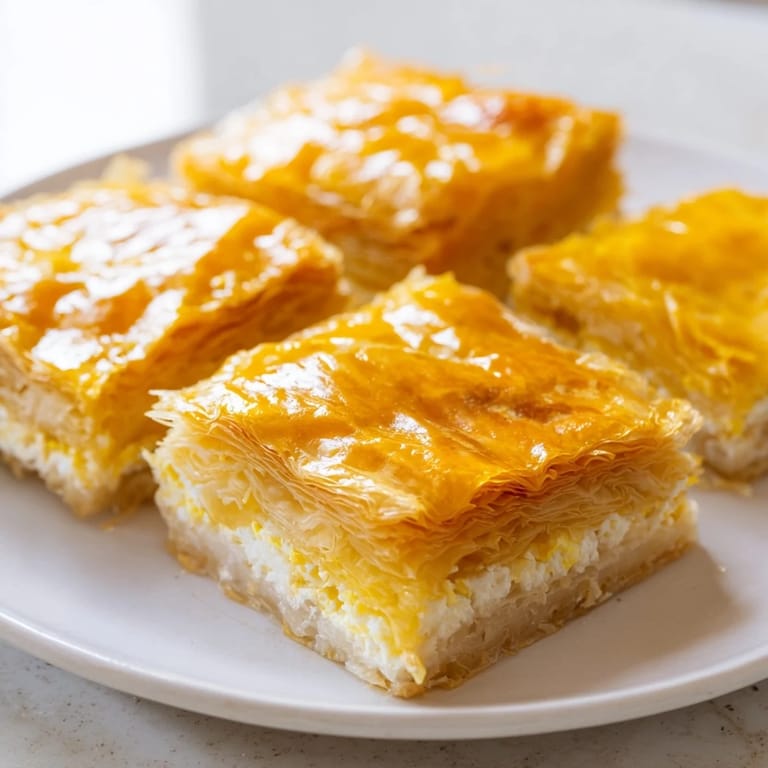
- Bake for 35–40 minutes, until the top is deep golden and the edges are crispy enough to shatter. Your kitchen will smell extraordinary.
- Rest and serve:
- Let it cool for 10 minutes—this is when the layers set slightly and become easier to serve. It's equally good warm or at room temperature.
 Save
Save There was a moment when I brought this to a family gathering and my grandmother, who grew up in Zemun, tasted it and got quiet. She said it reminded her of her mother's kitchen, of the way butter and cheese could make something feel like home. That's when I understood this wasn't just dinner—it was a small bridge across time.
The Magic of Layering
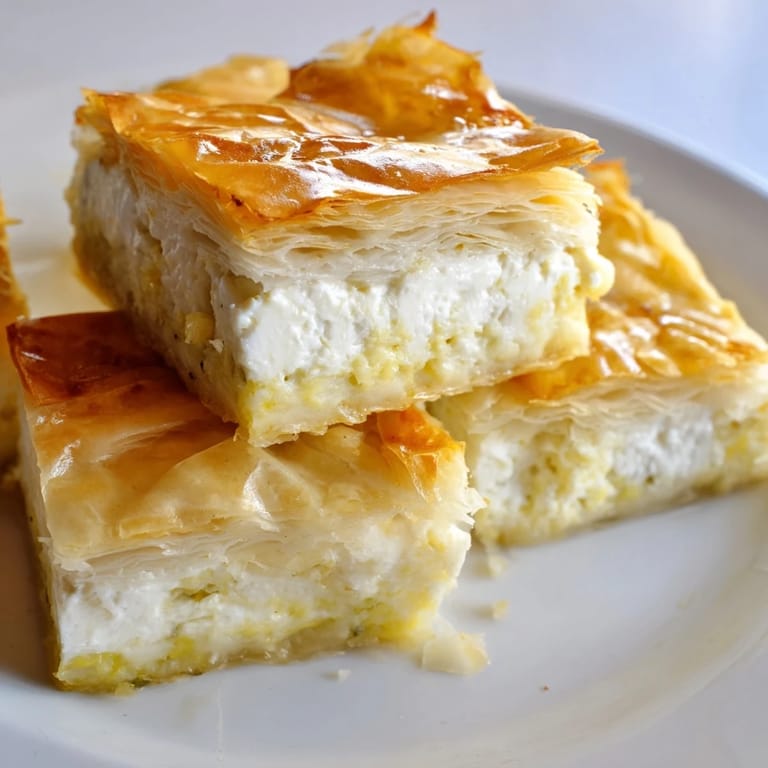
The real beauty of gibanica lives in the discipline of those layers. Each sheet of phyllo needs oil to crisp properly, and the filling needs those moments between layers to create distinct pockets of flavor. When you cut into a finished pie, you should see distinct strata of gold and cream—that's the sign you've done it right. I learned this the hard way after making a version where I tried to rush and use fewer layers; it was good, but it wasn't magic.
The Cheese Question
Not all cottage cheese is created equal, and neither is all feta. Creamy cottage cheese blends better into the filling than dry versions, while feta that's packed in brine tends to be fresher and more flavorful than vacuum-sealed blocks. The filling is where the entire pie lives or dies, so this is worth thinking about at the market. If you find a local feta, even better—the flavor depth will surprise you.
Beyond the Basics
This recipe is a sturdy foundation, but it's also forgiving. Some cooks add a tablespoon of sour cream to the filling for extra richness, while others swear by a pinch of nutmeg for warmth. I've seen versions with dill stirred in, and they're absolutely worth trying. The point is that gibanica has been made a thousand different ways across the Balkans, and your kitchen is just as legitimate as any other.
- Serve it alongside a crisp tomato and cucumber salad to cut through the richness.
- Leftovers keep in the fridge for several days and reheat beautifully at 160°C for about 10 minutes.
- If you want to make this gluten-free, seek out quality gluten-free phyllo and don't tell anyone unless they ask.
 Save
Save Make this when you want to prove something to yourself or someone else—that you can create something crispy and creamy and deeply satisfying with your own hands. Once you do, you'll make it again.