 Save
Save My first batch of pelmeni came together on a snowy afternoon when my neighbor mentioned she'd learned to make them from her grandmother in Moscow. I was skeptical—surely these tiny, pinched dumplings couldn't be as forgiving as she claimed. But there was something magical about the rhythm of filling, folding, and sealing each one, my fingers eventually moving without thinking. By the time I'd finished, I understood why she made them by the hundreds.
The first time I served these to friends, one of them bit into one and said, 'This tastes like home,' even though she'd never had pelmeni before. That's when I realized these aren't just dumplings—they're a small, warm package of comfort that somehow translates across cultures. Now I make them whenever someone needs feeding or celebrating.
Ingredients
- All-purpose flour (2 cups): The foundation of a tender, slightly chewy dough that holds up to filling and boiling without falling apart.
- Cold water (1/2 cup): Keep it genuinely cold—this helps the dough stay elastic and prevents the filling from leaking during cooking.
- Egg (1 large): Binds everything together and gives the dough richness and structure.
- Salt (1/2 tsp for dough, plus more for filling): Essential in both the dough and the filling; don't skip either.
- Ground pork (7 oz) and ground beef (7 oz): The combination of both meats creates depth; pork alone can feel one-note, and beef alone too heavy.
- Onion (1 small, finely grated): Grating releases juice that keeps the filling moist and tender; chopping leaves it too chunky.
- Garlic (2 cloves, minced): Just enough to remind you this is seasoned meat, not overpower the delicate filling.
- Black pepper (1/2 tsp): Fresh cracked is noticeably better than pre-ground here.
- Cold water (2 tbsp for filling): This small amount keeps the meat mixture from drying out as it cooks.
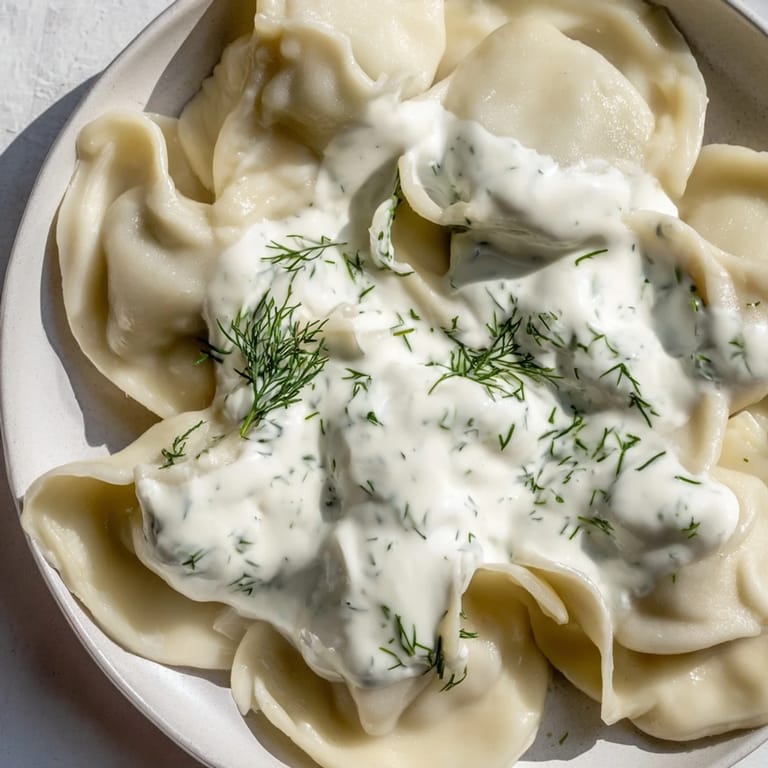
- Sour cream (1 cup): The cooling, tangy finish that makes every bite feel indulgent.
- Fresh dill (1 tbsp, optional): It's optional, but dill transforms this from good to memorable.
Tired of Takeout? 🥡
Get 10 meals you can make faster than delivery arrives. Seriously.
One email. No spam. Unsubscribe anytime.
Instructions
- Build Your Dough Foundation:
- Combine flour and salt in a large bowl, then crack in the egg and start mixing. Gradually add cold water a little at a time—you're looking for a rough shaggy mass, not a smooth dough yet. This patience saves you from ending up with something too wet to knead.
- Knead Into Silky Dough:
- Now knead for 8–10 minutes until smooth, elastic, and no longer sticky. Your arms will feel it, but the dough will transform into something almost silky. Cover and rest for 20 minutes—this isn't optional; it relaxes the gluten and makes rolling much easier.
- Mix the Filling:
- In a separate bowl, combine both meats with the grated onion, minced garlic, salt, pepper, and cold water. Mix until it's sticky and well combined—don't be gentle here; you want everything thoroughly distributed so each pelmeni tastes the same.
- Roll and Cut:
- On a lightly floured surface, roll the dough to about 1/16 inch thick—thinner than you probably think, but this is key to delicate pelmeni that cook through quickly. Using a 2.5-inch round cutter, cut out circles, gathering and re-rolling scraps as you go.
- Fill and Fold with Care:
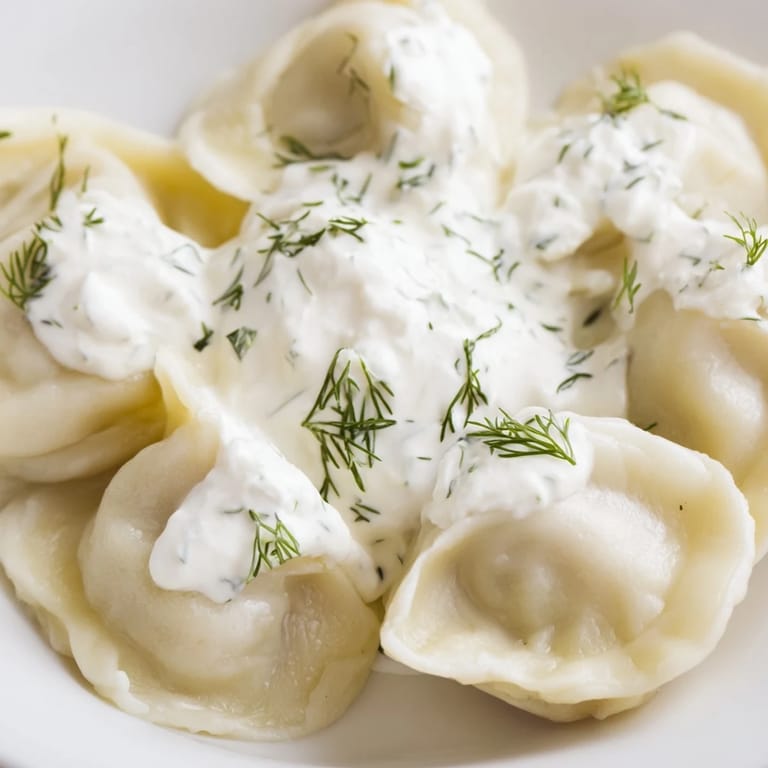
- Place 1 teaspoon of filling in the center of each circle, then fold in half to form a half-moon, pinching the edges tight. Now bring the two corners of the half-moon together and pinch to seal—this distinctive pelmeni shape isn't just for looks; it helps them hold their shape while cooking.
- Boil Until They Float:
- Bring a large pot of salted water to a rolling boil, then gently drop pelmeni in batches (don't crowd them). Stir gently once with a wooden spoon to prevent sticking. They'll sink at first, then float to the surface after 5–7 minutes; once floating, give them another minute to ensure the filling is cooked through.
- Finish and Serve:
- Remove each batch with a slotted spoon and transfer to a serving bowl. Top generously with sour cream, a sprinkle of fresh dill, and a crack of black pepper while they're still steaming hot.
 Save
Save There's a Russian proverb that pelmeni are 'little pockets of joy,' and I used to think that was sentimental until I watched my six-year-old nephew carefully fold his first one, tongue poking out in concentration. When he bit into it and declared it 'the best dumpling ever,' I realized these aren't just food—they're a way of saying 'I made this for you.'
The Freezer Strategy
The real magic of pelmeni is that they transform your freezer into a backup plan for hunger. Make a double or triple batch on a quiet afternoon, freeze them in a single layer on a tray, then transfer to bags where they'll keep for months. When you're tired and need dinner in 20 minutes, pelmeni go straight from freezer to boiling water without thawing—no extra cooking time needed, just straight from ice to steaming bowl.
Beyond Sour Cream
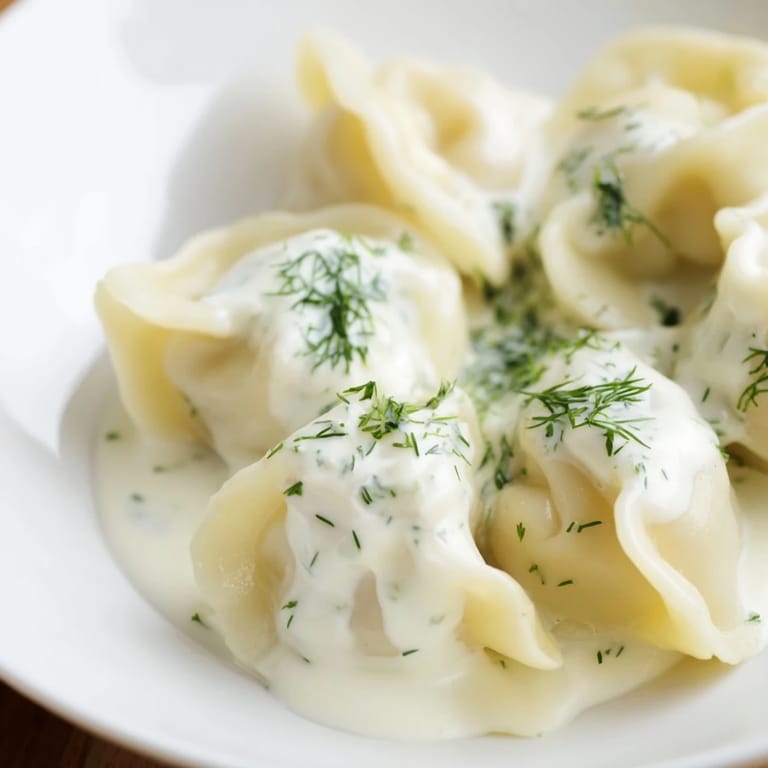
While sour cream is the classic finish, I've discovered that pelmeni are surprisingly adaptable. Some days I drizzle them with melted butter and fried onions, other times a splash of vinegar and a shower of black pepper. The meat filling is seasoned enough to stand on its own, so the sauce is really just a canvas for whatever you're craving that night.
Making It Your Own
Once you've made a batch the traditional way, you'll feel confident experimenting. The dough and technique stay the same, but the filling is where pelmeni become personal. I've added a pinch of nutmeg, switched to ground lamb, tried mushrooms mixed into the meat, and each version felt like my own discovery.
- A tiny pinch of nutmeg in the filling adds warmth without announcing itself.
- Freeze raw pelmeni on a tray before transferring to bags to prevent them from becoming one solid block.
- Cook from frozen without thawing—they take the same 5–7 minutes, and the filling stays tender.
 Save
Save These little dumplings have a way of turning an ordinary evening into something warm and comforting. Make them once, and you'll understand why they've fed Russian families through centuries of winters.
Recipe FAQs
- → What type of meat is used for the filling?
The filling combines ground pork and ground beef, seasoned with grated onion, garlic, salt, and pepper for a balanced savory taste.
- → How is the dough prepared for pelmeni?
The dough is made with flour, egg, cold water, and salt, kneaded until smooth and rested to achieve a tender, elastic texture.
- → How are pelmeni cooked perfectly?
They are boiled in salted water until they float, usually 5 to 7 minutes, indicating the filling is fully cooked and the dough tender.
- → What is the best way to serve pelmeni?
Serve hot topped generously with a rich sour cream sauce and chopped fresh dill for a traditional Russian touch.
- → Can pelmeni be frozen before cooking?
Yes, they can be frozen on a tray first, then stored in a bag for up to three months for convenient future meals.