 Save
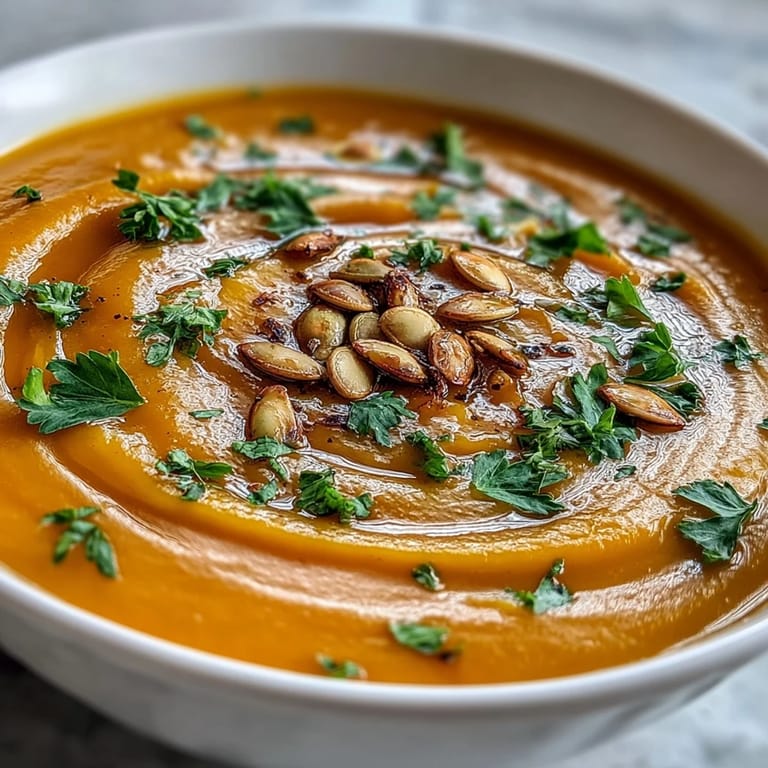
Save There's something about October when the farmers market suddenly floods with butternut squash in every shade of burnt orange and golden tan. I'd been walking past them for weeks, unsure what to do, until a friend casually mentioned roasting one first to deepen the flavor. That single tip changed everything, turning what I thought would be a one-note soup into something with real depth and richness that made my kitchen smell like autumn itself.
I made this for my sister during a surprise Sunday visit when she arrived with the kind of day written all over her face that only warm soup could fix. She had thirds and barely spoke until the bowl was empty, which said everything. Now whenever she texts that she's having one of those days, I know exactly what to make.
Ingredients
- Butternut squash (1 medium, about 1.2 kg): Roasting it first concentrates the natural sweetness and gives the soup incredible depth; don't skip this step even though it adds time.
- Onion and carrots (1 large onion, 2 medium carrots): These build the aromatic base that holds the whole soup together, so chop them into similar sizes so they cook evenly.
- Garlic (2 cloves, minced): Added after the vegetables soften so it perfumes everything without becoming sharp or bitter.
- Vegetable stock (800 ml): Use good quality stock; it's the invisible backbone of flavor, so don't reach for the questionable carton in the back of your pantry.
- Coconut milk (200 ml): This adds silkiness and a subtle sweetness, though heavy cream works beautifully too if you prefer a more classic approach.
- Olive oil (2 tbsp): Split between the roasting tray and the pot for a balanced richness without overwhelming the delicate squash flavor.
- Cumin and nutmeg (1/2 tsp and 1/4 tsp): These warm spices whisper rather than shout; they're what make people say this soup tastes like they've tasted it before even if they haven't.
- Salt and black pepper: Taste as you go because you'll need more than you think, especially if you're using unsalted stock.
Tired of Takeout? 🥡
Get 10 meals you can make faster than delivery arrives. Seriously.
One email. No spam. Unsubscribe anytime.
Instructions
- Prepare and roast the squash:
- Preheat your oven to 200°C and toss the diced squash with olive oil, salt, and pepper until every piece is coated. Spread it single layer on a baking tray and roast for 25 minutes, stirring halfway through, until the edges turn golden and caramelized.
- Build the aromatics:
- While the squash roasts, heat the remaining olive oil in a large pot and add your chopped onions and carrots. Sauté for 5 to 7 minutes, stirring occasionally, until they soften and turn translucent at the edges.
- Wake up the spices:
- Add your minced garlic, cumin, and nutmeg and stir constantly for about a minute. You'll know you've got it right when the kitchen suddenly smells like spiced warmth rather than raw garlic.
- Combine and simmer:
- Add your roasted squash to the pot, pour in the vegetable stock, and bring everything to a boil. Then lower the heat and let it simmer gently for 10 minutes so all the flavors can get to know each other.
- Purée to silky perfection:
- Remove from heat and use an immersion blender to purée the soup until completely smooth, working in batches if you're using a regular blender and being careful of the hot liquid. This is where the texture magic happens.
- Finish with creaminess:
- Stir in your coconut milk or cream, heat through gently without boiling, and taste for seasoning. You'll almost always need more salt than you expect, so go slowly.
- Serve with intention:
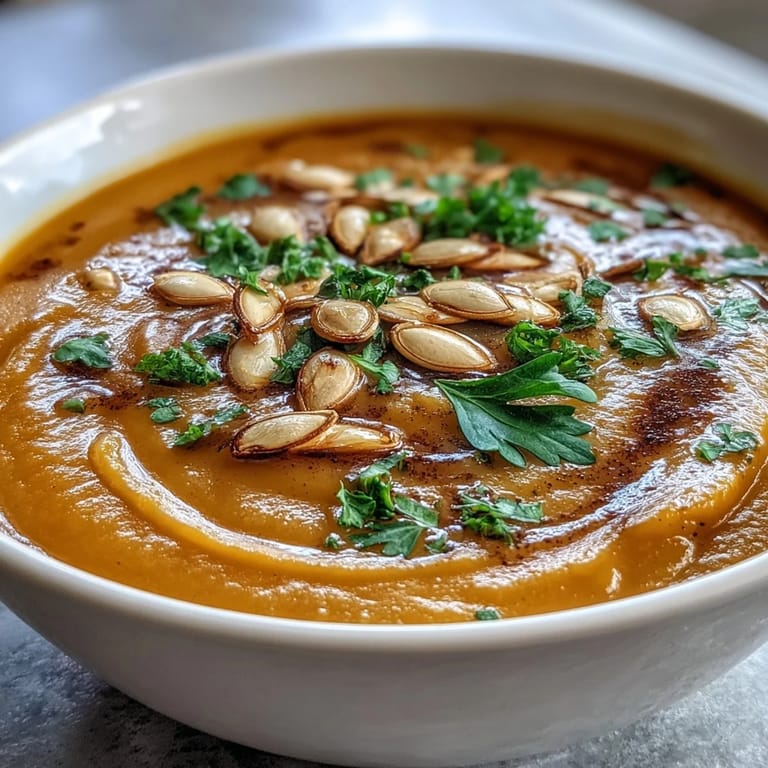
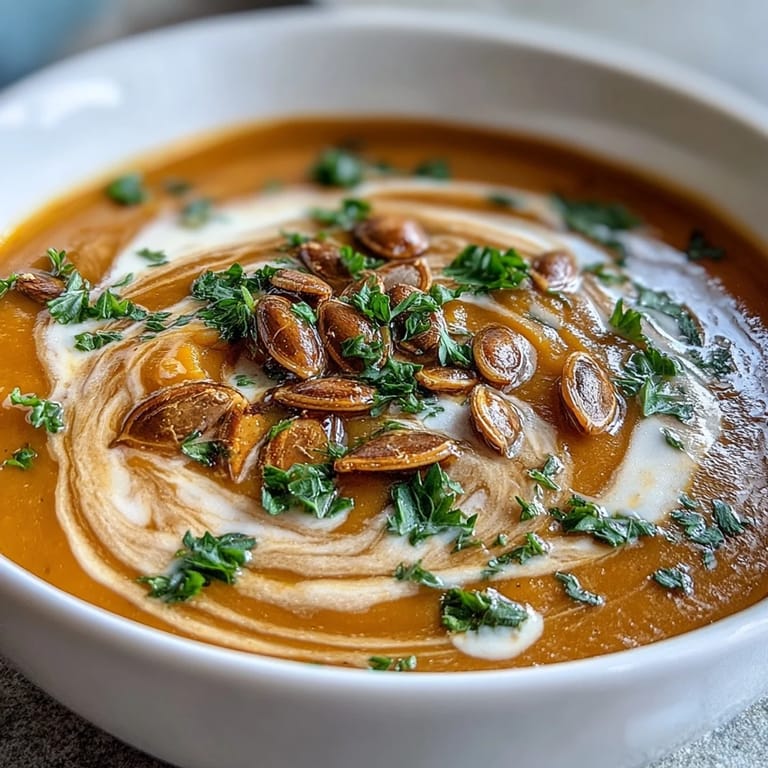
- Ladle into bowls and top with fresh herbs, toasted pumpkin seeds, and a swirl of coconut milk. Let people finish their own bowl before you start clearing plates.
 Save
Save My neighbor came over on a random Tuesday and we'd planned nothing, so I made this soup on the spot. Three hours later we were still sitting at the kitchen table talking about everything and nothing, and she looked at me and said she came for the visit but stayed for the soup, which made us both laugh because it was absolutely true.
Why Roasting Makes All The Difference
Roasting the squash before adding it to the pot transforms it from merely vegetable-based into something with actual caramel notes and complexity. The dry heat concentrates sugars and deepens flavors in a way boiling simply cannot achieve, which is why this soup tastes more refined than the versions I used to make by just chopping and simmering everything at once. The extra 25 minutes is absolutely worth every minute.
The Spice Balance Matters More Than You Think
Cumin and nutmeg are gentle enough that you might think they don't matter, but they're actually doing all the invisible work that makes people say this tastes like something they remember eating. The nutmeg especially should be just a whisper; too much and the soup tastes like you dumped a spice jar into it. I learned this the hard way by being too generous with my measuring spoon one afternoon and having to start over.
Customizing Your Bowl
This soup is naturally vegetarian and gluten-free, but more importantly it's adaptable to what's in your kitchen and what your body needs on any given day. Some mornings I want it rich with heavy cream and crusty bread, other times I keep it light with just the coconut milk and call it complete. The beauty is that the squash is the star no matter how you dress it up, and you can pivot based on appetite or occasion without losing what makes it special.
- Add a pinch of chili flakes if you want a subtle warmth creeping up through the sweetness.
- Roasted sage or thyme leaves make elegant garnishes if you're serving this to people and want it to look intentional.
- Leftover soup keeps beautifully in the fridge for three days and tastes even better reheated gently on the stovetop.
 Save
Save There's real magic in something this simple that tastes this good. Make it for yourself on a quiet evening or for someone who needs reminding that they're cared for.
Recipe FAQs
- → Can I make this soup ahead of time?
Yes, this soup actually tastes better the next day as flavors meld together. Store in an airtight container in the refrigerator for up to 4 days. Reheat gently over medium-low heat, adding a splash of stock or milk if needed to adjust consistency.
- → Can I freeze butternut squash soup?
Absolutely. Cool completely before transferring to freezer-safe containers, leaving space for expansion. Freeze for up to 3 months. Thaw overnight in the refrigerator and reheat slowly, stirring occasionally to maintain smooth texture.
- → What can I use instead of coconut milk?
Heavy cream creates an even richer result, while half-and-half offers a lighter alternative. For dairy-free options, try cashew cream or oat milk. Each creates slightly different flavor profiles but all maintain the luxurious texture.
- → Do I have to roast the squash first?
Roasting intensifies sweetness and adds depth, but you can skip it. Simmer raw diced squash directly in the pot with stock for 20-25 minutes until tender. The final flavor will be slightly less caramelized but still delicious.
- → How do I get the smoothest texture?
An immersion blender works perfectly directly in the pot. For ultra-smooth results, pass the puréed soup through a fine-mesh sieve. This extra step removes any fibrous bits, creating restaurant-quality silky texture.
- → What spices work well in this soup?
Beyond cumin and nutmeg, try cinnamon, ginger, or smoked paprika for warmth. A pinch of cayenne adds subtle heat, while fresh thyme or rosemary pairs beautifully with the squash's natural sweetness.