 Save
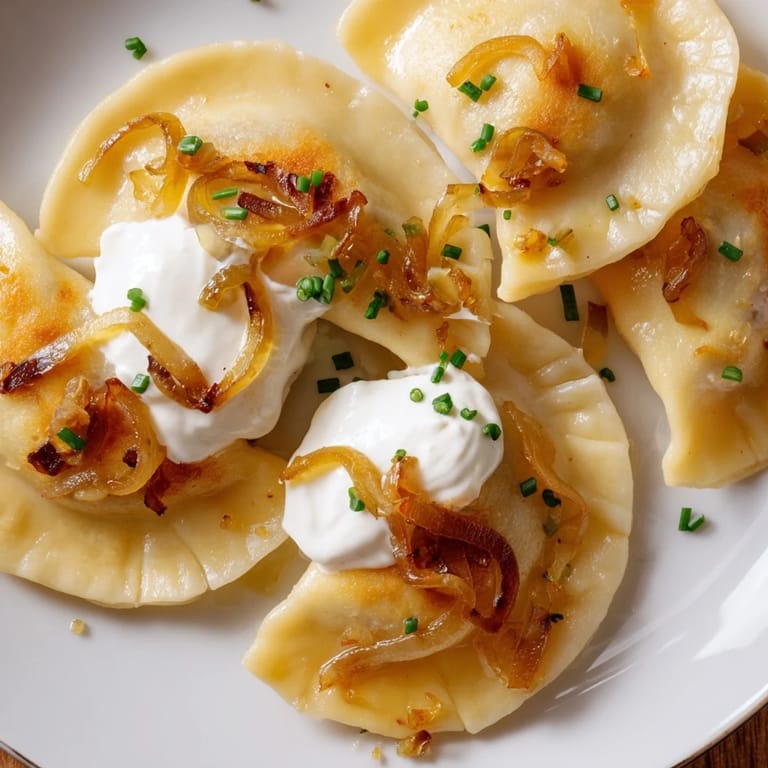
Save My grandmother's kitchen in Warsaw always smelled like butter and caramelized onions when she made pierogi, and somehow, after years of watching her fold them with practiced hands, I finally understood why she never rushed this dish. The first time I attempted it myself, my filling was too wet and my dough too thick, but that mistake taught me more than any perfect batch could have. These tender potato and cheese dumplings became my way of keeping that memory alive, boiled until they float like little clouds, then pan-fried until golden and crispy on the edges.
I made these for my husband on a rainy Sunday, and he ate almost half the batch before I could plate them properly, which told me everything I needed to know about whether I was on the right track. That moment of quiet satisfaction, watching someone genuinely enjoy food you've made from scratch, is exactly why I keep coming back to this recipe year after year.
Ingredients
- All-purpose flour: The foundation of tender dough; I learned to measure by weight rather than cups, which eliminates the guesswork that used to make my dough either too sticky or too stiff.
- Egg: Binds everything together and adds richness to the dough without making it heavy.
- Lukewarm water: Cold water won't incorporate smoothly, but hot water toughens the gluten; lukewarm is the sweet spot.
- Sour cream: This is the secret ingredient that makes the dough impossibly tender; don't skip it or substitute with yogurt.
- Russet potatoes: Their starch content makes them mash into a smooth, creamy filling that holds together beautifully.
- Farmers cheese or ricotta: Adds tang and creaminess; make sure to drain ricotta well or your filling becomes soup.
- Sharp cheddar: The sharpness cuts through the richness and prevents the filling from tasting one-dimensional.
- Butter: Used throughout, and I've never regretted using good quality butter in any step.
- Onions: Half go into the filling for depth, half caramelize slowly for topping; both applications matter equally.
Tired of Takeout? 🥡
Get 10 meals you can make faster than delivery arrives. Seriously.
One email. No spam. Unsubscribe anytime.
Instructions
- Mix and Rest the Dough:
- Create a well in your flour, add the egg and melted butter, then gradually incorporate the water and sour cream, stirring until shaggy crumbs form. Knead on a floured surface for about five minutes until the dough becomes silky and springs back when you poke it, then cover and let it rest for half an hour, which allows the gluten to relax and makes rolling infinitely easier.
- Build the Filling:
- Boil cubed potatoes until a fork slides through without resistance, then drain thoroughly and mash until completely smooth. Meanwhile, golden sautéed onions will soften and sweeten, and when you fold them together with the mashed potatoes, cheeses, salt, and pepper, let the mixture cool to room temperature before using so the filling doesn't seep through the dough.
- Shape the Pierogi:
- Roll your rested dough thin enough to see your hand through it but not so thin it tears, cutting circles roughly the size of a coffee cup lid. A heaping teaspoon of filling goes in the center, then fold and pinch the edges firmly so they don't burst open during cooking.
- Boil Until They Float:
- Gently place pierogi into simmering salted water and wait patiently for them to rise to the surface like little gifts, then cook for another minute or two until they feel tender when poked. Remove them with a slotted spoon and either serve immediately or let them cool on a towel before pan-frying.
- Caramelize the Onions Low and Slow:
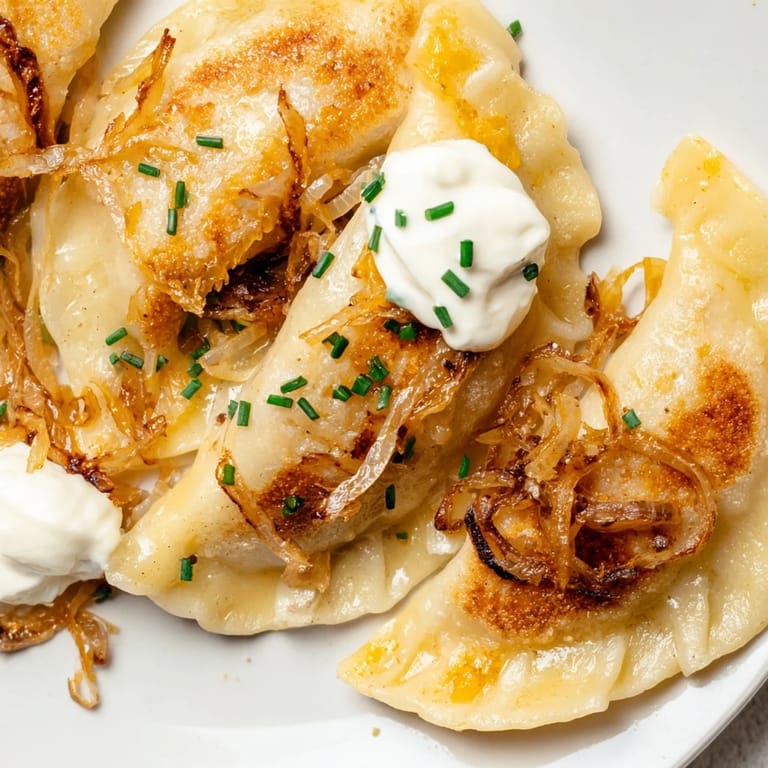
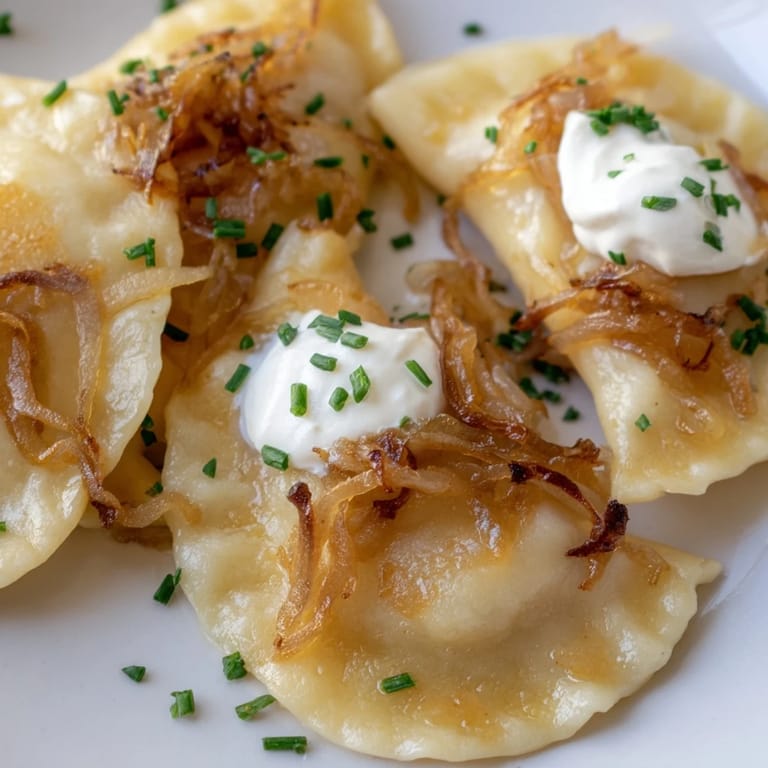
- This step cannot be rushed; low heat and frequent stirring over twenty to twenty-five minutes transforms sliced onions into sweet, mahogany-colored strands that taste nothing like raw onions. The patience here is what separates ordinary pierogi from extraordinary ones.
- Pan-Fry to Crispy Perfection:
- Use the same skillet where the onions cooked, with all its caramelized bits still clinging to the bottom, and briefly fry the boiled pierogi in batches until both sides turn golden and crispy. The contrast between that crispy exterior and the tender filling inside is what makes people come back for more.
 Save
Save There was a moment when my daughter asked why I made pierogi the hard way instead of buying frozen ones, and instead of defending my choice, I let her help fold the next batch. Watching her small hands mirror mine, concentrating on the pinch, I realized these dumplings had become more than dinner; they were a conversation between generations about caring enough to do something properly.
The Dough That Never Disappoints
The sour cream in this dough is non-negotiable; it creates a tender crumb that's almost impossible to achieve with water alone. I've experimented with substitutions and wasted enough dough to know that skipping this ingredient to save a few tablespoons leads only to regret and a dough that's either too elastic or too fragile. The melted butter adds richness without creating a flaky texture like cold butter would, which is exactly what you want here.
Why Fresh Filling Tastes Better
Making your own filling from whole potatoes and real cheese tastes remarkably different from packaged or frozen fillings, and the difference becomes obvious the moment the filling hits your tongue. There's a subtle sweetness in properly cooked potatoes that gets lost in commercial versions, and the cheese becomes something more interesting when you choose the blend yourself rather than accepting what's already been decided for you. That extra hour of effort in the kitchen pays dividends on the plate.
Serving and Storage Wisdom
Hot pierogi with caramelized onions and a generous dollop of sour cream is the only way to eat these on first serving, but they're also remarkable cold the next day straight from the fridge or quickly reheated in a skillet. Make double and freeze half on a baking sheet before transferring to bags; uncooked frozen pierogi go straight into boiling water without thawing, adding just a minute or two to the cooking time.
- Sour cream shouldn't be skipped on any serving; it adds a cool, tangy contrast that brightens everything.
- Fresh chives or parsley finish the dish with a quiet elegance that makes it feel less ordinary.
- Leftover caramelized onions keep in the fridge for days and make scrambled eggs or roasted vegetables suddenly special.
 Save
Save These pierogi are proof that simple ingredients become something transcendent when made with attention and care. Every time I make them, I'm grateful for the grandmother who taught me that real food requires time, and that time is never wasted.
Recipe FAQs
- → How do I prevent the dough from sticking?
Knead the dough until smooth and elastic, then let it rest covered with a damp towel. Lightly flour your surface and rolling pin before shaping.
- → What type of potatoes work best for the filling?
Russet potatoes are ideal due to their starchy texture, which creates a creamy, fluffy filling once mashed.
- → Why should I boil the dumplings before pan-frying?
Boiling ensures the dough cooks through and the filling heats properly, while pan-frying adds a crisp, golden exterior.
- → How are the onions caramelized perfectly?
Cook sliced onions slowly over medium-low heat with butter, stirring often, until deep golden and sweet, which takes about 20–25 minutes.
- → Can I prepare pierogi in advance?
Uncooked pierogi can be frozen on a tray, then stored in bags for up to two months, making meal prep convenient.