 Save
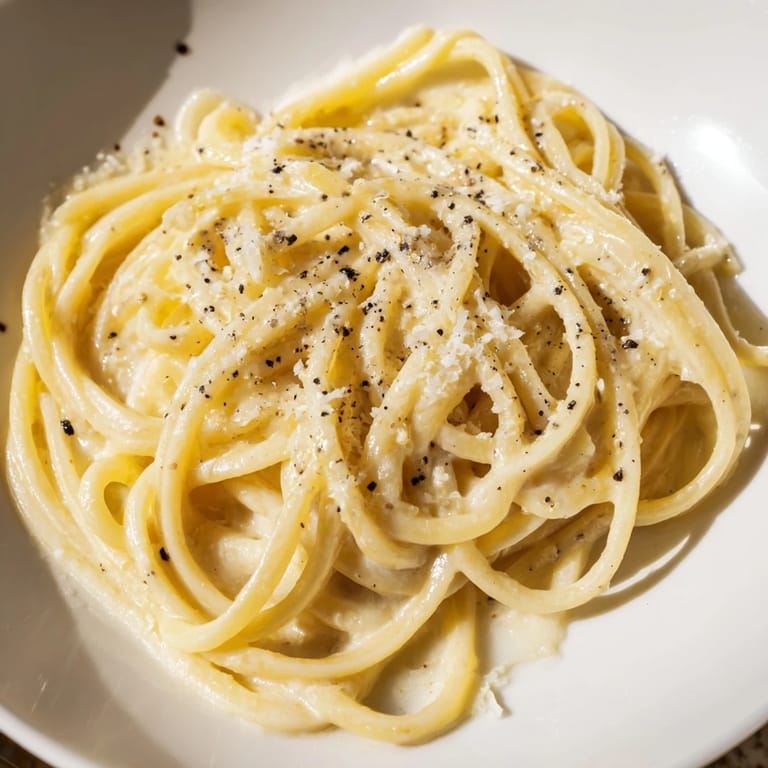
Save There's something almost rebellious about making pasta with just three ingredients when the world insists you need garlic, tomatoes, and a dozen herbs. I discovered this dish on a Wednesday night when my fridge felt as empty as my energy levels, and somehow those few things—butter, Parmesan, pasta water—turned into something so silky and satisfying that I've never looked back. It's the kind of meal that proves elegance doesn't require complexity, just intention.
I made this for someone who showed up at my door tired and hungry, and they kept asking what restaurant I'd gotten it from until I admitted it was pasta, butter, and cheese. The look on their face when they realized how simple it was—that's when I knew this recipe deserved to be in my regular rotation, not just my emergency meals.
Ingredients
- Dried pasta (200 g): Any shape works—spaghetti, linguine, fettuccine—but thinner cuts cling better to the sauce, and that's where the magic happens.
- Unsalted butter (50 g): This is your base, so use the good stuff and let it be the star; salted butter will throw off the seasoning you're building.
- Freshly grated Parmesan cheese (60 g): Pre-grated cheese has anti-caking agents that prevent the sauce from becoming creamy, so spend the two minutes grating it yourself.
- Salt and freshly ground black pepper: Taste as you go—the pasta water adds salinity, so you're balancing rather than starting from scratch.
Tired of Takeout? 🥡
Get 10 meals you can make faster than delivery arrives. Seriously.
One email. No spam. Unsubscribe anytime.
Instructions
- Boil the pasta until it's just shy of soft:
- Bring a big pot of salted water to a rolling boil, add your pasta, and cook a minute or two under the package time so it still has a slight resistance when you bite it. This matters because the sauce will soften it further.
- Save the liquid gold:
- Before draining, scoop out about 150 ml of that starchy pasta water and set it aside—this is what transforms butter and cheese into something that clings to every strand instead of pooling at the bottom.
- Make your sauce in the warm pot:
- Return the drained pasta to the pot off the heat, add the butter, and toss until it melts and coats everything evenly. You want every piece touching that butter.
- Add the cheese and emulsify:
- Sprinkle the Parmesan over the buttered pasta, pour in about 60 ml of pasta water, and toss vigorously—and I mean really toss, keeping your wrist loose and steady. Watch as the water, butter, and cheese come together into this silky, glossy sauce.
- Adjust and finish:
- If it looks too thick, add a splash more pasta water. If it's too thin, a bit more cheese does the trick. Season with salt and pepper, taste, adjust, then serve immediately while everything is still hot and cohesive.
 Save
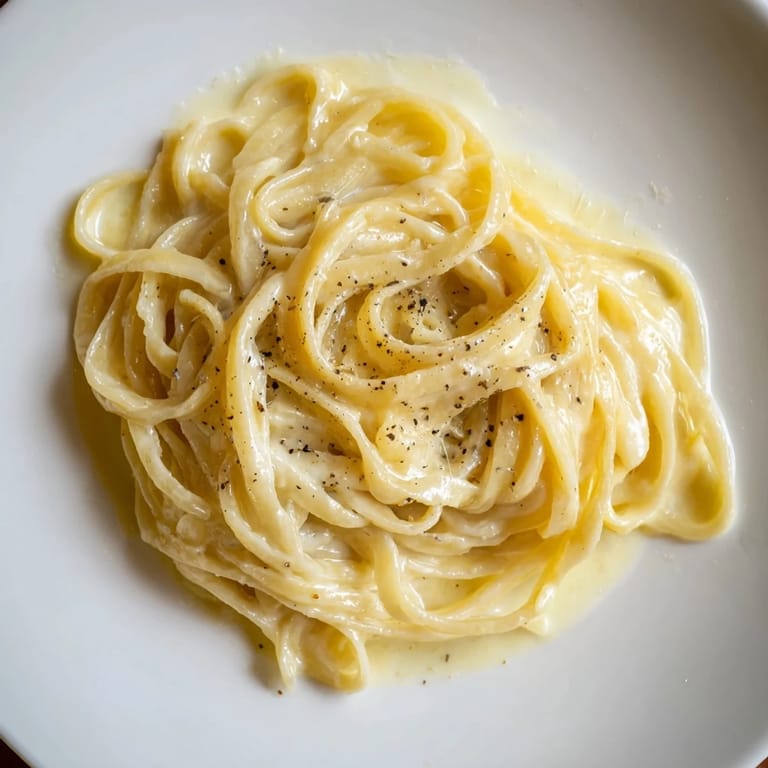
Save There's a moment when you're tossing the pasta and you feel the sauce come together under your spoon, and you realize you've just made restaurant-quality food in your kitchen with ingredients that cost less than takeout. That's the moment this dish stopped being lazy and became intentional.
The Science of Simplicity
What makes this work is emulsification—the starchy water helps butter and cheese blend into a smooth, clinging sauce instead of separating. It's not magic, it's just understanding how ingredients behave when they meet heat and movement. This is why recipes seem mysterious until you understand the why behind each step, and then suddenly they're just cause and effect.
Variations Worth Trying
The beauty of this foundation is how it welcomes small changes without asking permission. A handful of fresh herbs—parsley, chives, or basil—stirred in at the end adds freshness. Pecorino Romano swapped for Parmesan brings a sharper, more assertive flavor that some people prefer. Even a pinch of nutmeg or crushed red pepper flakes can wake up the dish in different ways, and none of these changes complicate the process.
When and Why to Make This
This is the meal for nights when you're tired but not in the mood for takeout. It's what you make when you want something that tastes cared for but doesn't require energy you don't have. It's also proof that cooking doesn't always mean elaborate or time-consuming—sometimes it just means understanding the fundamentals and letting them carry you.
- Keep all your ingredients at room temperature for a few minutes before cooking so the butter and cheese incorporate more smoothly.
- Taste the pasta water before using it—if it's aggressively salty, use a bit less for the sauce.
- Serve immediately in warm bowls because this sauce sets as it cools and loses its magic.
 Save
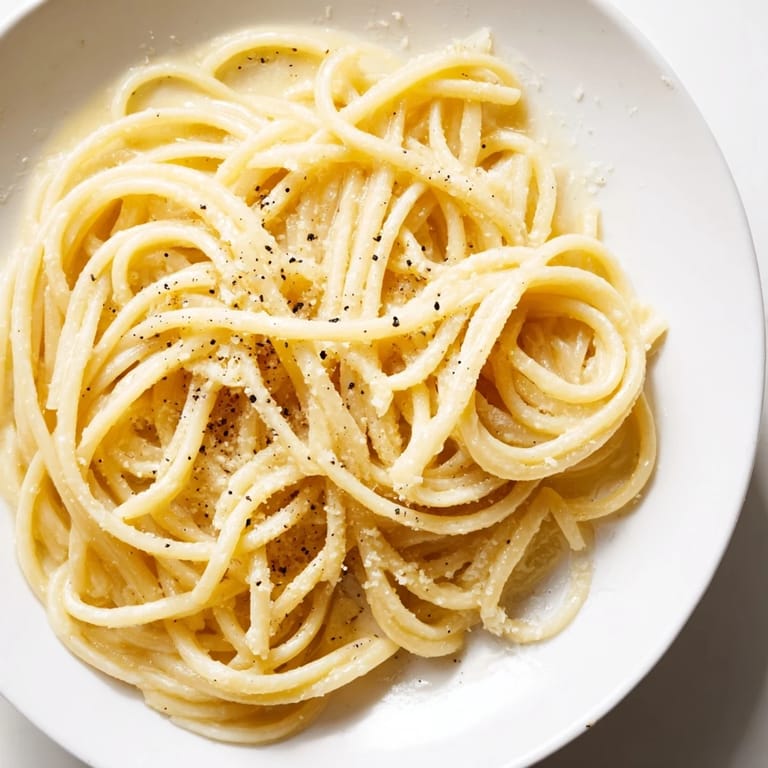
Save This dish taught me that the best recipes aren't always the most complicated ones—they're the ones that fit into real life and still taste like love. Make it when you need it, make it often, and let it remind you that sometimes three things are exactly enough.
Recipe FAQs
- → What type of pasta works best?
Long pasta such as spaghetti, linguine, or fettuccine works best to hold the creamy sauce.
- → How do I make the sauce creamy without cream?
The sauce becomes creamy by mixing melted butter and freshly grated Parmesan with reserved starchy pasta water which acts as a natural emulsifier.
- → Can I use different cheeses for this dish?
Yes, Pecorino Romano can replace Parmesan for a sharper flavor, or other hard grating cheeses if preferred.
- → What’s the purpose of reserving pasta water?
Pasta water contains starch that helps bind the sauce ingredients, making it smooth and silky.
- → How can I add extra flavor?
Enhance the dish with freshly grated nutmeg or chopped fresh herbs like parsley for added aroma and depth.