 Save
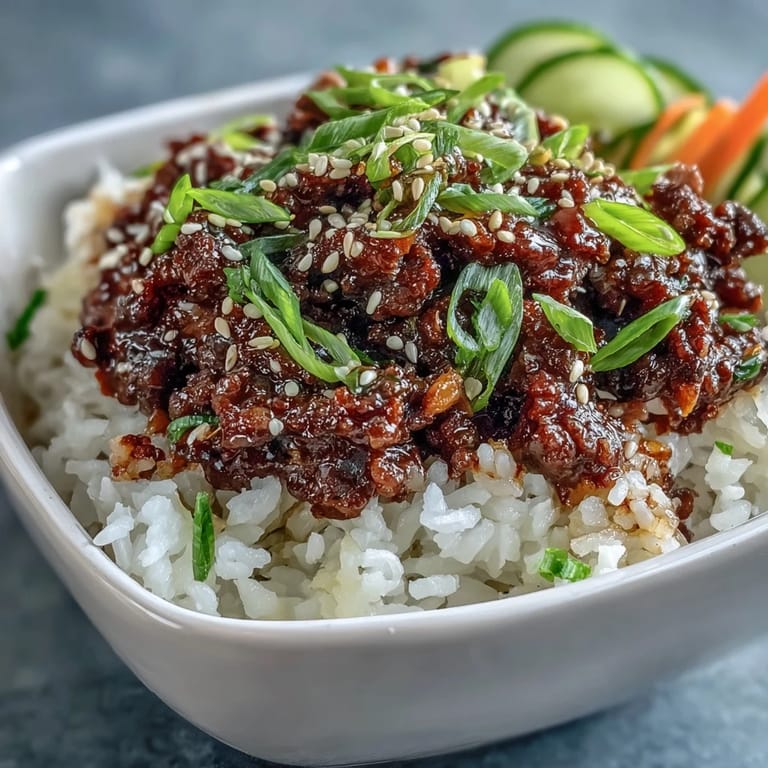
Save One Tuesday night, my friend brought over a container of Korean beef bowl she'd made for lunch, and the aroma hit me the moment she opened her bag—toasted sesame oil and ginger creating this warm, savory cloud that made my kitchen smell like a Seoul street market. I asked for the recipe on the spot, and what she handed me was beautifully simple: seasoned ground beef over rice with bright, tangy pickled vegetables that cut through the richness like a perfect counterpoint. That bowl became my weeknight salvation, the kind of meal that feels indulgent but comes together faster than ordering takeout. Now whenever I make it, I'm transported back to that moment when I realized the best dishes aren't complicated—they're just balanced.
I made this bowl for my partner on a rainy Sunday when neither of us wanted to leave the apartment, and something about the combination of warm, umami-rich beef with those cool, snappy pickles made the whole afternoon feel cozier. He went back for seconds without asking questions, which is when I knew this recipe had staying power. It's become our go-to when we want something that feels special but doesn't require a major cooking project.
Ingredients
- Ground beef: Use 500g of lean ground beef so you're not draining pools of fat, but don't go too lean or it becomes bland and crumbly.
- Soy sauce: Reach for tamari if you're avoiding gluten, and make sure it's fresh because old soy sauce tastes flat and salty instead of deep.
- Toasted sesame oil: This is non-negotiable—regular sesame oil will taste thin and disappointing, and the toasted version is what gives this bowl its signature nutty warmth.
- Brown sugar: Just a tablespoon balances the salt and soy sauce, rounding out the seasoning without making it sweet.
- Fresh ginger and garlic: Freshly grated ginger and minced garlic are crucial because they wake up your palate; pre-minced versions taste dusty and flat.
- Gochujang: This Korean chili paste adds complexity and gentle heat, but sriracha works if that's what you have, and you can skip it entirely if you prefer mild flavors.
- Green onions: Slice them thin and add them at the very end so they stay bright and don't wilt into invisibility.
- Sesame seeds: Toast your own if you can, or buy pre-toasted; they add texture and a subtle nuttiness that makes the whole bowl feel more intentional.
- Rice or cauliflower rice: Jasmine rice is traditional and slightly sweet, but cauliflower rice transforms this into something lighter and lower-carb without sacrificing satisfaction.
- Rice vinegar, sugar, and salt for pickling: The pickling liquid needs to be properly balanced—too much vinegar makes it puckering, too little and the vegetables taste flat and lifeless.
- Carrots, cucumber, and radish: Each vegetable brings something different: carrots are sweet and crisp, cucumber is cooling and tender, radish adds a gentle peppery bite.
Tired of Takeout? 🥡
Get 10 meals you can make faster than delivery arrives. Seriously.
One email. No spam. Unsubscribe anytime.
Instructions
- Start with the pickled vegetables:
- In a bowl, whisk together rice vinegar, sugar, and salt until the sugar completely dissolves—this matters because undissolved sugar granules taste gritty and wrong. Slice your vegetables thin (a mandoline makes this effortless), toss them in the vinegar mixture, and let them sit while you cook everything else; they'll soften slightly and absorb all those tangy flavors.
- Prepare your rice base:
- Whether you're using jasmine rice or cauliflower rice, get it cooking or reheating so it's warm and ready to go when the beef is done. The contrast between warm rice and cold pickles is part of what makes this bowl sing.
- Brown the ground beef:
- Heat a large skillet over medium-high heat and add your beef without any oil—it'll release its own fat as it cooks. Break it apart with the back of a spoon as it browns, which takes about five to seven minutes; you want it cooked through but not dried out, with some texture and color rather than a mushy gray mass.
- Build the flavor:
- Once the beef is cooked, drain off any excess fat if there's more than a thin layer pooling in the pan. Pour in your soy sauce, sesame oil, brown sugar, ginger, garlic, and gochujang if you're using it, stirring everything together and letting it cook for another two to three minutes until the kitchen smells incredible and the sauce coats the beef.
- Finish with brightness:
- Pull the pan off the heat and stir in your sliced green onions and sesame seeds so they stay fresh and don't turn dark and bitter from the residual heat.
- Assemble your bowls:
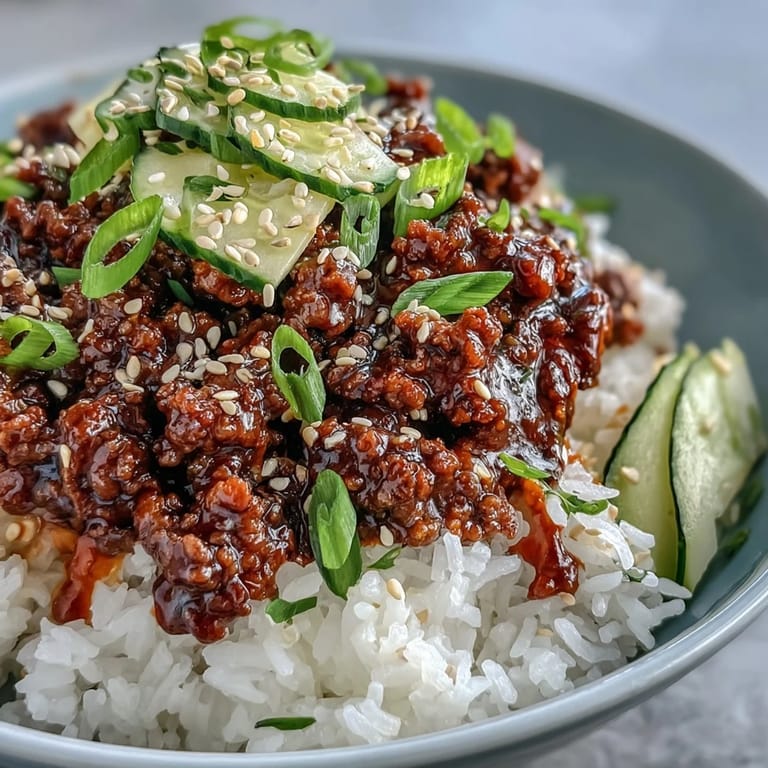
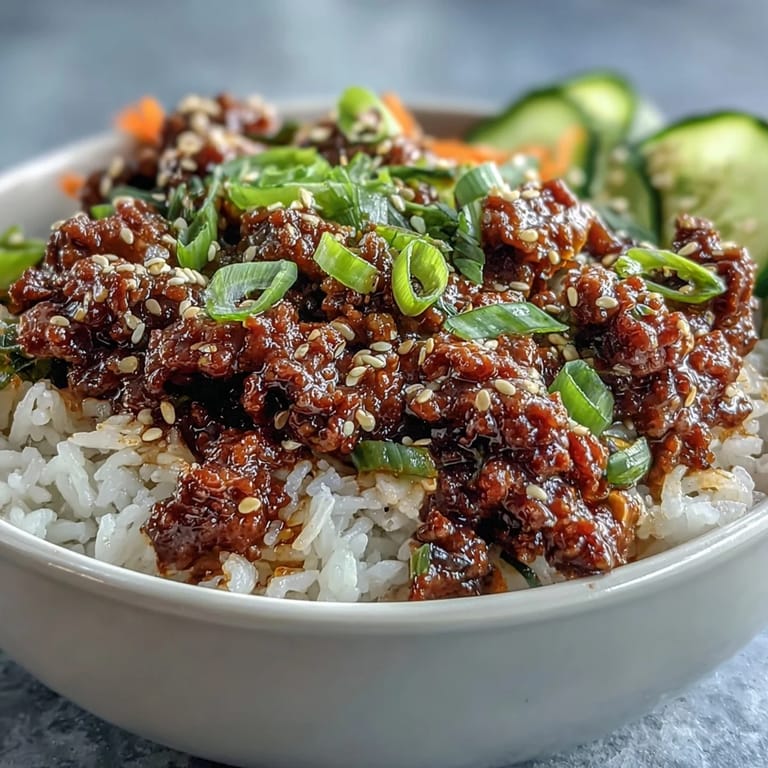
- Divide your warm rice among bowls, crown it with a generous portion of seasoned beef, and pile on those tangy, crunchy pickled vegetables without any shyness—they're not a garnish, they're the balance that makes the whole thing work. Top with extra green onions and sesame seeds and serve right away while everything is at the temperature it should be.
 Save
Save There's a moment, right when you're stirring that ginger and garlic into the beef, when your whole kitchen transforms into something that smells expensive and complicated, and that's when you realize you've done something right without any fuss. This is the kind of dish that makes you feel like you've cooked something real, something with intention, in less time than it takes to watch a single episode of television.
The Magic of the Pickled Vegetables
The pickled vegetables are where this bowl moves from nice to unforgettable, and I learned this the hard way when I tried making it without them once. The beef is rich and savory, the rice is mild and filling, and without something to cut through all that, you're eating something that's good but feels heavy after the third bite. Those vegetables aren't just flavor—they're texture contrast, brightness, and the thing that makes you want another spoonful instead of feeling satisfied after one bowl.
Making It Your Own
This bowl is endlessly flexible, which is part of why it's become my favorite thing to make when I'm tired but still want dinner to feel like something. I've made it with ground turkey on nights when I'm being health-conscious, with tempeh for vegetarian guests, and I've added a fried egg on top when I wanted extra richness and protein. The seasoning stays the same, the structure stays the same, but somehow it feels different every time depending on what you swap in.
Storage and Reheating Tips
This bowl is one of the few dishes that actually works well as leftovers if you're meal prepping, though I'll be honest—it's best eaten fresh while the rice is warm and the pickles are still snappy. If you do make it ahead, store the components separately: the beef in one container, the rice in another, and the pickled vegetables in a third, then assemble when you're ready to eat. Reheat the beef gently over low heat with a splash of water so it doesn't dry out, warm your rice however you usually do, and the pickles actually taste better the next day after spending more time in their brine.
- The pickled vegetables last about a week in the refrigerator and actually improve as they sit, so make a double batch and you'll have them ready for future bowls.
- Leftover beef is wonderful folded into scrambled eggs for breakfast or tucked into lettuce wraps for a quick lunch.
- If you're cooking for one, the recipe halves perfectly, or you can cook the full amount and eat well for three days straight without getting tired of it.
 Save
Save This Korean ground beef bowl has become my answer to the question of what to make when I want something that tastes like I tried hard but doesn't ask much of me. It's the kind of meal that makes you feel taken care of, whether you're cooking it for yourself or for someone you love.
Recipe FAQs
- → Can I make this bowl ahead of time?
The seasoned beef and pickled vegetables can be prepared up to 3 days in advance and stored separately in the refrigerator. Reheat the beef gently and assemble bowls fresh with warm rice for best results.
- → What can I substitute for gochujang?
Sriracha works well as a substitute, though it has a different flavor profile. You can also use Korean chili flakes (gochugaru) mixed with a small amount of miso paste for a similar fermented depth.
- → Is cauliflower rice a good low-carb option?
Absolutely. Cauliflower rice works beautifully in this bowl and absorbs all the savory juices from the seasoned beef. It reduces carbohydrates significantly while maintaining the bowl's satisfying texture.
- → How spicy is this dish?
The base dish has mild heat from ginger and garlic. The gochujang adds moderate spiciness, but it's completely optional. Adjust the heat level to your preference or omit entirely for a family-friendly version.
- → Can I use other proteins?
Ground turkey or chicken work well as lighter alternatives. For a vegetarian version, crumbled firm tofu or tempeh absorb the seasonings beautifully and provide protein while maintaining the dish's essence.
- → What other vegetables can I pickle?
Thinly sliced red onion, daikon radish, or even shredded cabbage work wonderfully in the quick pickle. Use any crisp vegetables that can be sliced thinly for the best texture.