 Save
Save There's something about a big pot of chili simmering on the stove that makes a kitchen feel like home. My neighbor stopped by one rainy afternoon, drawn in by the smell of cumin and smoked paprika wafting through our kitchen wall, and we ended up sharing bowls while watching the rain streak down the windows. That's when I realized this chili bowl wasn't just about feeding yourself—it was about creating those unexpected moments where food becomes the reason people linger a little longer.
I made this for a group of friends who were all stressed about different things, and somehow sitting around bowls of chili made everything feel manageable. We let everyone build their own with toppings spread across the table like a DIY bar, and it turned into this relaxed, unhurried meal where nobody was rushing through. That's when I understood why chili bowls show up at gatherings—they're inherently communal without trying too hard.
Ingredients
- Olive oil: Use enough to coat your pot generously; it's what coaxes flavor from the onions and peppers in those first crucial minutes.
- Onion and garlic: Don't skip the mincing—roughly chopped garlic will burn before the chili finishes cooking, and you'll taste the bitterness.
- Red and green bell peppers: The color combination matters more than you'd think; they add sweetness and visual warmth to every spoonful.
- Ground beef, turkey, or plant-based alternative: Brown it thoroughly and break it into small pieces so it distributes evenly throughout.
- Tomato paste: That one minute of cooking it in the pot concentrates its flavor in a way that makes the whole chili taste deeper and more intentional.
- Canned diced tomatoes: Don't drain them; the liquid becomes part of your broth and adds acidity that balances the spices.
- Kidney beans and black beans: Rinse canned beans well to remove excess sodium and the starchy liquid that can make the chili gummy.
- Corn kernels: Fresh or frozen works beautifully; canned corn should be drained well or it'll make things watery.
- Chili powder, cumin, smoked paprika, oregano: Layer these spices together—they're not just flavoring, they're building the backbone of what makes this taste like chili.
- Salt, black pepper, and cayenne: Taste as you go with the cayenne; heat builds in ways you don't expect once everything simmers together.
- Beef or vegetable broth: This is your liquid base; use quality broth if you can, because it really does make a difference.
Tired of Takeout? 🥡
Get 10 meals you can make faster than delivery arrives. Seriously.
One email. No spam. Unsubscribe anytime.
Instructions
- Heat your oil and soften the onion:
- Pour olive oil into your pot over medium heat and wait until it shimmers slightly, then add diced onion. You want them translucent and soft, not caramelized—that takes about 2 to 3 minutes, and you'll know it's right when the kitchen starts smelling like caramelizing sugar.
- Build your aromatic base:
- Add minced garlic and diced bell peppers, then cook for another 3 to 4 minutes until everything is fragrant and the peppers start to soften slightly. This step is where patience pays off—rushing it means your peppers will stay too firm in the finished chili.
- Brown your protein:
- Crumble in your ground beef (or turkey, or plant-based alternative) and use a wooden spoon to break it into small, even pieces as it cooks. You're looking for no pink remaining, and a slight browning on the edges—this takes about 5 to 7 minutes depending on your heat and how finely you've chopped the meat.
- Deepen the flavor with tomato paste:
- Stir in tomato paste and let it cook undisturbed for about 1 minute. You'll notice it darkens slightly and the smell becomes richer—that's the tomato paste caramelizing and concentrating its flavor.
- Combine everything and add the liquid:
- Add diced tomatoes with their juice, both cans of beans (drained and rinsed), corn, all your spices, and the broth. Stir well so the spices distribute evenly and nothing is clumping at the bottom of the pot.
- Simmer and let it meld:
- Bring everything to a simmer, then reduce heat to low, cover loosely, and let it cook for 25 to 30 minutes, stirring occasionally. The chili will darken slightly and thicken as it cooks—you're looking for a rich, cohesive texture where the flavors have become one.
- Prepare your grains:
- While your chili simmers, cook your rice, brown rice, quinoa, or other grains according to package directions. Timing it so both finish around the same moment is one of those small victories that makes cooking feel orchestrated rather than chaotic.
- Plate and personalize:
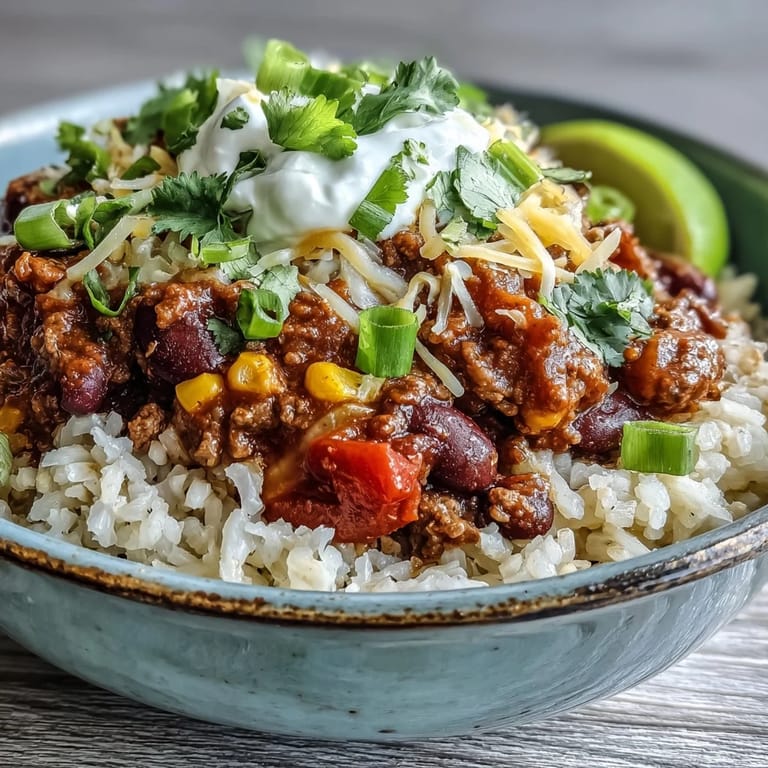
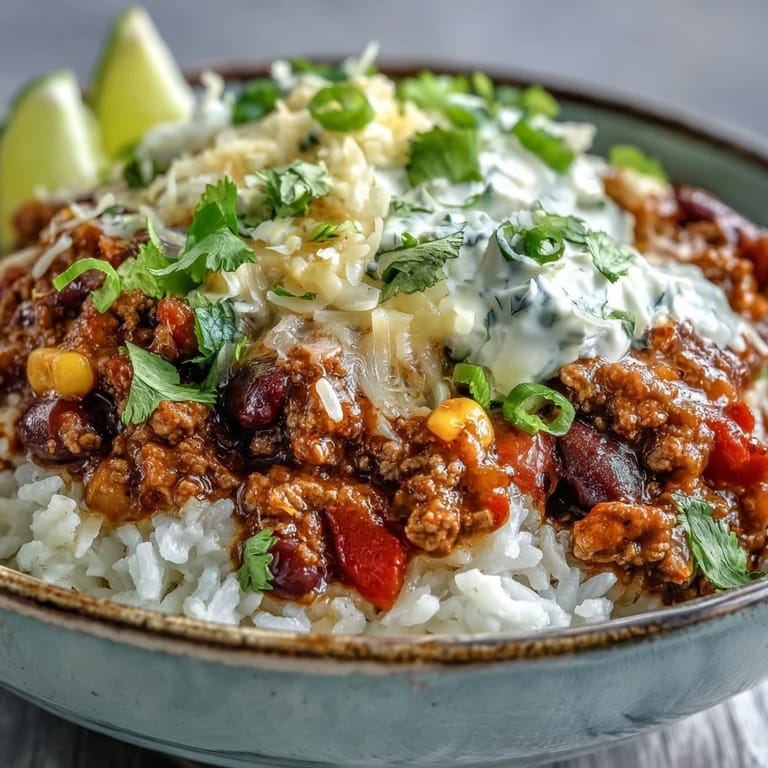
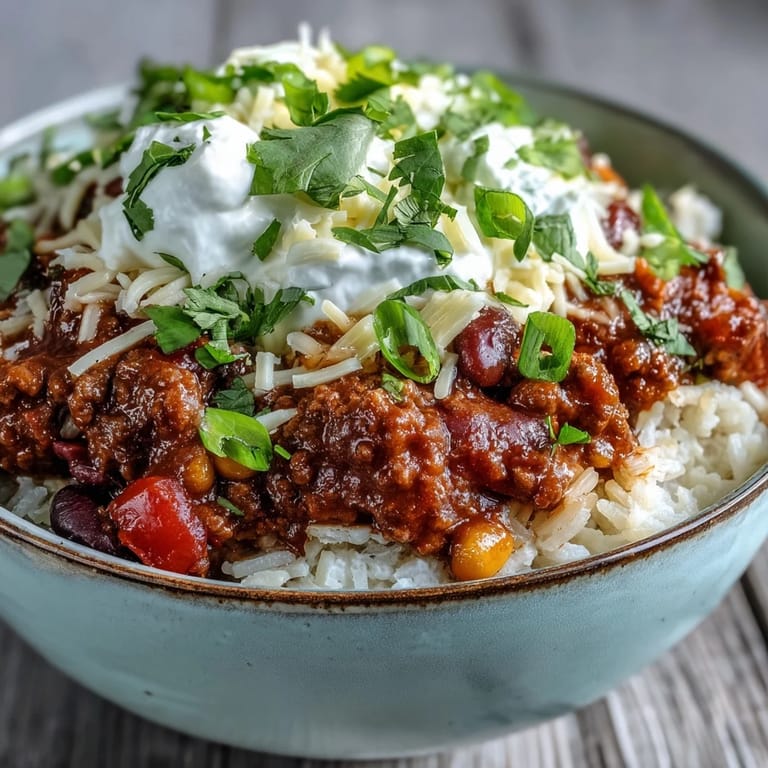
- Spoon grains into bowls, ladle chili over the top, and let everyone add their own toppings. This is the moment where the meal becomes individual—someone piles on cheese, another person reaches for cilantro and lime, and suddenly everyone's bowl tells a different story.
 Save
Save There was a Sunday morning when I made a pot of this chili and realized I'd accidentally doubled the cayenne, but instead of throwing it out, I just served it as-is and mentioned the mistake to whoever was eating. Everyone loved it, and I stopped apologizing for things that turned out better by accident than they would have by design. That's when cooking stopped feeling like following rules and started feeling like an actual conversation with the food.
The Art of Layering Spices
The magic of this chili lives in how the spices work together rather than compete. Chili powder provides the main flavor, cumin adds earthiness, smoked paprika brings a subtle char, and oregano ties it all into something that tastes intentional. I learned this the hard way by making a chili that was just chili powder and nothing else—it was one-dimensional and flat. Now I understand that spices are musicians in an orchestra, and you need all of them playing together to create something worth listening to. Start with the amounts suggested, but taste as you go during those last few minutes of simmering and adjust according to what your palate is telling you.
Why Your Toppings Matter More Than You Think
The toppings aren't afterthoughts; they're where people get to make this chili their own. Cheese adds richness, cilantro and lime brighten everything, sour cream or Greek yogurt cools down the heat and adds creaminess, avocado brings a buttery texture that changes the entire mouthfeel. I've watched people spend more time deciding what to put on their chili than eating it, and that's because toppings transform a dish from something you eat to something you experience. Set them out on the table and let people build their own bowl—it takes the pressure off you and makes everyone feel invested in what they're eating.
Variations and Flexibility
This chili thrives on flexibility in ways that make it feel like the recipe was designed for whatever you have on hand. Change the grain base to barley, farro, or even bulgur for different textures and flavors, or skip the grains entirely and serve it with cornbread for a completely different meal. Use turkey instead of beef if that's what's in your freezer, or double down on beans and skip the meat entirely for something equally satisfying. The spice level is completely yours to control—some people like barely a whisper of heat, others want cayenne to be the star of the show. One last thing worth trying is making a double batch and freezing half; this chili actually tastes better after a day or two in the fridge as the flavors continue to meld together and deepen.
- Vegetarian and vegan versions work beautifully when you use plant-based ground meat or simply add extra beans and keep everything else the same.
- Make it in a slow cooker by sautéing your vegetables and browning your meat first, then transferring everything to cook on low for 4 to 6 hours instead of simmering on the stovetop.
- Double the recipe and freeze half for those mornings when you want a warming, substantial lunch but don't have time to cook.
 Save
Save Make this chili and you'll understand why it shows up at gatherings, stays in people's regular rotation, and somehow tastes different depending on who's cooking it and who's eating it. There's comfort in a bowl of chili, and there's joy in sharing it.
Recipe FAQs
- → What grains work best as a base?
White rice, brown rice, and quinoa are popular choices. Farro, bulgur, and barley also provide excellent texture and nutty flavor that complements the hearty chili.
- → Can I make this vegetarian?
Absolutely. Replace the ground beef with plant-based crumbles or simply add an extra can of beans. The spices and vegetables provide plenty of flavor on their own.
- → How can I adjust the spice level?
Start with the listed amounts of chili powder and cayenne, then taste near the end of cooking. Add more cayenne for heat or additional chili powder for depth without too much spice.
- → How long does leftovers keep?
The chili portion stores well in the refrigerator for 4–5 days and freezes beautifully for up to 3 months. Cook fresh rice or grains when reheating for best texture.
- → What toppings work best?
Shredded sharp cheddar, cool sour cream, creamy avocado, fresh cilantro, green onions, jalapeño slices, and lime wedges all add complementary flavors and textures.
- → Can I cook this in a slow cooker?
Yes. Brown the meat and sauté the vegetables first, then transfer everything to a slow cooker. Cook on low for 6–8 hours or on high for 3–4 hours.