 Save
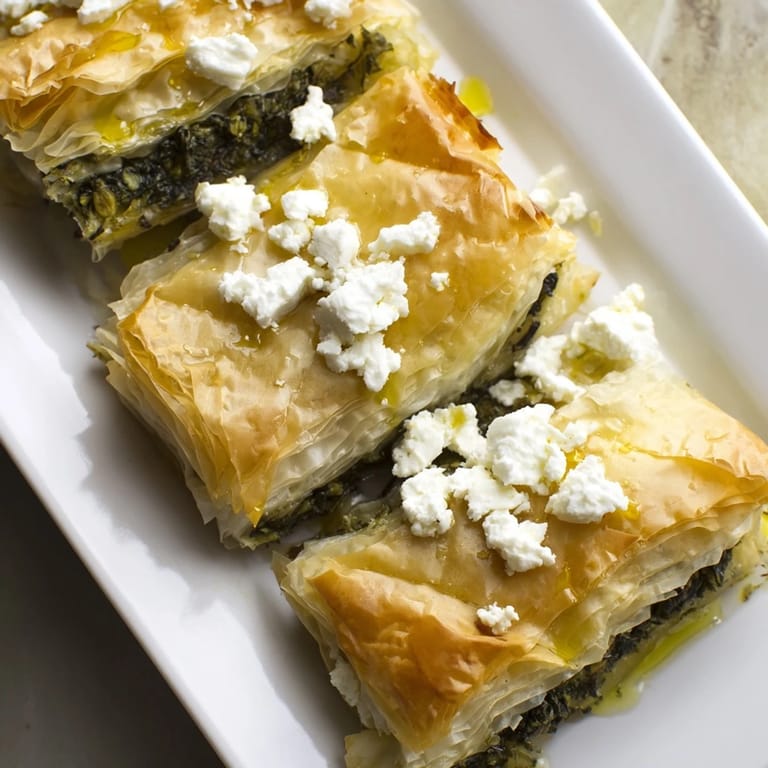
Save The first time I made spanakopita, I wasn't even trying to recreate my grandmother's version—I was just hungry on a Tuesday afternoon and had a bag of spinach that needed rescuing from the back of my fridge. I layered those phyllo sheets almost nervously, brushing each one with olive oil and wondering if I was doing it right, and when it came out of the oven, crackling and golden, I realized I'd stumbled onto something magical. Now, every time I make it, that nervous excitement comes back, mixed with the smell of dill and the satisfying sound of a fork breaking through those crispy layers.
I made this for my friend Marcus on a lazy Sunday, and he ate three pieces while barely looking up from his plate, which is how I knew I'd nailed it. He kept asking if there was some secret ingredient, and I loved telling him it was just spinach and feta and the patience to layer phyllo without tearing it—though I didn't mention the one sheet I absolutely did tear and covered up with butter anyway.
Ingredients
- Fresh spinach (2 lbs): Fresh is better if you have time—it has more flavor and texture than frozen, though frozen works perfectly fine if you squeeze it very, very dry.
- Yellow onion (1 medium) and scallions (2): These are your flavor foundation; don't skip them or rush them while sautéing.
- Fresh dill (3 tbsp) and parsley (1/4 cup): These aren't just garnish—they're what make this taste authentically Greek, so fresh is worth the effort.
- Feta cheese (8 oz): Look for good quality feta; the cheap stuff turns grainy when baked, and you'll taste the difference.
- Ricotta or cottage cheese (1/2 cup, optional): This adds creaminess and helps balance the sharpness of the feta.
- Eggs (2 large): These bind everything together and help the filling set into something sliceable.
- Phyllo dough (1 lb): Thaw it completely—cold phyllo tears and shatters, which is frustrating and wasteful.
- Olive oil or butter (1/2 cup): This is what turns phyllo into something crispy and golden; don't be shy with it.
Tired of Takeout? 🥡
Get 10 meals you can make faster than delivery arrives. Seriously.
One email. No spam. Unsubscribe anytime.
Instructions
- Get your oven and dish ready:
- Preheat your oven to 350°F and lightly grease a 9x13-inch baking dish—this is your canvas for layers.
- Cook the onions and scallions:
- Heat 2 tablespoons of olive oil in a large skillet over medium heat and sauté the onion and scallions until they're soft and fragrant, about 5 minutes. You'll know it's right when your kitchen smells like a Mediterranean afternoon.
- Wilt the spinach:
- Add your chopped spinach in batches if it's fresh (it looks like a mountain at first), stirring until it releases its liquid and reduces down to something manageable. This takes about 10 minutes, and patience here prevents a watery filling later.
- Cool and squeeze:
- Once the spinach is cooked, spread it on a cutting board or clean kitchen towel and squeeze out as much moisture as you can—this is the step that separates soggy from perfect.
- Mix the filling:
- In a large bowl, combine your cooled spinach with the dill, parsley, crumbled feta, ricotta if using, beaten eggs, black pepper, nutmeg, and salt to taste. Taste it and adjust seasoning—this is your only chance to fix the flavor before it bakes.
- Layer the phyllo base:
- Lay one sheet of phyllo in your baking dish, letting the edges hang over the sides, and brush it lightly with olive oil or melted butter. Repeat with 6-7 more sheets, brushing each one—the oil is what makes phyllo crispy, so don't skip this step.
- Spread the filling:
- Pour your spinach-feta mixture evenly over the phyllo base, smoothing it to the edges.
- Top with phyllo:
- Layer the remaining phyllo sheets on top, brushing each with oil or butter just like you did with the base. Tuck the overhanging edges down into the sides of the dish so everything stays contained.
- Score and bake:
- Using a sharp knife, score the top layers into squares or diamonds—don't cut all the way through, just score enough to mark where you'll slice later. Bake for 35-40 minutes until the top is golden and crisp, watching the last few minutes if your oven runs hot.
- Cool and serve:
- Let it cool for 10 minutes before serving—this gives the filling time to set so your pieces hold together instead of falling apart.
 Save
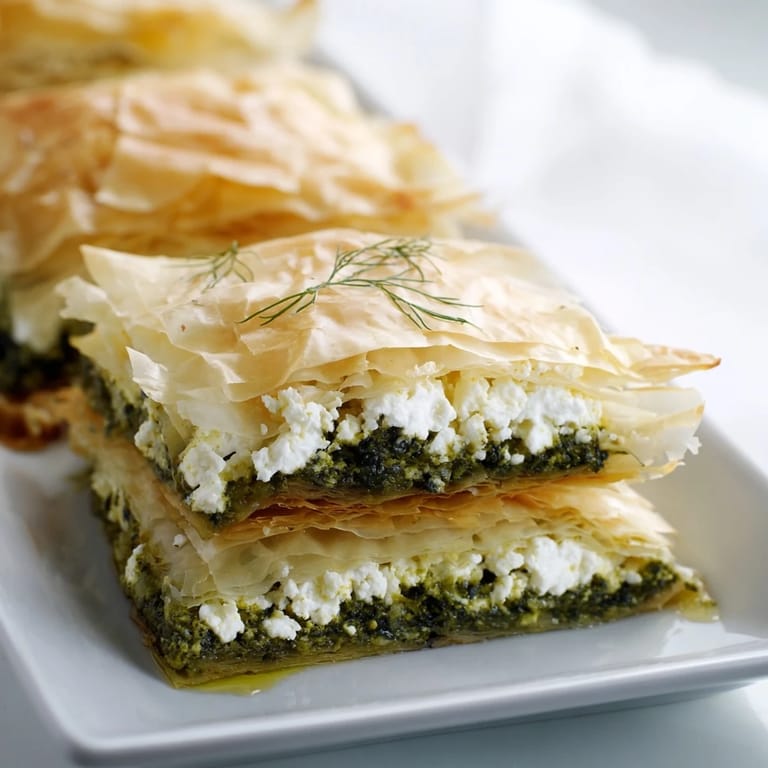
Save There's a moment when spanakopita comes out of the oven and the kitchen fills with the smell of crispy butter and herbs, and that's when you know you've made something worth making. I think of it as a bridge between simplicity and elegance—just honest ingredients layered with care, turned into something that feels celebration-worthy.
Phyllo Mastery (It's Easier Than You Think)
Phyllo has a reputation for being temperamental, but honestly, it's more forgiving than people say—the worst that happens is you tear a sheet, and you just brush a little extra oil on it and move on. The real trick is working confidently and not overthinking each layer. I used to stress about making everything look perfect, and then I realized that once it's baked and crispy, nobody can tell the difference between my careful sheets and the ones I hurried through. Work steadily, brush generously, and let the oven do the magic.
Variations That Work
Once you understand the basic formula, spanakopita becomes a canvas for what you have on hand. I've made it with chard, with a mixture of greens from my garden, even with some chopped mushrooms added to the filling for earthiness. The herbs are where you can play too—mint is wonderful if you have it, and I've even added a pinch of lemon zest to brighten everything up. The phyllo and the baking temperature stay the same; everything else is flexible.
Serving and Pairing
Spanakopita is wonderfully versatile—it works as an appetizer at a dinner party, a side dish alongside grilled fish or lamb, or honestly, as a light lunch with a salad. A crisp white wine like Assyrtiko or Sauvignon Blanc is the perfect companion; the acidity cuts through the richness of the feta and butter in a way that feels right. I also love it at room temperature the next day, which makes it perfect for packed lunches or picnics.
- Serve it warm straight from the oven when the phyllo is crispiest and the filling is still steaming.
- Leftovers keep for three days covered in the fridge and can be gently reheated or eaten cold.
- Make it a day ahead if you like—the flavors actually meld and deepen overnight.
 Save
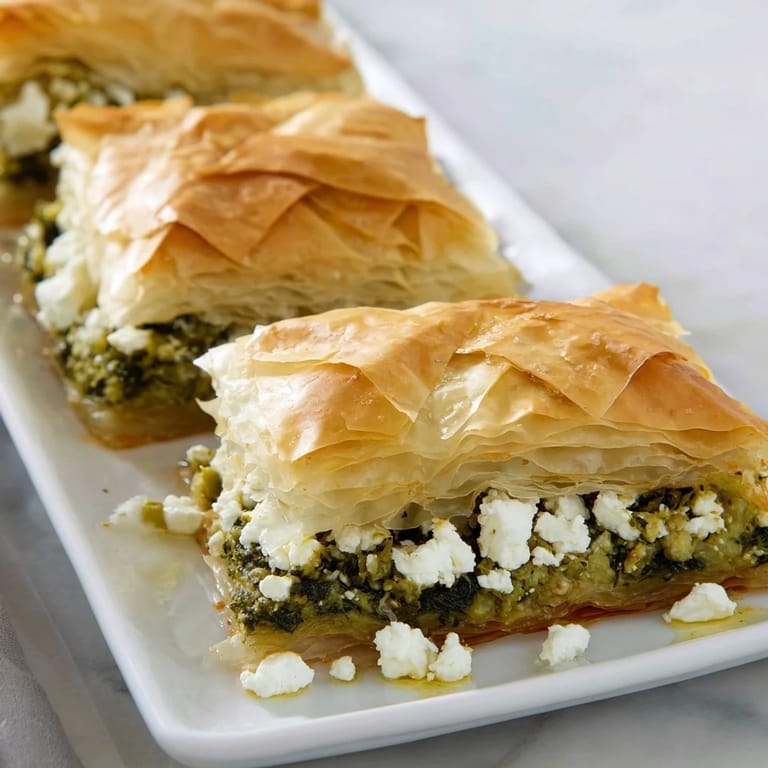
Save This is the kind of recipe that becomes a regular in your kitchen once you make it the first time, and I hope it brings you that same small victory I felt on that Tuesday afternoon. There's something beautiful about feeding people food that looks effortless but tastes intentional.
Recipe FAQs
- → Can I use frozen spinach instead of fresh?
Yes, frozen spinach works well if thoroughly thawed and drained to remove excess moisture, ensuring a moist but not soggy filling.
- → What type of cheese complements the filling?
Feta cheese provides a tangy, salty flavor, and adding ricotta or cottage cheese can create a creamier texture.
- → How do I prevent the phyllo from drying out?
Brush each layer generously with olive oil or melted butter to keep the phyllo moist and crisp after baking.
- → Can I substitute other greens for spinach?
Chard or a mix of mild leafy greens can be used as alternatives, maintaining a similar texture and flavor profile.
- → What is the best way to store leftovers?
Cover leftovers and refrigerate for up to 3 days. Reheat gently in an oven to preserve crispness.
- → How should the pie be served?
Allow it to cool slightly before cutting into squares. It can be enjoyed warm or at room temperature.