 Save
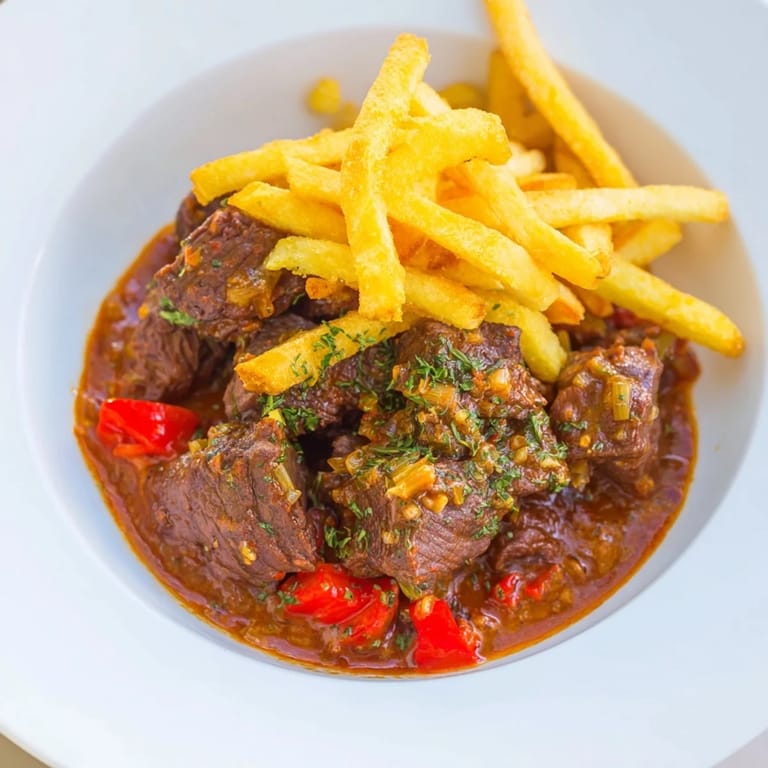
Save There's something about the smell of paprika hitting hot oil that instantly transports me to a small Prague kitchen where my neighbor insisted goulash wasn't just food—it was a meditation in a pot. She'd simmer it for hours while we talked about everything from the weather to life's small disappointments, and by the time those crispy potato strips hit the bowl, you weren't just eating anymore, you were experiencing something that tasted like patience and care.
I made this for friends on a cold Sunday when nobody wanted to leave the table, and halfway through their second bowls, I realized the goulash had done what it does best—brought people together without any fuss or pretense, just honest flavors and the kind of comfort that makes you feel seen.
Ingredients
- Beef chuck, 800 g in 2.5 cm cubes: Chuck has just enough marbling to stay tender during the long simmer, and the larger pieces keep their integrity rather than falling apart into stringy bits.
- Vegetable oil, 2 tbsp: High heat tolerance matters here since you're browning meat, so vegetable or canola works better than olive oil.
- Onions, 2 large finely chopped: They're your flavor foundation, dissolving into the sauce and creating that golden-brown base that everything else builds on.
- Garlic, 3 cloves minced: Add it right after the paprika so it softens without turning bitter—timing makes all the difference with garlic.
- Sweet Hungarian paprika, 2 tbsp: This is the soul of the dish, so find the real stuff from Hungary if you can; it tastes like history and smoke in the best way.
- Caraway seeds, 1 tsp: These little seeds carry a subtle earthiness that's distinctly Czech, barely noticeable but deeply missed if you leave them out.
- Marjoram, 1 tsp: A cousin to oregano but softer and more delicate, it adds complexity without shouting over the paprika.
- Salt and black pepper: Start conservative since the beef broth will add its own saltiness, and you can always adjust at the end.
- Tomato paste, 2 tbsp: This deepens the sauce's color and richness, anchoring the spices with a subtle tanginess.
- Beef broth, 750 ml: Quality matters—a good broth makes the difference between okay goulash and the kind you remember.
- Bell pepper, 1 diced: It adds sweetness and texture, softening into the sauce while keeping a slight presence.
- All-purpose flour, 1 tbsp: This thickens the sauce gently without making it pasty, and gluten-free flour works just as well.
- Bay leaf, 1: Adds a subtle herbal note that rounds out the flavors; remember to fish it out before serving.
- Potatoes, 4 large peeled: Starchy potatoes work better for frying than waxy ones—they crisp up instead of staying soft inside.
- Vegetable oil for frying, 500 ml: You need enough depth for proper frying temperature, and it has to stay around 180°C to avoid greasy results.
Tired of Takeout? 🥡
Get 10 meals you can make faster than delivery arrives. Seriously.
One email. No spam. Unsubscribe anytime.
Instructions
- Warm your pot and build the flavor base:
- Heat the oil over medium heat and watch the onions turn from translucent to that burnished golden color—this takes about 8 minutes and it's worth waiting for since it's where the sweetness comes from. Listen for the gentle sizzle and resist the urge to rush it with higher heat.
- Bloom the spices before they can burn:
- Stir in the garlic, caraway seeds, and paprika, keeping the heat at medium and stirring constantly for just one minute. You want the spices to wake up and release their oils, not char into bitterness.
- Brown the meat properly for depth:
- Add the beef cubes and let them sit untouched for a minute or two before stirring, giving them a chance to develop those deep brown edges. This creates the foundation for a rich sauce, not just a watery stew.
- Bring everything together with aromatics:
- Stir in the tomato paste, marjoram, salt, pepper, and bay leaf, coating everything in that brick-colored paste that smells like serious cooking. The paste should caramelize slightly against the pot, deepening the color another shade.
- Dust and seal in the flavors:
- Sprinkle the flour over the meat and stir well, letting it coat everything evenly—this helps thicken the sauce later while also protecting the meat from drying out. It looks rough at first, but trust it.
- Build the sauce with peppers and broth:
- Add the diced bell pepper and pour in the beef broth, then bring everything to a boil before immediately reducing the heat to low. Cover the pot and let it simmer for 1.5 to 2 hours, stirring occasionally, until the beef is so tender a spoon cuts through it easily.
- Prepare the potatoes while the goulash cooks:
- Cut your peeled potatoes into thin matchstick shapes—a mandoline makes this fast and consistent, but a sharp knife works if you have patience and decent knife skills. The thinner they are, the crispier they'll get.
- Rinse and dry your potato strips thoroughly:
- Cold water removes excess starch that would make them stick together, and patting them dry with a clean towel ensures maximum crispiness when they hit the oil. Moisture is the enemy of crispy fries.
- Fry the potatoes to golden perfection:
- Heat the oil to 180°C and work in batches so the temperature stays consistent—crowding the pan drops the heat and gives you limp fries instead of crispy ones. They should turn golden in 3 to 4 minutes and sound crackling when you pull them out.
- Finish and adjust the goulash:
- Remove the bay leaf and taste the sauce, adding more salt and pepper if it needs it—the longer simmer will have mellowed some of the seasoning. Sometimes a small pinch of caraway at this point wakes everything up.
- Plate it like you mean it:
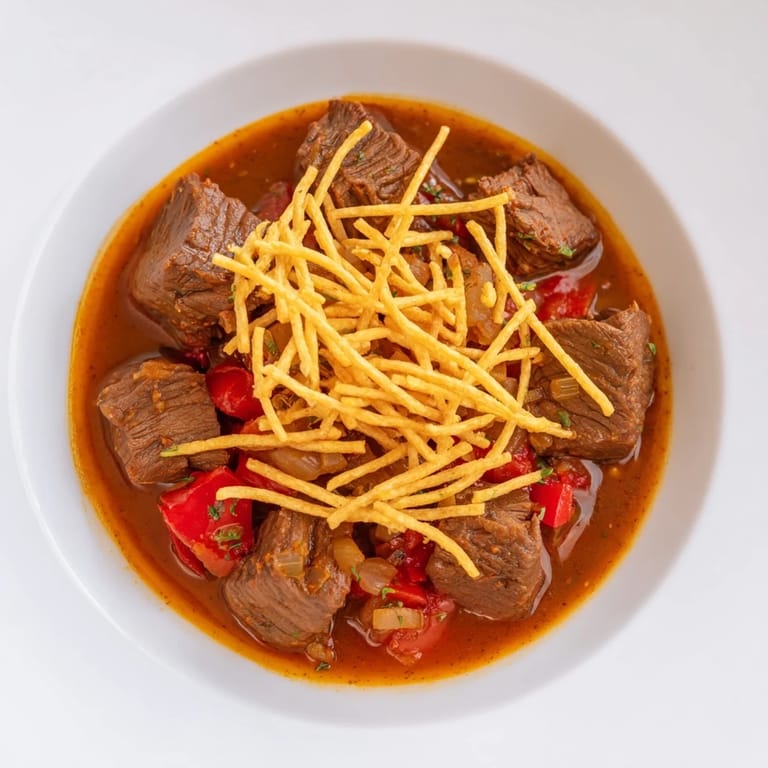
- Serve the hot goulash in bowls with the crispy potato strips piled on top, letting them soften slightly from the steam while still maintaining their crunch. This contrast is the whole point.
 Save
Save The first time someone told me that goulash was essentially a peasant's answer to tough cuts of meat and humble ingredients, I understood why it's been feeding people for centuries. There's no pretense here, just technique transforming simple things into something unforgettable.
The Story Behind the Strips
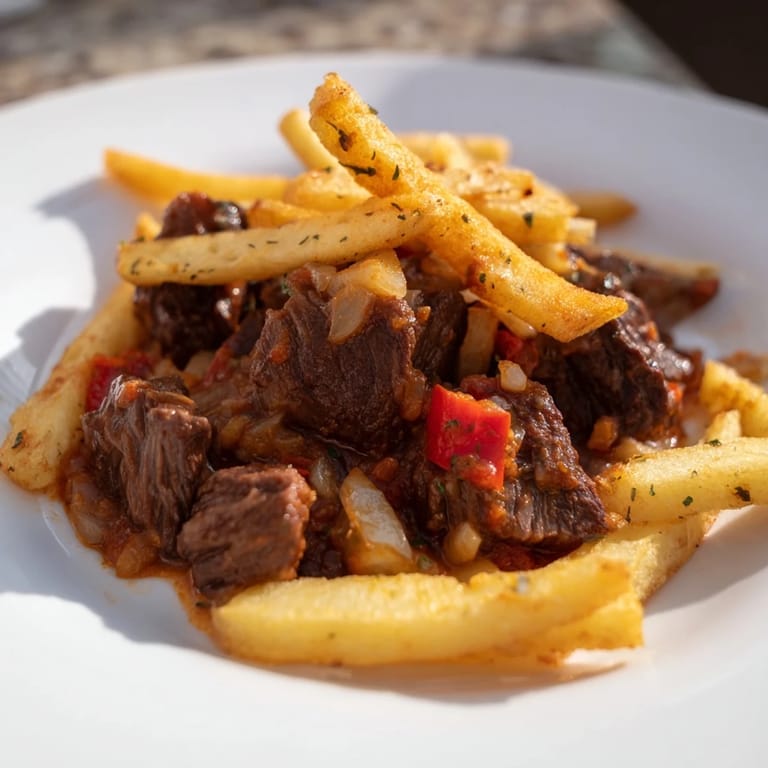
Czech goulash with crispy potato strips is a conversation between two textures—the soft, spoon-tender beef suspended in sauce, and those shattering golden strips that give you something to bite down on. The potatoes are never an afterthought; they're the answer to the question the goulash asks. I learned this sitting in a restaurant in Prague where an older woman next to me rearranged her plate so the strips stayed on top as long as possible, and I realized she was protecting them like they mattered as much as the goulash itself.
Getting the Paprika Right
Hungarian paprika is the non-negotiable ingredient here, and there's a real difference between the sweet version and the hot version. I made this once with regular grocery store paprika and the dish tasted flat and one-dimensional, like something was missing even though I'd followed the recipe exactly. When I switched to actual Hungarian paprika from a specialty shop, the same ingredients suddenly sang—deeper, smokier, more alive. It's worth hunting down, and if you find a good source, buy extra.
Why This Works as Comfort Food
There's science behind why this dish feels so deeply satisfying—the long cooking breaks down collagen in the beef into gelatin, which creates a silky mouthfeel that makes you want another spoonful. The paprika activates something in your brain that associates it with warmth and safety, and the caraway adds a subtle, almost subconscious earthiness that says home.
- Make extra sauce because you'll find yourself spooning it over other things long after the goulash is gone.
- Serve with a dollop of sour cream on the side—it cools the spice and adds richness that transforms each bite.
- A cold Czech Pilsner or light red wine is the only proper accompaniment, letting you reset between spoonfuls and appreciate how the flavors evolve.
 Save
Save This is the kind of dish that teaches you something every time you make it, whether it's about timing or taste or how food brings people together. Make it often enough and it stops being a recipe and becomes something you know in your hands.
Recipe FAQs
- → How do I achieve tender beef in this dish?
Simmer the beef on low heat for 1.5–2 hours until it becomes very tender, allowing the flavors to meld and the meat to soften perfectly.
- → What spices give the sauce its distinct flavor?
Sweet Hungarian paprika, caraway seeds, and marjoram combine to create the rich, aromatic profile characteristic of this dish.
- → How are the crispy potato strips prepared?
Thinly cut potatoes are rinsed, thoroughly dried, then deep-fried at 180°C until golden and crispy, then seasoned with salt.
- → Can I make this gluten-free?
Yes, by using gluten-free flour as a thickener, the dish remains gluten-free without altering the texture significantly.
- → What are good serving suggestions?
Serve with a dollop of sour cream and chopped fresh parsley for added richness and freshness. It pairs well with a Czech Pilsner or a light red wine.
- → Is there a way to add more heat to the sauce?
For extra spice, add a dash of hot paprika or chili flakes during cooking to enhance the heat.