 Save
Save The first pot of chicken noodle soup I made was during a snowstorm that knocked out our power. With only the gas stove working, I gathered ingredients by candlelight, chopping vegetables while wrapped in two sweaters. The kitchen windows frosted over while the soup pot steamed them from within, creating this magical warmth bubble in our otherwise freezing home. Something about that forced simplicity made the soup taste better than any restaurant version I'd had.
Last winter, my neighbor broke her ankle slipping on ice, and I brought over a container of this soup. Her teenage son, notorious for surviving on nothing but pizza and energy drinks, asked for the recipe after finishing two bowls. The following week, I spotted grocery bags on their porch with carrots and celery poking out - apparently he was determined to learn how to make it himself.
Ingredients
- Boneless chicken breasts: I cube mine while still slightly frozen which makes the cutting cleaner and more precise.
- Mirepoix (onion, carrot, celery): This trio creates the foundation of flavor, so try to chop them relatively uniform in size for even cooking.
- Low-sodium chicken broth: Using low-sodium gives you control over the final seasoning, a lesson I learned after making an inedibly salty batch once.
- Egg noodles: These cook quickly and have a tender bite that stands up well to reheating without turning mushy.
- Bay leaf: It might seem like a small addition, but it adds a subtle depth that you definitely notice when its missing.
Tired of Takeout? 🥡
Get 10 meals you can make faster than delivery arrives. Seriously.
One email. No spam. Unsubscribe anytime.
Instructions
- Build the flavor base:
- Heat olive oil in a large pot over medium heat, then add your diced onion, carrots, and celery. Listen for that gentle sizzle as the vegetables start to soften and release their aromas.
- Add the aromatics:
- Once vegetables have softened after about 5 minutes, stir in the minced garlic. Youll smell the change immediately as it becomes fragrant.
- Incorporate the protein:
- Add your diced chicken and stir until the outside loses its pink color. The chicken will finish cooking in the broth, so no need to cook it completely now.
- Create the broth:
- Pour in the chicken broth and add bay leaf, thyme, parsley, salt and pepper. As it comes to a gentle boil, those little bubbles around the edge will carry the aroma throughout your kitchen.
- Develop depth:
- Reduce heat and let everything simmer for 10 minutes. This is where the magic happens as all the flavors meld together.
- Add the noodles:
- Drop in your egg noodles and continue simmering until theyre tender and the chicken is cooked through. The broth will slightly thicken from the starch in the noodles.
- Final touches:
- Fish out that bay leaf, then taste and adjust your seasoning. Sometimes a little extra black pepper makes all the difference.
- Serve with care:
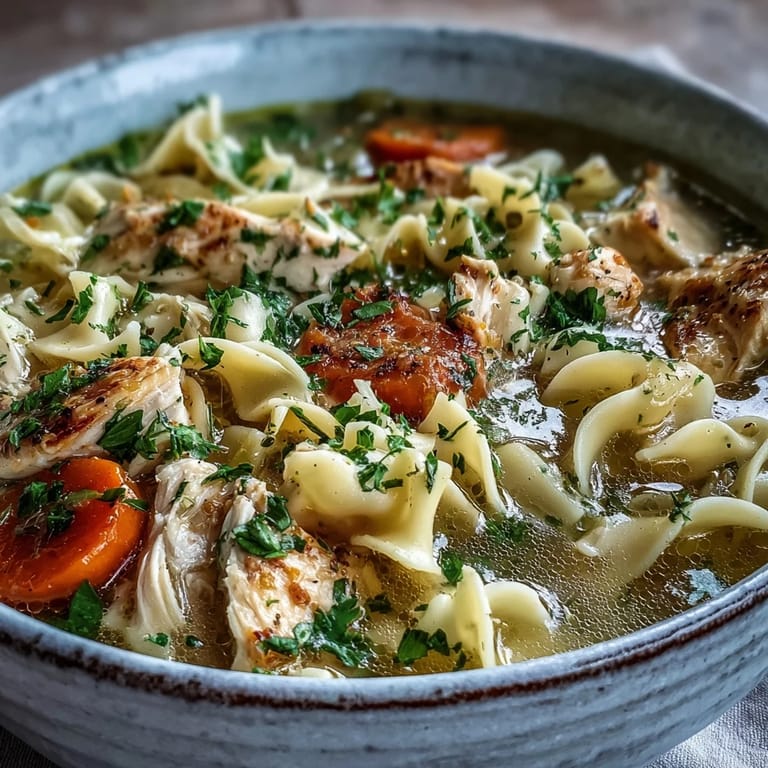
- Ladle into bowls with a bit of fresh parsley on top. The steam rising from the bowl is nearly as comforting as the soup itself.
 Save
Save My daughter had her wisdom teeth removed last year, and this soup became her lifeline for nearly a week. I remember her shuffling to the kitchen in her pajamas, ice pack held to her swollen cheek, silently pointing at the soup pot with pleading eyes. She later told me the warm broth was the only thing that truly soothed her pain, even more than the prescription medication.
Storage and Leftovers
This soup actually improves overnight as the flavors continue to develop in the refrigerator. I sometimes deliberately make a double batch knowing that day two and three will be even better than the first serving. Just store in airtight containers and refrigerate for up to 4 days, or freeze individual portions for up to 3 months for emergency comfort food.
Flavor Variations
During a particularly nasty cold season, I started adding a thumb-sized piece of ginger and a squeeze of lemon to brighten the flavors and add extra immune-supporting properties. Another time, when my herb garden was overgrowing, I tossed in fresh dill and parsley instead of dried, which transformed the soup into something almost spring-like despite it being the middle of winter.
Serving Suggestions
While this soup is certainly a complete meal on its own, Ive discovered a few pairings that elevate the experience without adding much effort. A slice of warm crusty bread with salted butter creates the perfect tool for sopping up those last spoonfuls of broth that elude your spoon.
- For a protein boost, sprinkle a few toasted pine nuts or pumpkin seeds on top just before serving.
- A small side salad with a light vinaigrette balances the warmth of the soup, especially during transitional seasons.
- Keep it simple with saltine crackers crushed on top for a nostalgic touch that adds subtle texture.
 Save
Save This soup has seen us through power outages, illnesses, heartbreaks, and celebrations. Its become less of a recipe and more like a member of the family, always reliable and never disappointing.
Recipe FAQs
- → Can I use rotisserie chicken instead?
Yes, shred about 2 cups of rotisserie chicken and add it during the last 5 minutes of simmering to heat through.
- → How long does this keep in the refrigerator?
Store in an airtight container for up to 4 days. The noodles will continue absorbing liquid, so you may need to add more broth when reheating.
- → Can I freeze this soup?
Freeze without noodles for up to 3 months. Add freshly cooked noodles when reheating to prevent them from becoming mushy.
- → What vegetables work best?
The classic trio of onions, carrots, and celery creates the traditional flavor base. You can also add peas, green beans, or spinach for extra nutrition.
- → How do I make it more flavorful?
Use bone-in chicken and simmer longer for a richer broth. A splash of lemon juice or a Parmesan rind during cooking adds depth.