 Save
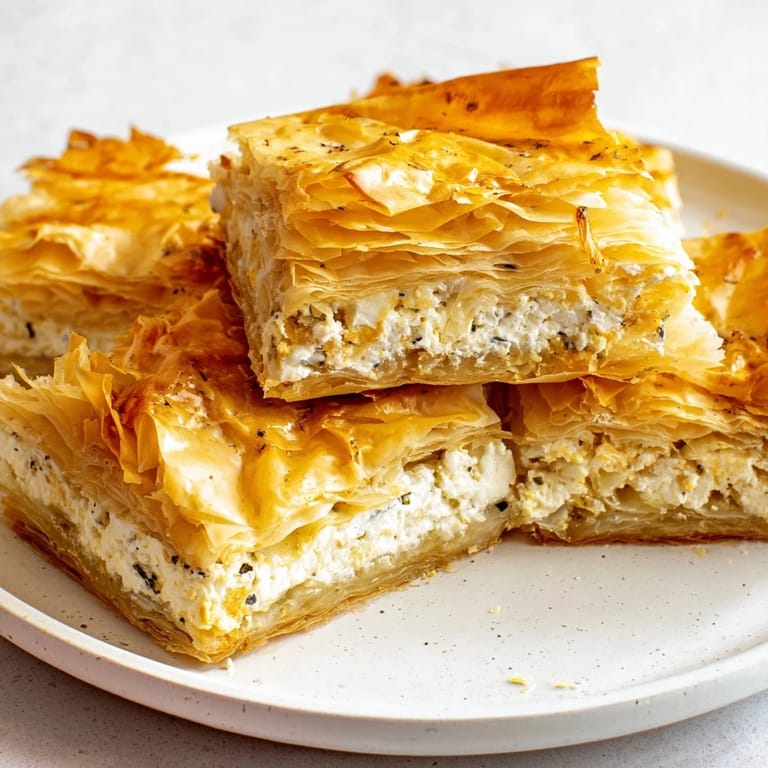
Save My neighbor Eleni used to bake banitsa every Sunday morning, and the smell would drift through the courtyard like a warm invitation. I finally knocked on her door one weekend with an empty plate and a hopeful smile. She laughed, pulled me into her kitchen, and taught me how to coax phyllo dough into buttery, golden layers without tearing half the sheets. Now I make it when I need the house to feel like home, or when I want breakfast to feel like a small celebration.
I brought a pan of banitsa to a friend's brunch once, still warm and wrapped in a towel. Someone asked if it was a quiche, and I said no, but I didn't really know how to explain it until everyone had tried a piece and gone quiet for a few seconds. After that, I didn't need to explain anything.
Ingredients
- Feta cheese: The salty, tangy backbone of the filling. I crumble it with my hands so some pieces stay chunky and create little pockets of flavor.
- Plain yogurt: Adds creaminess and a subtle tang that balances the richness of the butter and eggs.
- Eggs: They bind everything together and give the filling that soft, custard-like texture once baked.
- Phyllo dough: Thaw it in the fridge overnight, never at room temperature, or the sheets will stick together and tear when you try to separate them.
- Unsalted butter: Melted and brushed between every layer, it's what makes the pastry shatter when you cut into it.
- Whole milk: Just a splash to loosen the filling so it spreads easily without clumping.
- Salt and black pepper: I go light on the salt since feta is already salty, but the pepper adds a quiet warmth that sits in the background.
Tired of Takeout? 🥡
Get 10 meals you can make faster than delivery arrives. Seriously.
One email. No spam. Unsubscribe anytime.
Instructions
- Prep the oven and dish:
- Set your oven to 180°C and grease your baking dish with a thin layer of melted butter. Use a pastry brush or your fingers to make sure every corner is coated so nothing sticks later.
- Mix the filling:
- Whisk the eggs, yogurt, milk, salt, and pepper in a large bowl until smooth and slightly frothy, then fold in the crumbled feta gently so it stays in soft chunks. If you overmix, the filling turns runny and loses texture.
- Prep the phyllo:
- Unroll the phyllo sheets and immediately cover them with a damp kitchen towel. They dry out in minutes, and once they crack, there's no saving them.
- Layer the base:
- Lay one sheet of phyllo in the dish, letting the edges hang over the sides, then brush it lightly with melted butter. Repeat with 3 more sheets, brushing each one so they don't stick together or tear when baked.
- Add the first layer of filling:
- Spoon about a quarter of the cheese mixture over the phyllo and spread it gently with the back of a spoon. Don't press down hard or the layers underneath will compress and lose their flakiness.
- Repeat the layers:
- Add 3 to 4 more phyllo sheets, buttering each one, then spread another portion of filling. Keep going until all the filling is gone, then finish with a final stack of buttered phyllo on top.
- Score the top:
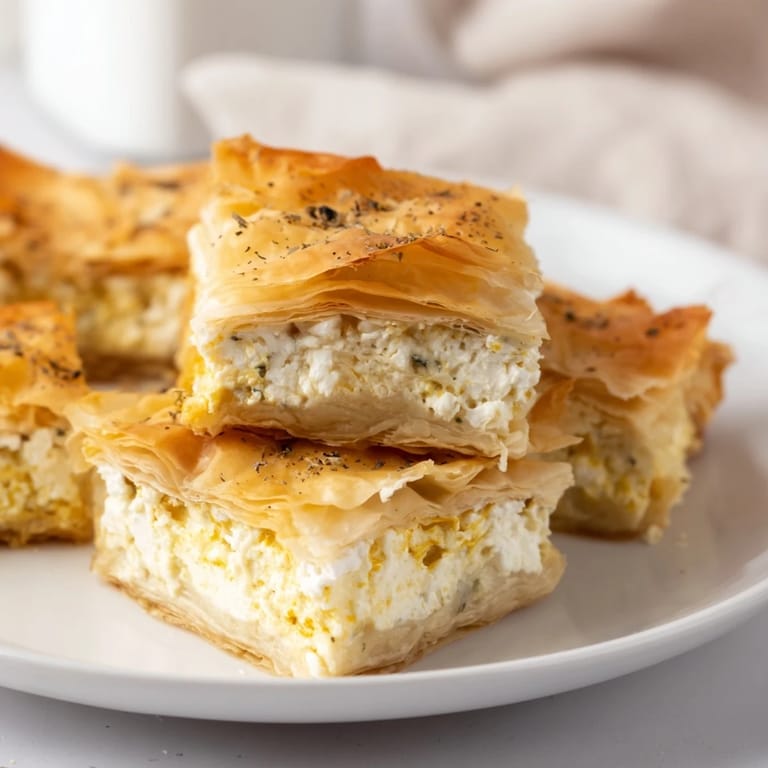
- Use a sharp knife to cut the banitsa into squares or diamonds before baking. This makes it easier to serve later and helps the butter seep into the cuts for extra crispness.
- Finish with butter:
- Drizzle any remaining melted butter over the top, letting it pool in the scored lines. It might seem like a lot, but this is what makes the top layer shatter like glass.
- Bake until golden:
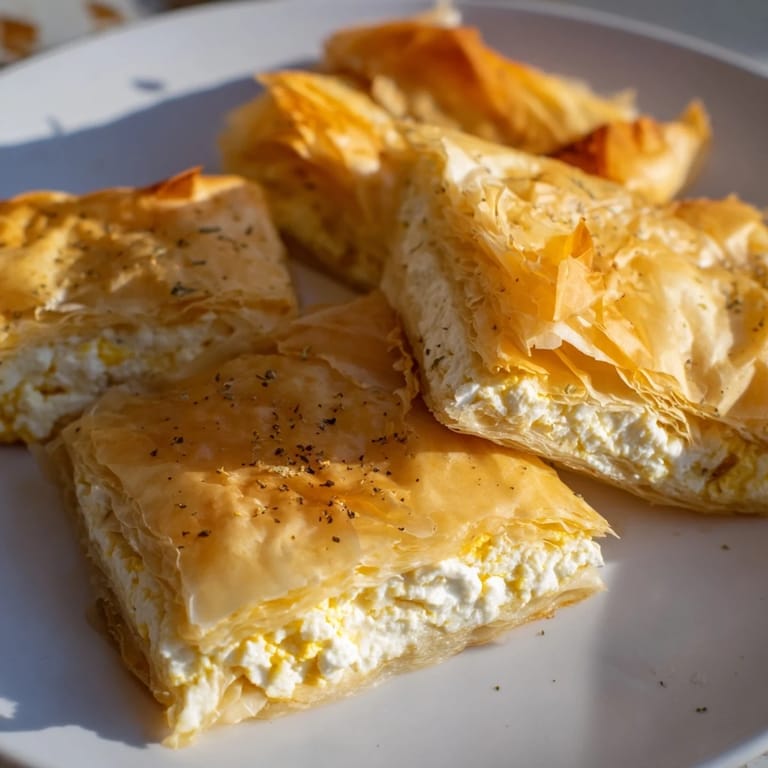
- Slide the dish into the oven and bake for 30 to 35 minutes, until the top is deep golden and the edges are starting to pull away from the sides. Your kitchen will smell like a Bulgarian bakery.
- Cool and serve:
- Let the banitsa rest for 10 minutes before cutting into it. The filling will set just enough to hold its shape, and the phyllo will stay crisp instead of turning soggy.
 Save
Save I made banitsa the morning my sister came home from a long trip, and we ate it straight from the pan with our hands, standing at the counter. She said it tasted like something our grandmother might have made, even though neither of us had ever met her. Some foods just carry memory in their bones.
How to Store and Reheat
Banitsa keeps well in the fridge for up to three days, covered tightly with foil or plastic wrap. I reheat individual pieces in a hot oven or toaster oven for a few minutes to bring back the crispness, because microwaving turns the phyllo soft and sad. If you want to freeze it, assemble the whole thing but don't bake it. Wrap it well, freeze it flat, and bake it straight from frozen, adding an extra 10 minutes to the baking time.
Flavor Variations to Try
Sometimes I stir in a handful of chopped fresh dill or parsley for a bright, herbal note that cuts through the richness. A few spoonfuls of sautéed spinach or leeks mixed into the filling turns it into something heartier and almost meal-like. If you want a milder flavor, swap half the feta for ricotta or Bulgarian sirene cheese, which is creamier and less sharp. I've also added crumbled cooked sausage once, and it disappeared faster than any other version I've made.
What to Serve Alongside
Banitsa doesn't need much company, but I like pairing it with a cold glass of ayran, that salty yogurt drink that tastes like summer in the Balkans. A simple tomato and cucumber salad with a squeeze of lemon works too, especially if you're serving it for brunch. Sometimes I just set out a bowl of olives and call it done.
- A dollop of thick yogurt on the side adds extra tang and creaminess.
- Fresh fruit like melon or grapes makes a nice contrast to the savory richness.
- If you're serving it for breakfast, strong coffee or black tea is all you need.
 Save
Save Every time I pull banitsa from the oven, I think about Eleni and her Sunday mornings, and how generosity sometimes looks like phyllo dough and melted butter. Make this once, and it'll become the thing you're known for.
Recipe FAQs
- → What type of cheese is traditionally used?
Feta cheese is the classic choice, providing a salty and tangy flavor that complements the flaky pastry.
- → Can I add herbs to the filling?
Yes, fresh dill or parsley can be mixed into the filling to enhance aroma and freshness.
- → How should the phyllo dough be handled?
Phyllo sheets should be kept covered with a damp towel to prevent drying and become fragile during assembly.
- → What is the baking temperature and time?
Bake at 180°C (350°F) for about 30–35 minutes until the pastry is golden and crisp on top.
- → How is the banitsa portioned before baking?
Cut the layered pastry into squares or diamond shapes to create even serving pieces before baking.
- → What sides pair well with this pastry?
Enjoy with a cold ayran yogurt drink or a light tomato and cucumber salad for a balanced meal.