 Save
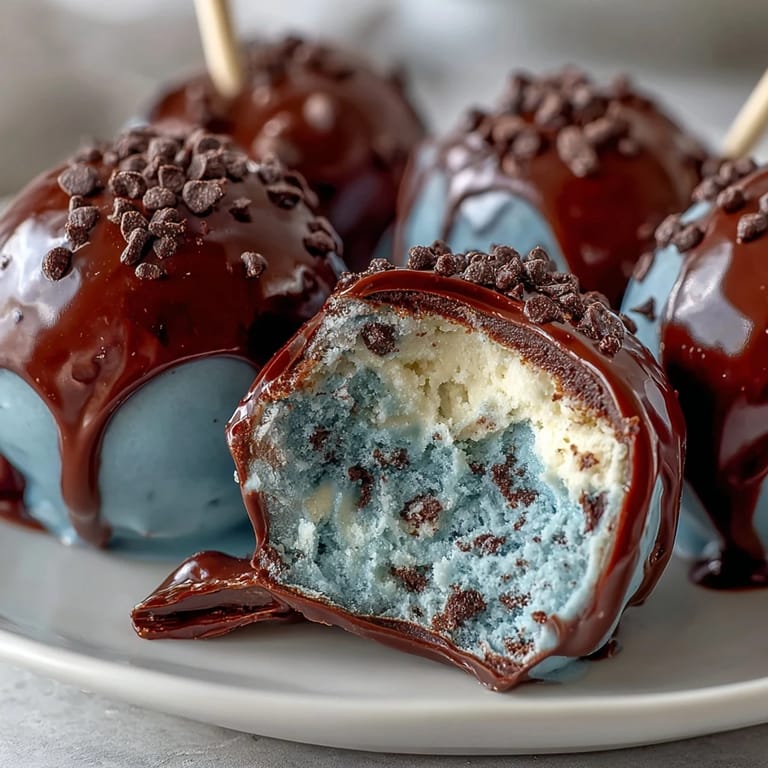
Save My sister pulled me into her kitchen last April with a wild idea: make something that looked like actual robins eggs for her Easter brunch. I'd never touched a cake pop before, but watching her vision come together—those delicate blue spheres catching the spring sunlight—I understood why people get obsessed with these little things. They're not just dessert; they're edible art that somehow tastes even better than they look.
I remember standing in front of the Styrofoam block watching my nephew's eyes go wide when he saw the cake pops arranged there like edible Easter eggs. He picked one up so carefully, like he was holding something precious, and that moment made me realize these aren't just treats—they're little celebrations you can hold in your hand.
Ingredients
- Vanilla cake mix: Use a quality box mix or bake from scratch if you have time; either way, let it cool completely so it crumbles evenly without clumping.
- Softened butter: Leave it on the counter for a proper creaming, which makes the frosting fluffy enough to bind the cake without making it gummy.
- Powdered sugar: Sift it if you have lumps, since they won't dissolve smoothly and can create a grainy texture.
- Milk and vanilla extract: These add moisture and depth to balance the sweetness of the coating later.
- White candy melts or white chocolate: Candy melts are more forgiving for beginners, but real white chocolate tastes richer if you're comfortable tempering it.
- Oil-based blue gel food coloring: This is non-negotiable—water-based coloring will make the chocolate seize into a grainy mess, as I learned the hard way.
- Coconut oil or shortening: A little goes a long way to thin the coating without affecting the flavor or finish.
- Cocoa powder and vodka: The vodka evaporates quickly, leaving just the speckled cocoa for that authentic robins egg look.
- Lollipop sticks and Styrofoam block: These are your assembly line essentials and worth having on hand even if you think you won't need them.
Tired of Takeout? 🥡
Get 10 meals you can make faster than delivery arrives. Seriously.
One email. No spam. Unsubscribe anytime.
Instructions
- Bake and cool your cake base:
- Follow your cake mix directions and bake until a toothpick comes out clean. This cooling step is crucial—warm cake crumbles unevenly and makes gritty cake pops, so give it a full hour if you can.
- Make the frosting:
- Cream that butter until it's pale and fluffy, about two minutes, then gradually add powdered sugar so it stays smooth instead of clumping. This is the glue that holds everything together, so don't rush it.
- Combine cake and frosting:
- Crumble the cooled cake fine, almost like breadcrumbs, then add frosting bit by bit while mixing with your hands. You're aiming for a texture that barely holds together—too wet and your pops will be heavy, too dry and they'll crack.
- Roll and freeze:
- Roll each ball to about the size of a walnut, then freeze them on parchment paper for 15 minutes. This step prevents them from falling apart when you dip them in warm chocolate.
- Prepare the blue coating:
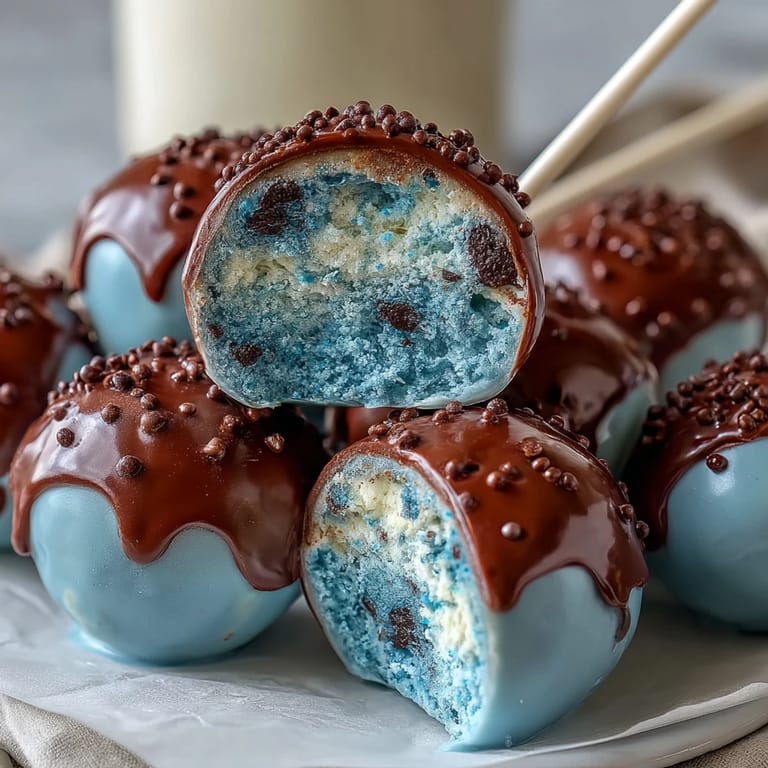
- Melt your candy melts slowly, either over a double boiler or in 20-second microwave bursts, stirring between each interval. Add your oil-based blue coloring drop by drop until you reach that perfect robins egg blue, then thin slightly with coconut oil if needed.
- Stick and set:
- Dip each stick into melted coating, push it halfway into a cake ball, then refrigerate for 10 minutes so it holds firm. This is the difference between a cake pop that stays on the stick and one that spins off in your hand.
- Dip into blue:
- Lower each pop gently into the warm coating, let it sit for a second, then twist slightly and lift straight up so excess drips away cleanly. Work quickly but calmly; rushed dipping creates thick, uneven coats.
- Create the speckled effect:
- Mix cocoa powder and vodka into a thin slurry, dip a pastry brush in it, and flick it gently toward each pop while they're still wet. The vodka acts as the vehicle, and it evaporates, leaving just the speckles behind.
- Final set:
- Stand your pops in the Styrofoam block and let them sit undisturbed for at least an hour before moving them, or they'll slide and create flat spots.
 Save
Save There's something meditative about flicking cocoa powder onto wet chocolate to create those speckles, like you're painting tiny birds instead of decorating dessert. My hands smelled like cocoa and vodka for the rest of the day, and somehow that felt like proof that I'd actually made something beautiful.
The Secret to Smooth, Glossy Coating
The difference between dull, thick cake pops and shiny, elegant ones often comes down to one thing: patience with your coating temperature. If it's too hot, it runs off and leaves thin spots; too cool and it clings thick and heavy. I keep mine between 85 and 90 degrees Fahrenheit, warm enough to flow but not so hot it breaks down the color or causes cracks as it cools. A quick dip, a gentle shake, and up and out—that's the rhythm that works every time.
Flavor Variations Worth Trying
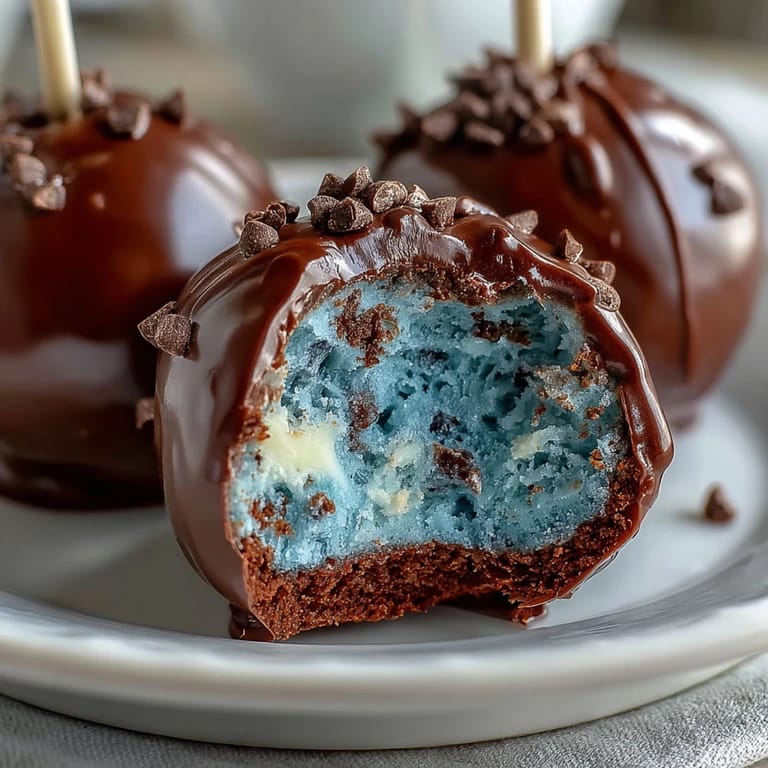
While vanilla cake and basic frosting are classic, I've had wonderful luck swapping in almond extract or a squeeze of lemon zest into the frosting for subtle brightness. You could also use a chocolate cake base with white coating for striking contrast, or add a teaspoon of espresso powder to make the cocoa speckles taste richer. The blue coating stays the same, so you're really just experimenting with what's hiding inside, and that's where the magic happens for people tasting them.
Storage and Make-Ahead Strategies
These pops are actually better made a day or two in advance because the flavors meld and the coating sets to a perfect snap. Keep them in an airtight container at room temperature if your kitchen is cool, or refrigerate them if it's warm outside—just take them out about 15 minutes before serving so the chocolate softens to the right texture. You can even freeze the bare cake balls for up to two weeks, then coat them whenever you're ready, which means you can spread the work across multiple days without stress.
- Room temperature storage works for up to three days if your kitchen stays under 72 degrees Fahrenheit.
- Refrigerated, they'll keep for a full week and actually taste slightly fresher because the cold slows staling.
- Never store them in direct sunlight or near heat sources, or the coating will bloom and lose its shine.
 Save
Save These little blue pops have a way of turning an ordinary dessert table into something that feels festive and intentional. Make them once and you'll understand why they're a springtime tradition.
Recipe FAQs
- → What type of cake works best for these pops?
Moist vanilla cake, either from a mix or homemade, provides the best texture for molding into bite-sized balls.
- → How do I achieve the robins egg blue color?
Use oil-based blue gel food coloring mixed into melted white chocolate or candy melts to get the vibrant robins egg blue shade.
- → What creates the speckled effect on the coating?
A thin paste made of cocoa powder mixed with vodka or clear extract is gently flicked over the coated pops to create delicate speckles.
- → Can these be made ahead of time?
Yes, after setting completely, store at room temperature up to 3 days or refrigerate for up to a week.
- → Are there any tips for smoother coating?
Add coconut oil or vegetable shortening to the melted coating to thin it and achieve a smooth, even dip.
- → What tools are essential for assembly?
Lollipop sticks, a Styrofoam block or cake pop stand, and a small food-safe paintbrush for decorating are key for proper assembly and finishing.