 Save
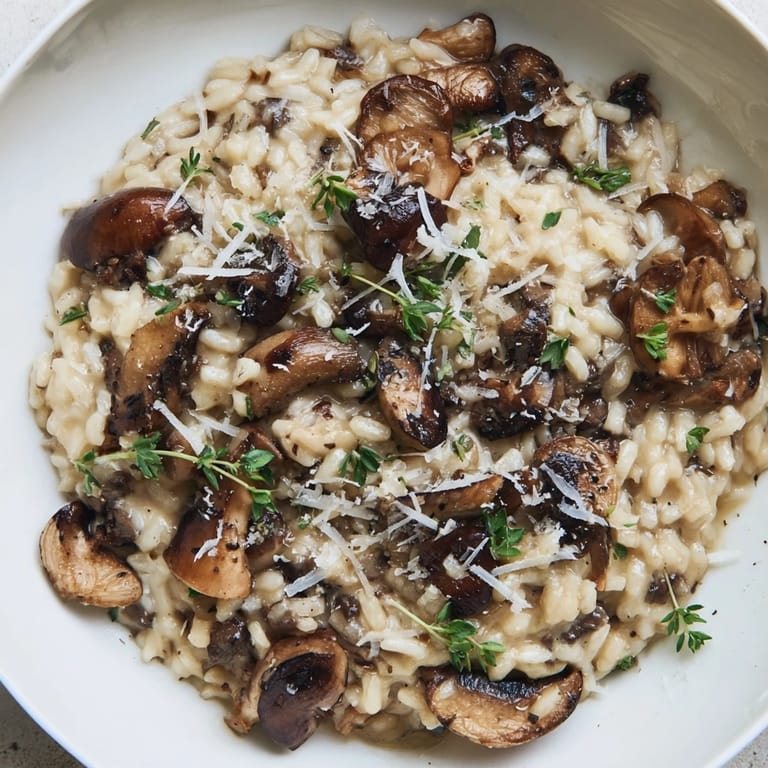
Save The smell of mushrooms roasting in the oven is what finally convinced me risotto wasn't just restaurant food. I'd always been intimidated by the constant stirring, the precise timing, but one rainy Thursday I had a bag of mushrooms going soft and a half-open bottle of wine on the counter. What started as a salvage mission turned into one of those meals where you stand at the stove, tasting as you go, realizing you've made something worth making again and again. The mushrooms caramelized into these deeply savory, almost meaty bites that transformed the creamy rice into something far more interesting than I expected.
I made this for my sister's birthday dinner last spring, and she still brings it up. She's not vegetarian, but she said she didn't miss meat for a second. We sat around the table scraping our bowls clean, and I remember thinking that this dish had a way of making people slow down, talk more, reach for seconds without hesitation. It's become my go-to when I want to feed someone something that feels like a hug in a bowl.
Ingredients
- Mixed mushrooms: Using a variety gives you different textures and flavors, cremini for earthiness, shiitake for depth, button for mild sweetness. Don't skip the roasting step, it's where the magic happens.
- Arborio rice: The high starch content is what makes risotto creamy without needing cream. Carnaroli works too, but arborio is easier to find and very forgiving.
- Vegetable broth: Keeping it warm on a back burner means the rice cooks evenly without shocking it with cold liquid. Homemade is lovely, but good quality store-bought works perfectly.
- Dry white wine: It adds acidity that balances the richness, and you can drink the rest while you stir. Sauvignon Blanc or Pinot Grigio are my favorites here.
- Parmesan cheese: Freshly grated melts into the rice and creates that silky finish. Pre-grated won't give you the same creaminess, trust me on this one.
- Fresh thyme: It clings to the mushrooms as they roast and perfumes the whole dish with something woodsy and warm.
Tired of Takeout? 🥡
Get 10 meals you can make faster than delivery arrives. Seriously.
One email. No spam. Unsubscribe anytime.
Instructions
- Roast the mushrooms:
- Preheat your oven to 220°C and toss the sliced mushrooms with olive oil, salt, pepper, and thyme until everything is coated. Spread them on a baking sheet in a single layer and roast for 20 to 25 minutes, stirring once halfway through so they brown evenly and get those crispy, caramelized edges.
- Start the risotto base:
- While the mushrooms roast, heat butter and olive oil in a large, heavy-bottomed saucepan over medium heat. Add the finely chopped onion and cook until it's soft and translucent, about 5 minutes, stirring occasionally so it doesn't brown.
- Toast the rice:
- Stir in the minced garlic and cook for just a minute until it smells amazing. Add the arborio rice and stir constantly for about 2 minutes, letting each grain get coated in the fat and turn slightly translucent at the edges.
- Add the wine:
- Pour in the white wine and stir until it's almost completely absorbed by the rice. You'll hear the sizzle and smell the alcohol cook off, leaving behind just the bright, fruity notes.
- Build the creaminess:
- Start adding the warm vegetable broth one ladleful at a time, stirring frequently and waiting until each addition is mostly absorbed before adding the next. This takes about 25 to 30 minutes, and yes, you really do need to stir often, but it's meditative once you get into the rhythm.
- Finish with mushrooms and cheese:
- When the rice is creamy and al dente, stir in the roasted mushrooms, saving a few pretty ones for garnish if you like. Fold in the grated Parmesan and chopped parsley, then taste and adjust the seasoning with salt and pepper.
- Serve immediately:
- Spoon the risotto into warm bowls and top with extra Parmesan and those reserved mushrooms. Risotto waits for no one, so gather everyone to the table before you plate it.
 Save
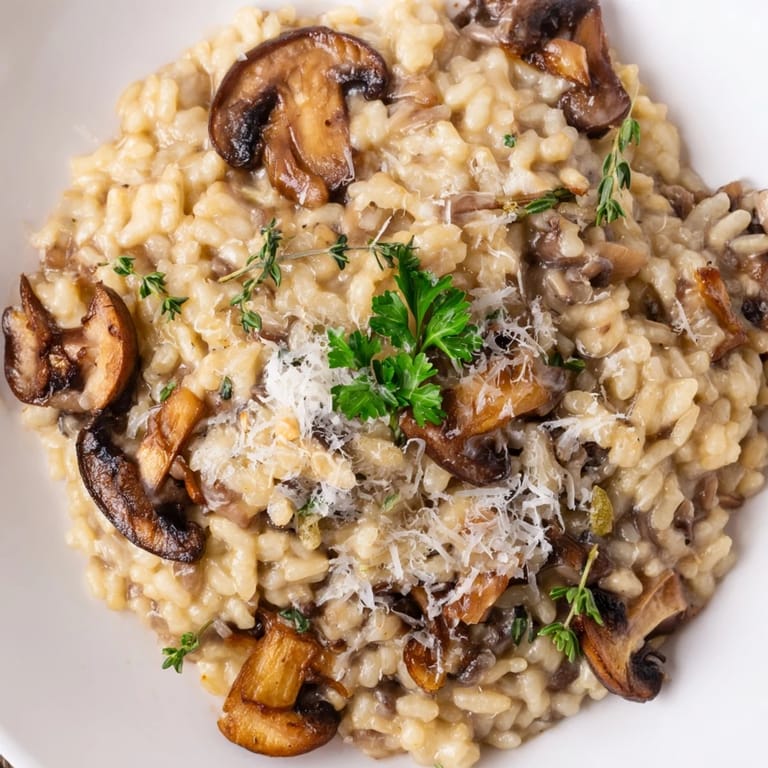
Save There's something about standing at the stove, glass of wine in one hand, wooden spoon in the other, watching the rice slowly transform into something creamy and luxurious. It's one of those dishes that makes you feel like a real cook, even on nights when you're just winging it. The first time I nailed it, I texted a photo to my mom at 9 p.m., and she replied with three heart emojis and asked when I was making it for her.
How to Know When It's Done
The rice should be suspended in a creamy, flowing sauce that pools slightly when you spoon it into a bowl. If it's stiff or the grains are separate, you need more broth. If it's soupy, just let it cook uncovered for another minute or two, stirring constantly. Taste a grain, it should be tender with just a little resistance in the center, not crunchy and definitely not mushy.
Storing and Reheating
Risotto thickens as it cools, so leftovers will look like a solid mass in the fridge, and that's totally normal. To reheat, add a splash of broth or water and warm it gently in a pan over low heat, stirring until it loosens up again. Honestly though, my favorite way to use leftovers is to form them into patties, coat them in breadcrumbs, and pan-fry them into crispy risotto cakes for breakfast.
Make It Your Own
Once you've made this a couple times, you'll start seeing how adaptable it is. Swap the mushrooms for roasted butternut squash in the fall, or stir in fresh peas and lemon zest in the spring. I've added crispy pancetta for non-vegetarian friends, and I've finished it with truffle oil when I wanted to show off. The technique stays the same, but the flavors can go wherever your pantry or your mood takes you.
- Try stirring in a handful of baby spinach or arugula right at the end for a pop of color and freshness.
- A squeeze of lemon juice before serving brightens everything up and cuts through the richness.
- If you want it even creamier, stir in an extra tablespoon of butter or a splash of heavy cream with the Parmesan.
 Save
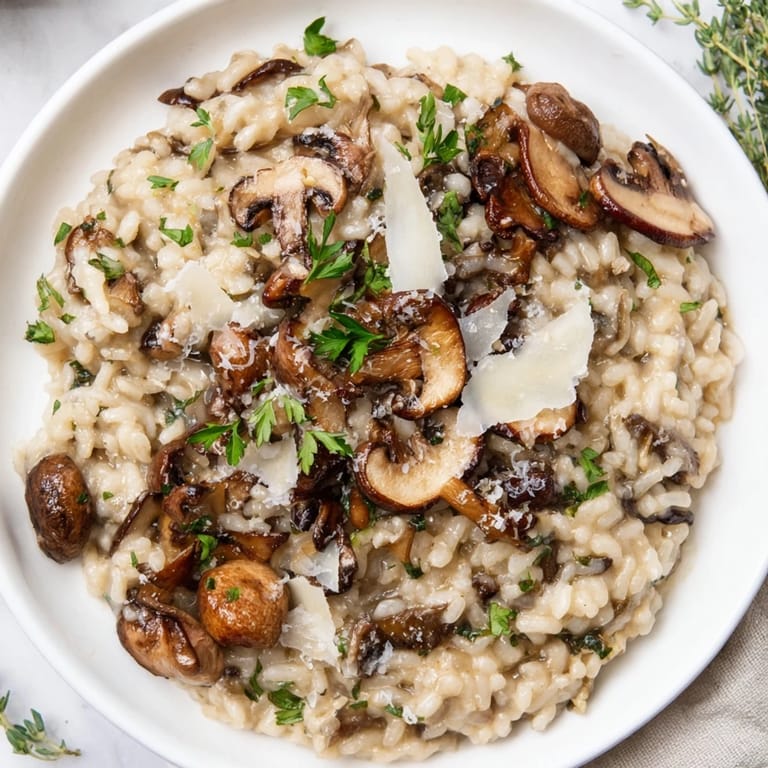
Save This risotto has become one of those dishes I make when I want to feel grounded, when I need the rhythm of stirring and the reward of something warm and satisfying. I hope it becomes that for you too.
Recipe FAQs
- → Why is stirring important when cooking risotto?
Constant stirring releases the starch from the arborio rice, which creates the characteristic creamy texture. This starch combines with the warm broth to form a naturally rich sauce without requiring cream.
- → Can I use different types of mushrooms?
Yes, this preparation works well with cremini, shiitake, button, oyster, or porcini mushrooms. Mix varieties for complex flavors. Avoid very watery mushrooms like portobello caps, which can release excess moisture.
- → What does 'al dente' mean for risotto rice?
Al dente means the rice should be tender with a slight firmness in the center of each grain. This takes about 25-30 minutes of gradual broth absorption, creating the ideal creamy yet structured texture.
- → Can I make this ahead of time?
Risotto is best served immediately after cooking. However, you can prepare the roasted mushrooms ahead and store them separately. Reheat gently when ready to combine with freshly made risotto.
- → What's the best way to keep the broth warm?
Heat your vegetable broth in a separate saucepan and maintain a gentle simmer throughout cooking. Adding cold broth will stop the cooking process and prevent even absorption of liquid by the rice.
- → Can I substitute the white wine?
Yes, you can use vegetable broth instead for a non-alcoholic version, though the wine adds subtle acidity and depth. Alternatively, use a splash of lemon juice combined with broth for brightness.