 Save
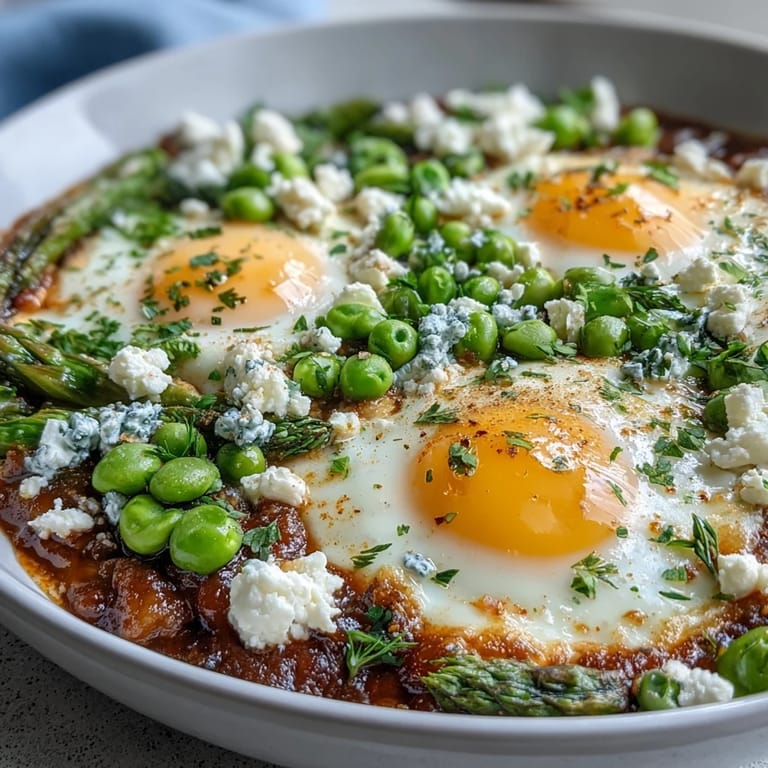
Save Last spring, my neighbor showed up at my door with a basket overflowing with fresh broad beans and asparagus from her garden, and I had no idea what to do with half of it. She mentioned shakshuka in passing—something her grandmother made in Lebanon—and suddenly I was googling frantically at my kitchen counter. That first attempt was chaotic, but somewhere between the fragrant spices hitting the pan and the eggs sliding into the sauce, I understood why this dish has been feeding families for generations. The colors alone—those bright green vegetables against the deep red sauce—felt like spring itself on a plate.
I made this for my partner after a long week, and there's something about watching someone's face light up when they break into a runny yolk and it pools into that silky sauce—it reminded me why I bother cooking at all. We sat at the kitchen table for longer than usual, tearing bread, squeezing lemon, and not saying much, which felt like everything.
Ingredients
- Olive oil: Use something you actually like the taste of—this isn't the time for the cheapest bottle in the cupboard.
- Medium onion: Finely chopped is your friend here; you want it to almost dissolve into the sauce rather than announce itself in every bite.
- Garlic cloves: Fresh minced garlic makes all the difference; jarred just doesn't have the same punch.
- Red bell pepper: The sweetness balances the spices beautifully, and it adds a lovely pop of color.
- Asparagus: Cut into 2 cm pieces so they cook evenly and don't turn mushy; buy them firm and bright green.
- Peas and broad beans: Frozen are absolutely fine and sometimes better than fresh—no shame in it, and they're already perfectly tender.
- Canned chopped tomatoes: A good quality tin matters here; it's the backbone of your sauce, so don't cut corners.
- Tomato paste: This concentrates the tomato flavor and adds richness; 2 tablespoons is the sweet spot.
- Ground cumin: Toasting it briefly in the oil releases all its warmth and earthiness.
- Smoked paprika: Gives that deep, almost smoky undertone that makes people ask what your secret ingredient is.
- Ground coriander: Subtle and slightly sweet; it rounds out the spice blend without overwhelming.
- Chili flakes: Optional but recommended—even a small pinch adds complexity, not just heat.
- Large eggs: Room temperature eggs cook more gently into the sauce without scrambling.
- Fresh parsley or mint: Mint feels more authentic here and adds a brightness that cuts through the richness.
- Feta cheese: Crumbled on top at the end, it adds a salty tang that makes everything taste more intentional.
- Lemon wedges: Squeeze over everything before eating; the acidity wakes up all the flavors.
Tired of Takeout? 🥡
Get 10 meals you can make faster than delivery arrives. Seriously.
One email. No spam. Unsubscribe anytime.
Instructions
- Build your flavor base:
- Heat the olive oil over medium heat and add the finely chopped onion, letting it soften for about 4–5 minutes until it turns translucent and begins to smell sweet. You'll know it's ready when you can easily crush a piece against the side of the pan with your spoon.
- Awaken the aromatics:
- Add the minced garlic and diced red bell pepper, cooking for another 2–3 minutes until they're just beginning to soften. The garlic should smell incredible at this point—that's your cue to keep moving.
- Toast the spices:
- Sprinkle in the cumin, smoked paprika, ground coriander, and chili flakes, stirring constantly for about 1 minute. This short toasting time is crucial—it wakes up the spices and fills your kitchen with an aroma that makes everyone suddenly very interested in dinner.
- Create the sauce:
- Stir in the tomato paste and cook for 30 seconds to caramelize it slightly, then add the canned tomatoes and a generous pinch of salt and pepper. Simmer uncovered for about 10 minutes, stirring occasionally, until the sauce thickens and the flavors marry together into something deeper than the sum of their parts.
- Add the spring vegetables:
- Nestle the asparagus, peas, and broad beans into the sauce, cover the pan, and cook for 7–8 minutes until the vegetables are just tender. Listen for the gentle simmer underneath the lid—too vigorous and your vegetables will start to break down.
- Cradle the eggs:
- Using the back of your spoon, gently press small wells into the sauce, then carefully crack each egg into its own well. Cover and cook gently for 5–7 minutes; the whites need time to set while the yolks stay gloriously runny, so resist the urge to peek too often.
- Finish with brightness:
- Remove from heat and scatter fresh parsley or mint across the top, followed by crumbled feta if you're using it. Serve immediately with lemon wedges so everyone can squeeze to their taste.
 Save
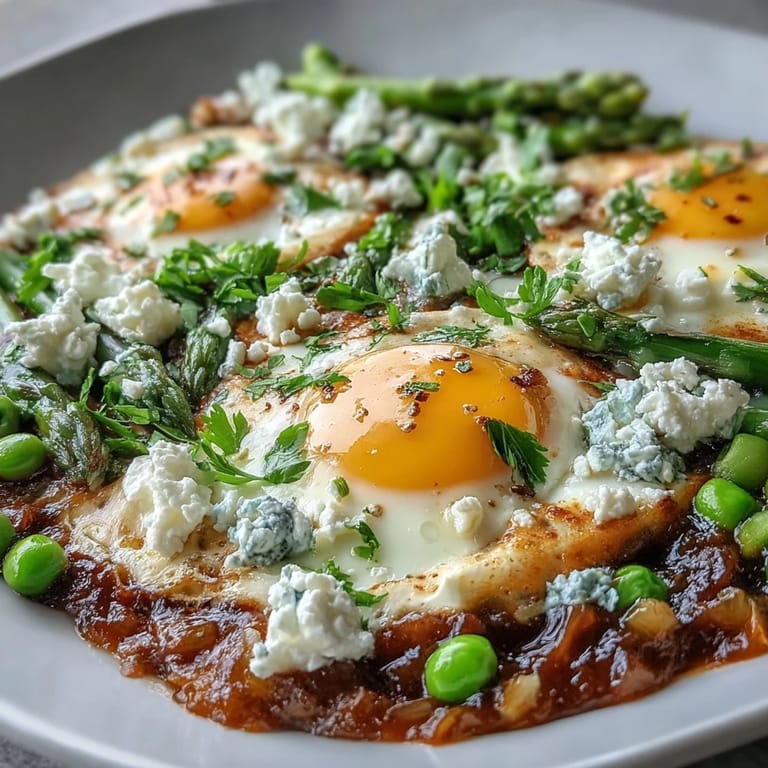
Save The first time my mother tasted this, she took one bite and immediately asked if she could bring it to her book club potluck. That's when I realized this wasn't just a recipe I'd tried—it had become something I genuinely wanted to make again and again.
The Spring Vegetables Story
There's something wonderful about eating vegetables that actually taste like themselves in this dish. The peas stay bright and slightly sweet, the broad beans add a creamy texture when you bite into them, and the asparagus soaks up all those spiced tomato flavors while keeping its spring-like snap. This isn't about cooking vegetables into submission; it's about letting them be themselves in a really good sauce.
Why Eggs Belong Here
Eggs aren't decoration in shakshuka—they're the point. That moment when your spoon breaks through a runny yolk and it mingles with the warm sauce and bread is why this dish exists. I once tried to make it without eggs to use up a sauce, and it was fine, but it wasn't shakshuka. The eggs transform it from a vegetable stew into something both rich and elegant.
Getting It Right Every Time
The beauty of this dish is its flexibility—you can play with vegetables, adjust the heat, make it vegan, whatever you need. But the magic lives in the details: quality tomatoes, properly toasted spices, and eggs that stay runny. Once you understand those three things, you've basically got a formula you can trust.
- Taste the sauce before adding eggs and adjust seasoning—you won't get another chance once they're in.
- If your pan is too hot, the bottoms of the eggs will cook too fast; keep the heat gentle and patient.
- Serve immediately in the skillet if you can; it keeps everything warm and makes it feel communal and special.
 Save
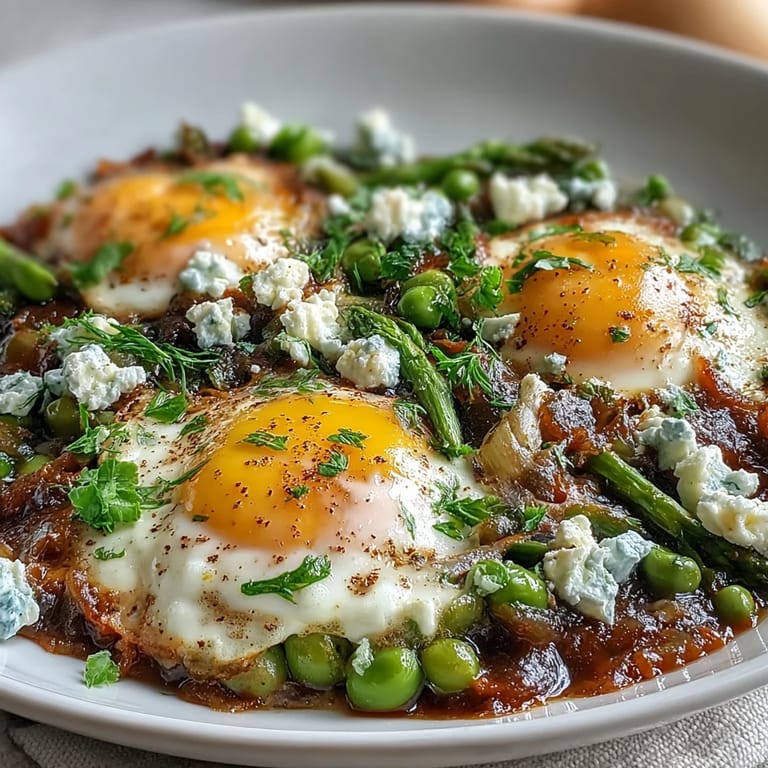
Save This dish has quietly become my answer to 'what should we make tonight?' because it delivers color, flavor, and comfort without demanding hours of your time. Every time I make it, I'm grateful that my neighbor showed up at my door with that basket of vegetables.
Recipe FAQs
- → Can I use frozen peas and broad beans?
Yes, frozen peas and broad beans work perfectly in this dish. Add them directly to the sauce without thawing. They may need an extra 1-2 minutes of cooking time compared to fresh vegetables.
- → How do I know when the eggs are done?
The whites should be completely set and opaque while the yolks remain slightly runny. This usually takes 5-7 minutes. Cover the pan to help the eggs cook evenly from both the top and steam underneath.
- → Can I make this vegan?
Absolutely. Simply omit the eggs and feta cheese, and add a can of drained chickpeas or white beans for protein. The vegetables and spiced tomato sauce provide plenty of flavor and nutrition on their own.
- → What other vegetables can I add?
Spinach, zucchini, or diced courgette work beautifully. Add leafy greens in the last few minutes so they wilt without becoming mushy. Denser vegetables like zucchini should be added earlier with the asparagus.
- → How spicy is this dish?
The chili flakes add gentle warmth, but this isn't meant to be overly spicy. Adjust the amount to your taste, or leave them out entirely for a milder version. The smoked paprika provides depth rather than heat.
- → Can I prepare this ahead?
The vegetable base can be made up to a day in advance and reheated gently. Add the eggs just before serving, as they're best cooked fresh. Store leftovers in the refrigerator for up to 2 days.