 Save
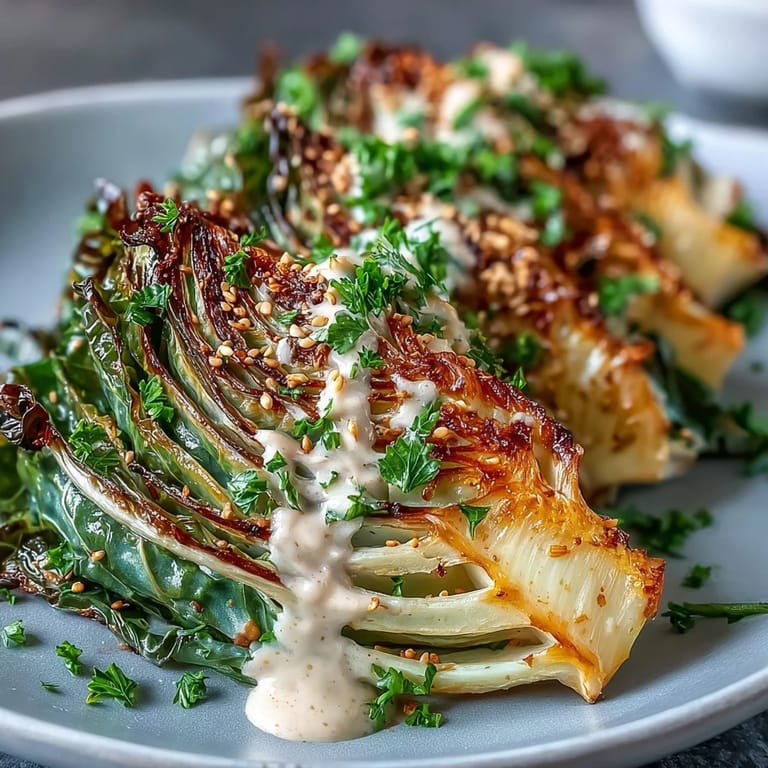
Save There's something almost magical about the moment roasted cabbage transforms in the oven—the kitchen fills with this toasty, caramelized smell that makes you wonder why you don't cook cabbage like this more often. I stumbled onto this recipe during a phase where I was trying to eat more vegetables without relying on the same roasted broccoli routine, and a friend casually mentioned tahini sauce like it was the simplest thing in the world. Turns out, it is, and the combination of crispy-edged cabbage with that creamy, nutty sauce became something I found myself making almost weekly. It's the kind of dish that feels both restaurant-quality and deeply unpretentious.
I brought this to a potluck once where everyone seemed to be eyeing the pasta salad, and by the end of the evening someone asked for the recipe while holding an empty platter—that's when I knew it wasn't just me being enthusiastic about roasted cabbage. There's something about presenting food in wedges that makes people take it more seriously than they would a pile of chopped vegetables, even if it's technically the same thing.
Ingredients
- 1 medium green cabbage (about 2 lbs), cut into 8 wedges, core intact: Keeping the core in holds everything together while roasting, and it gets tender and almost sweet by the end, which surprised me the first time I tried it.
- 2 tbsp olive oil: This is enough to get good caramelization on the cut edges without making everything greasy, but don't be shy with it.
- 1/2 tsp kosher salt and 1/4 tsp freshly ground black pepper: Season generously on both sides, as the cabbage will shrink slightly and you want flavor throughout.
- 1/3 cup tahini (sesame seed paste): Buy the good stuff if you can—I learned the hard way that bargain tahini can be gritty and bitter, while quality tahini is smooth and naturally sweet.
- 1 small garlic clove, finely grated: Grating the garlic instead of mincing it distributes the flavor more evenly and prevents harsh chunks in the sauce.
- 2 tbsp fresh lemon juice: Fresh is non-negotiable here; bottled lemon juice tastes tinny and throws off the whole balance.
- 2–4 tbsp cold water: Start with 2 tablespoons and add more gradually—it's easier to thin out a thick sauce than to thicken one that's too loose.
- 1/4 tsp ground cumin: This adds a subtle warmth and earthiness that ties everything together without announcing itself.
- 1 tbsp toasted sesame seeds, 2 tbsp chopped fresh parsley or cilantro, pinch of smoked paprika or Aleppo pepper: These garnishes are optional but genuinely worth doing—they add color, texture, and a final flavor lift.
Tired of Takeout? 🥡
Get 10 meals you can make faster than delivery arrives. Seriously.
One email. No spam. Unsubscribe anytime.
Instructions
- Get your oven hot and ready:
- Preheat to 425°F (220°C) and line a baking sheet with parchment paper so cleanup is effortless and nothing sticks.
- Prep and season the cabbage:
- Arrange your wedges on the sheet, drizzle with olive oil, and season both sides with salt and pepper—the oil helps them crisp up beautifully. Try to position them so the flat cut sides make contact with the pan for better browning.
- Let the oven do the work:
- Roast for 25–30 minutes, flipping halfway through, until the edges are deeply browned and the cabbage is fork-tender with charred bits. The smell alone will tell you when it's getting close.
- Build your tahini sauce:
- While the cabbage roasts, whisk together tahini, grated garlic, lemon juice, cumin, and salt in a bowl. Gradually add cold water, a tablespoon at a time, whisking until you have a smooth, pourable sauce that coats the back of a spoon.
- Come together on the plate:
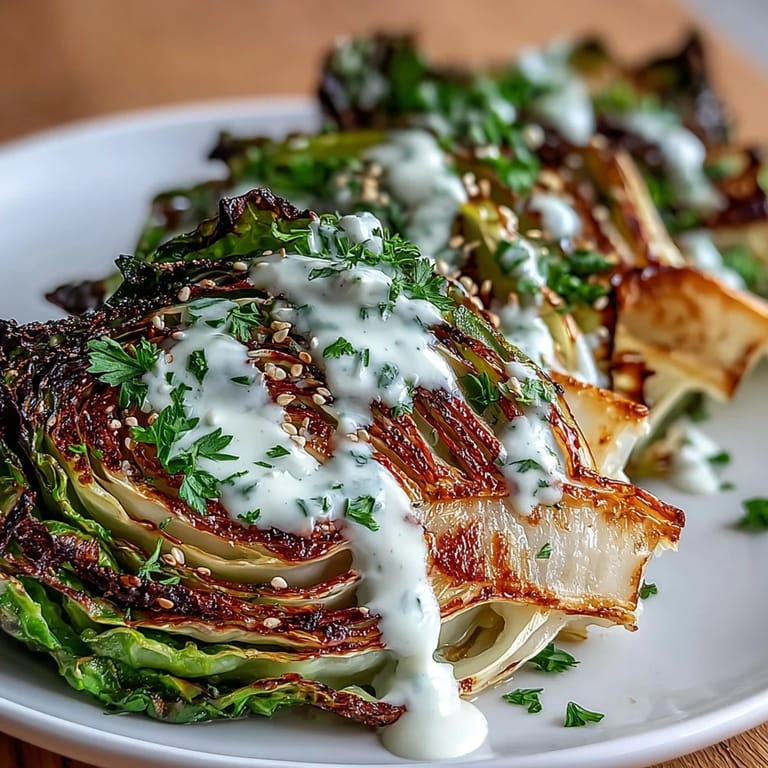
- Transfer the hot roasted cabbage to a serving platter and drizzle generously with tahini sauce, letting it pool slightly on the plate. Finish with sesame seeds, fresh herbs, and a pinch of smoked paprika if you're using it.
 Save
Save The first time someone at my table said they'd never realized cabbage could taste this good, it shifted something in how I thought about simple ingredients and what heat and salt and a little attention can do. Now whenever cabbage goes on sale, I think about roasting it first.
The Tahini Moment
I used to think tahini was intimidating, like it required some secret knowledge or a specific culinary background to get right, but it turns out the magic is just whisking it slowly with lemon juice and thinning it to the consistency you want. The first time I made this sauce, I added the water all at once and ended up with something too thin, but I learned that patience and gradual adjustment gives you control and a better result. Now I make tahini sauce for almost anything that needs richness—roasted vegetables, grain bowls, even as a dip with fresh vegetables.
Roasting Cabbage at Home
The transformation that happens to cabbage in the oven still gets me—the outer leaves get crispy and almost charred at the edges while the inside stays tender, and the whole thing becomes slightly sweet as the natural sugars caramelize. It's the kind of technique that works just as well for red cabbage, Brussels sprouts, or even broccoli, so once you understand the principle, you can apply it to whatever vegetables you have. The key is high heat, good seasoning, and patience to let things brown rather than steam.
Building a Meal Around This
On its own, roasted cabbage with tahini sauce is enough for a light lunch or a stunning side dish, but it also plays well with other components if you want something more substantial. I've served it alongside grain bowls, tucked into warm pita with hummus and pickled onions, or simply with rice to soak up the sauce. The tahini sauce is forgiving enough that it works with almost any grain or bread, so let what you have on hand guide you.
- Serve warm for the best texture and most vibrant tahini sauce consistency.
- Leftover roasted cabbage keeps for three days in an airtight container, though the sauce is best drizzled on fresh right before eating.
- This dish is naturally vegan and gluten-free, making it a thoughtful option for guests with dietary restrictions.
 Save
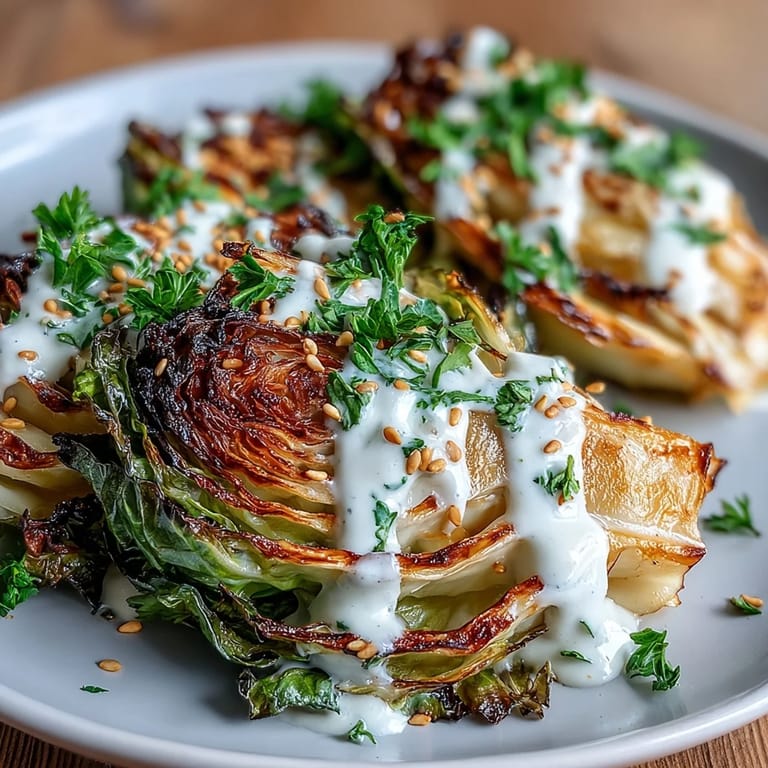
Save This recipe has become my answer to the question of what to make when you want something that feels nourishing but not heavy, impressive but not complicated. It's one of those dishes that tastes like you tried, even though you really just let the oven and a whisk do all the work.
Recipe FAQs
- → Can I use red cabbage instead of green?
Yes, red cabbage works beautifully in this preparation. Expect slightly longer cooking time as red cabbage tends to be denser than green varieties.
- → How do I store leftovers?
Store roasted cabbage and tahini sauce separately in airtight containers. The cabbage keeps for 3-4 days in the refrigerator. Reheat in a 350°F oven until warmed through.
- → What can I serve with roasted cabbage wedges?
These pair wonderfully with warm pita bread, rice pilaf, or quinoa. They also complement grilled proteins like chicken, lamb, or falafel for a complete meal.
- → Why did my tahini sauce seize up?
Tahini often thickens initially when mixed with acidic ingredients. Continue whisking and gradually add cold water—it will smooth out into a creamy, pourable consistency.
- → Can I make this dish ahead?
You can cut the cabbage wedges and prepare the tahini sauce up to a day in advance. Roast the cabbage just before serving for the best texture and flavor.