 Save
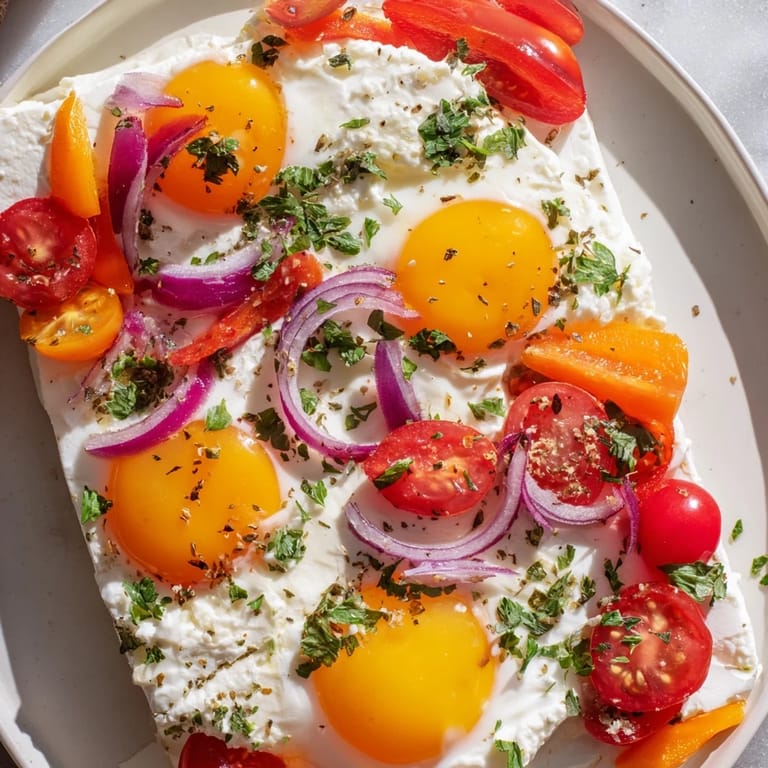
Save There's something about the sizzle of a baking dish coming out of the oven that stops everyone mid-conversation. One Sunday morning, I threw this together on impulse—leftover feta, tomatoes from the farmers market, a handful of eggs—and my partner wouldn't stop talking about it for weeks. It became our default when friends showed up hungry and we had nothing planned. The dish is ridiculously forgiving, almost impossible to mess up, and it tastes like you spent hours in the kitchen when really you spent fifteen minutes prepping.
I made this for my mom's book club once, halving the batch because I wasn't sure how adventurous they'd be with runny yolks. Every single person asked for the recipe, and three of them texted me later saying their families were fighting over who got the last bite. That's when I knew it wasn't just a weeknight dinner—it was something special.
Ingredients
- Cherry tomatoes (2 cups, halved): The ones that still have that vine-ripened sweetness matter here—they won't turn to mush but will collapse into something closer to jam at the edges.
- Red onion (1 small, thinly sliced): Raw onion seems harsh until it softens in the oven, then it becomes almost caramelized and sweet.
- Garlic (2 cloves, minced): Don't skip mincing—whole cloves will overpower everything and stay stubbornly chewy.
- Red bell pepper (1 small, sliced): You can use yellow or orange for color variation; they cook down and add body without fighting the other flavors.
- Feta cheese block (7 oz/200 g): A solid block matters because it holds together while the edges brown—crumbled feta will scatter and won't create those pools of melted richness.
- Large eggs (4): Room temperature eggs cook more evenly; they won't be cold when they hit the warm vegetables.
- Extra virgin olive oil (3 tbsp): The good stuff, the kind you taste immediately—this is where the Mediterranean flavor actually lives.
- Dried oregano and thyme (1 tsp and ½ tsp): These herbs are tough enough to handle oven heat without turning bitter.
- Red pepper flakes (¼ tsp optional): Just a whisper unless you want heat to be the main character.
- Fresh parsley (2 tbsp, chopped): The brightness at the end—wait to add it after cooking or it becomes a sad, dark memory of green.
Tired of Takeout? 🥡
Get 10 meals you can make faster than delivery arrives. Seriously.
One email. No spam. Unsubscribe anytime.
Instructions
- Heat your oven and build the vegetable base:
- Preheat to 400°F and scatter your tomatoes, onion, bell pepper, and garlic into a medium baking dish. Drizzle everything with olive oil, then sprinkle on the oregano, thyme, red pepper flakes, salt, and pepper—toss until the vegetables are all slicked with oil and you can smell the herbs waking up.
- Nestle the feta and let it char:
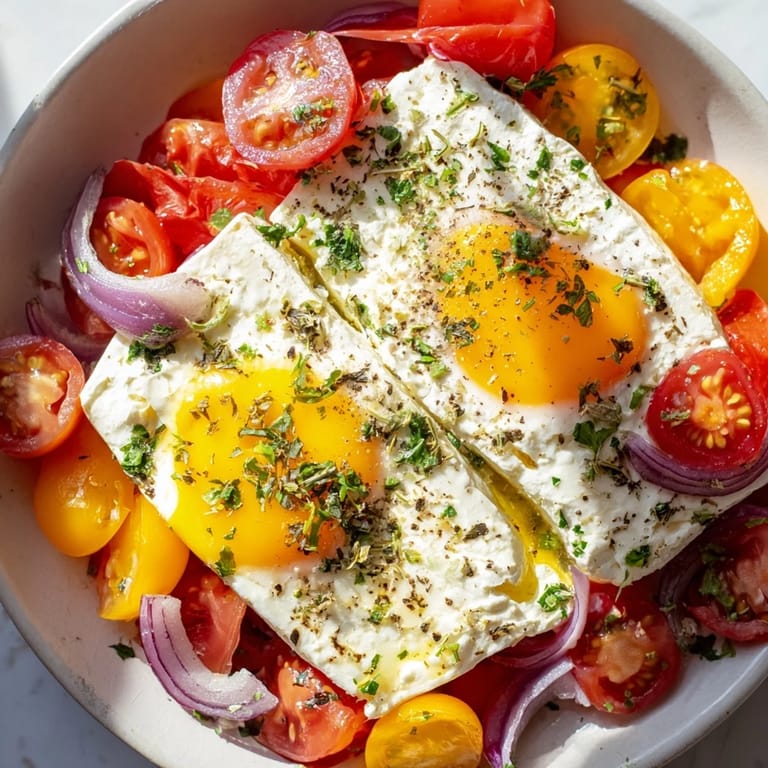
- Place the feta block right in the center like it owns the dish, then slide everything into the oven for 15 minutes. You're looking for the vegetables to soften at the edges and the feta to develop golden-brown spots where it touches the hot pan.
- Create four wells for the eggs:
- Take the dish out carefully—it's hot and the oil is already bubbling—and use the back of a spoon to make four little gaps in the vegetables around the feta, pressing down gently to create shallow nests. Crack one egg into each well, being careful the yolk doesn't break unless you're going for fully set eggs.
- Finish cooking until the whites set:
- Return the dish to the oven for 8 to 10 minutes, watching through the window if you can—the egg whites will turn opaque while the yolks stay soft and glossy if you catch it at the right moment. Everyone has different preferences for yolk doneness, so use your instincts; if you like them firmer, add another minute or two.
- Garnish and serve immediately:
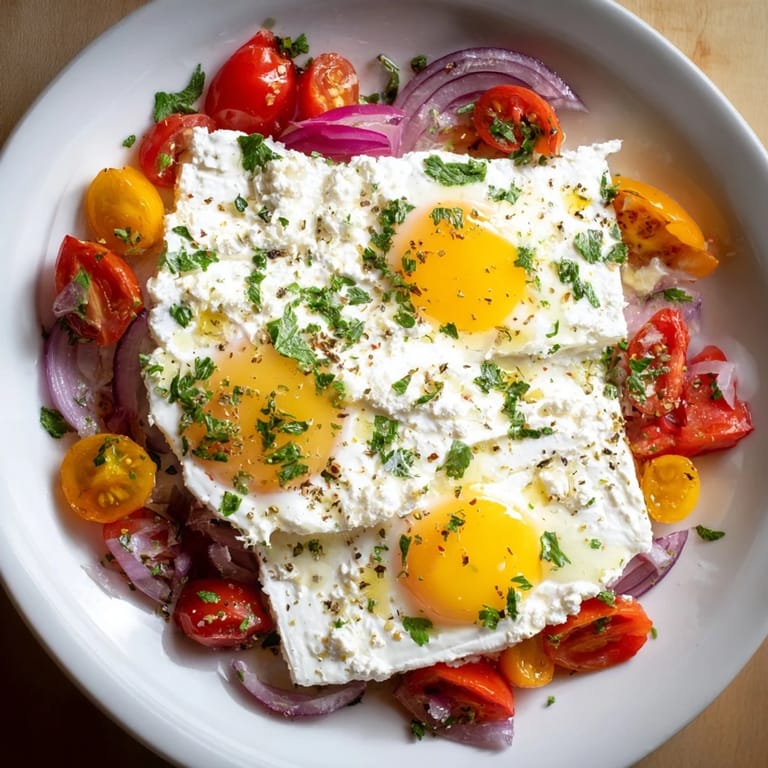
- Pull it from the oven, scatter fresh parsley over the top, and bring it straight to the table with crusty bread nearby so people can tear bread and dip it into the warm, herbed tomato sauce pooled around the feta and eggs.
 Save
Save My greatest cooking failure and greatest win both happened with this dish. Once I forgot the eggs entirely and ate a pan of warm, herb-soaked tomato and feta with a spoon at midnight—still delicious, just sadder. Another time, a friend who'd never broken a raw egg into hot food in her life watched it happen and realized it was the easiest, most dramatic thing she could cook. She still makes it.
Why This Tastes Like Vacation
There's a reason Mediterranean food feels both simple and luxurious—it's because the quality of each ingredient matters more than technique. Olive oil that tastes like olives, feta that's actually creamy, tomatoes that remember the sun. You're not performing culinary tricks; you're just arranging good things in a hot pan and letting them become better together. The oregano and thyme add layers that store-bought spice blends can't touch because they're dried at their peak, and when they hit heat, they remind you of actual Mediterranean air, not a description of it.
Variations That Work
The foundation is so solid that this dish welcomes changes without falling apart. Add a handful of baby spinach or pitted Kalamata olives before baking—they'll soften into the vegetables and echo the flavors you're already building. If you want more green, fresh basil can go on at the end alongside the parsley, though it's more delicate and won't survive high heat, so save it for garnish. The red pepper flakes can be aggressive or barely there depending on your mood and who's eating. Even the vegetables are flexible; zucchini, mushrooms, or artichoke hearts all work because they're sturdy enough to roast without turning to mush.
Pairing and Serving
This dish asks for very little because it already contains everything you need, but a crisp wine alongside it feels right—Sauvignon Blanc if you want something clean and bright, or a chilled rosé if you want something with a little more body. Bread is almost mandatory because the tomato juice mingling with melted feta and olive oil is too good to leave in the pan. Serve it family-style, straight from the baking dish, so people can tear bread and scoop into their own portions while everything's still hot and the feta is still soft enough to pick up on bread.
- Gluten-free bread works seamlessly if anyone at your table needs it.
- This reheats reasonably well, though the yolks obviously won't have the same silky texture the second day.
- Leftovers are better crumbled into a salad than eaten alone.
 Save
Save This is the kind of dish that reminds you why you cook in the first place—not for rules or perfection, but for the moment when people stop mid-conversation because something just tastes that good. Make it whenever you want to feel competent in the kitchen without trying too hard.
Recipe FAQs
- → What type of cheese is best for this dish?
Feta cheese works best due to its creamy texture and salty flavor that complements the vegetables and eggs well.
- → Can I use fresh herbs instead of dried oregano and thyme?
Yes, fresh oregano and thyme can be used; simply increase the quantity slightly for a more intense flavor.
- → How can I tell when the eggs are perfectly baked?
The egg whites should be fully set while the yolks remain slightly runny for a creamy texture.
- → Is it possible to add other vegetables to this dish?
Absolutely, ingredients like spinach or Kalamata olives can be added for extra flavor and variety.
- → What is the best way to serve this baked feta and eggs?
Serve it warm with crusty or gluten-free bread and garnish with fresh parsley for a complete meal.