 Save
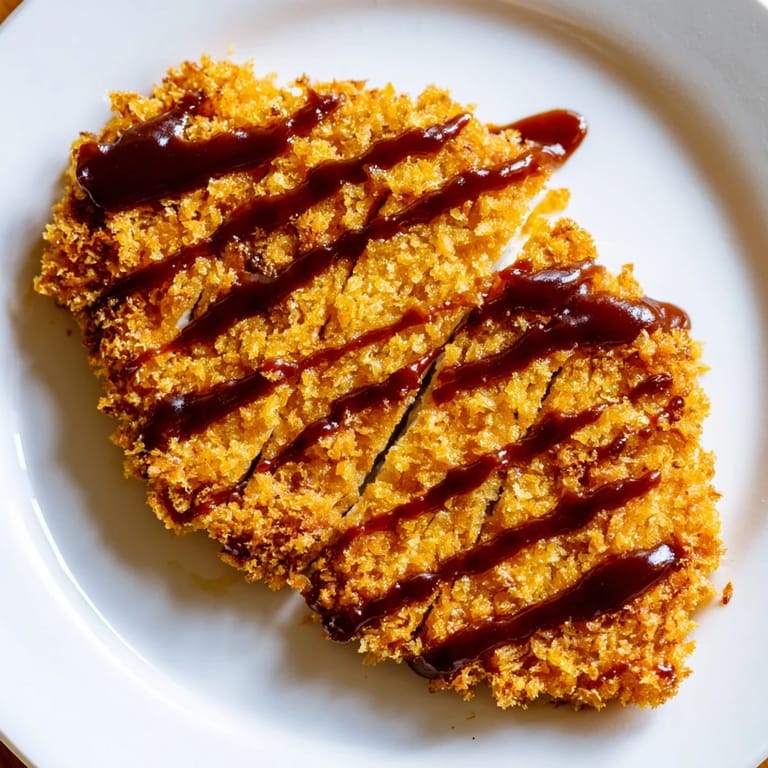
Save My neighbor handed me a container of golden cutlets one Thursday evening, still warm from her kitchen. She told me they were katsu, and that her grandmother used to make them every weekend in Osaka. The panko crust crackled when I bit in, and the chicken stayed impossibly juicy. I asked for the recipe the next morning.
The first time I made this for a group, I panicked because I forgot to pound the chicken thin. Half the pieces were still pale inside while the breading burned. Now I always flatten them evenly, and every cutlet comes out golden at the same time. My friends still ask me to make katsu night happen at least once a month.
Ingredients
- Boneless, skinless chicken breasts (4, about 150 g each): Choose breasts that are similar in size so they cook evenly, and don't skip the pounding step or you'll end up with thick, unevenly cooked centers.
- Salt (1/2 teaspoon): Season the meat itself, not just the breading, because that's where the flavor really lives.
- Black pepper (1/4 teaspoon): Freshly cracked makes a noticeable difference, but pre-ground works just fine if that's what you have.
- All-purpose flour (1/2 cup, 65 g): This first layer helps the egg stick, so don't skip it even though it seems like an extra step.
- Large eggs (2): Beat them well with a little water to thin the mixture so it coats smoothly without clumping.
- Water (1 tablespoon): Just enough to loosen the egg wash and make the breading process less messy.
- Panko breadcrumbs (1 1/2 cups, 90 g): Japanese panko is coarser and airier than regular breadcrumbs, which is why the crust turns out so light and crispy.
- Vegetable oil (1 cup, 240 ml): Use a neutral oil with a high smoke point, and make sure it's deep enough to come halfway up the cutlets for even browning.
- Ketchup (1/4 cup, 60 ml): The base of the sauce, it adds sweetness and body without tasting too childish once you mix in the other ingredients.
- Worcestershire sauce (2 tablespoons): Brings that deep, savory umami note that makes tonkatsu sauce taste like more than just ketchup.
- Soy sauce (1 tablespoon): Adds saltiness and richness, use regular or low sodium depending on your taste.
- Mirin (1 tablespoon): A sweet Japanese rice wine that rounds out the sauce, but honey works in a pinch if you can't find it.
- Dijon mustard (1 teaspoon): Just a touch of tang to balance the sweetness and keep the sauce from feeling one-dimensional.
- Sugar (1 teaspoon): Helps marry all the flavors together and gives the sauce a subtle glossy finish.
- Shredded cabbage (optional): Traditionally served alongside for freshness and crunch, it cuts through the richness beautifully.
- Lemon wedges (optional): A squeeze of citrus right before eating brightens everything up.
- Steamed rice (optional): Katsu over rice with sauce drizzled on top is one of the most comforting meals I know.
Tired of Takeout? 🥡
Get 10 meals you can make faster than delivery arrives. Seriously.
One email. No spam. Unsubscribe anytime.
Instructions
- Prepare the chicken:
- Place each breast between two sheets of plastic wrap and pound gently with a meat mallet or rolling pin until it's an even half-inch thick. Season both sides with salt and pepper, pressing the seasoning in lightly with your fingers.
- Set up a breading station:
- Arrange three shallow dishes in a row: flour in the first, beaten eggs mixed with water in the second, and panko in the third. This assembly line setup makes the process faster and less chaotic.
- Bread the chicken:
- Dredge each breast in flour and shake off the excess, then dip it into the egg mixture, letting any extra drip off. Press it firmly into the panko, making sure every surface is covered, and set it aside on a plate.
- Heat the oil:
- Pour oil into a large skillet until it's about a quarter-inch deep and heat over medium until it shimmers and a panko crumb dropped in sizzles immediately. If the oil smokes, it's too hot, so turn the heat down a notch.
- Fry the cutlets:
- Carefully lay the breaded chicken into the hot oil, working in batches if your pan isn't big enough to avoid crowding. Fry for 3 to 4 minutes per side until the crust turns deep golden and the meat is cooked through, then transfer to a wire rack to drain.
- Make the tonkatsu sauce:
- In a small bowl, whisk together ketchup, Worcestershire sauce, soy sauce, mirin, mustard, and sugar until smooth and glossy. Taste it and adjust the sweetness or saltiness to your liking.
- Serve:
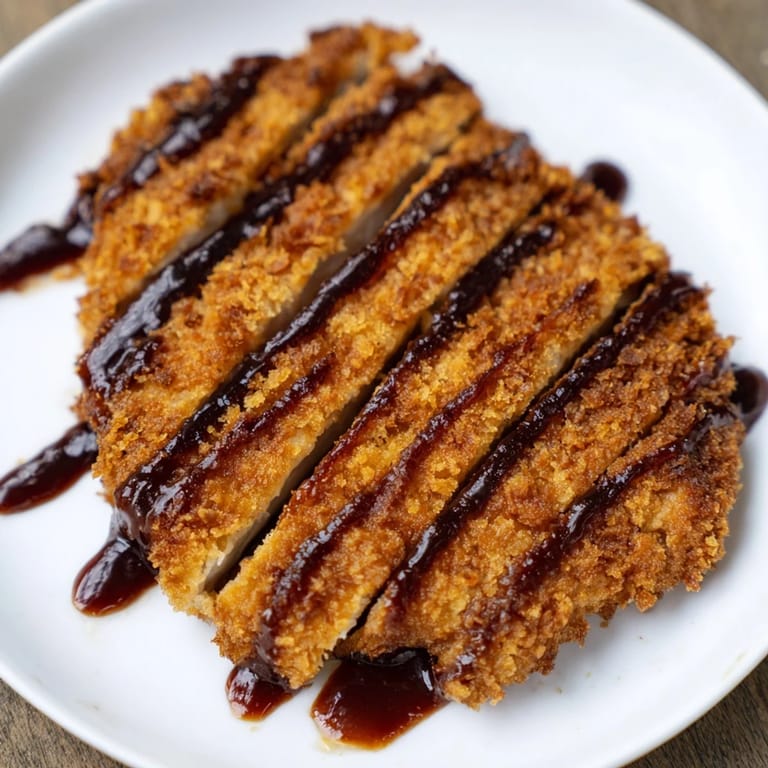
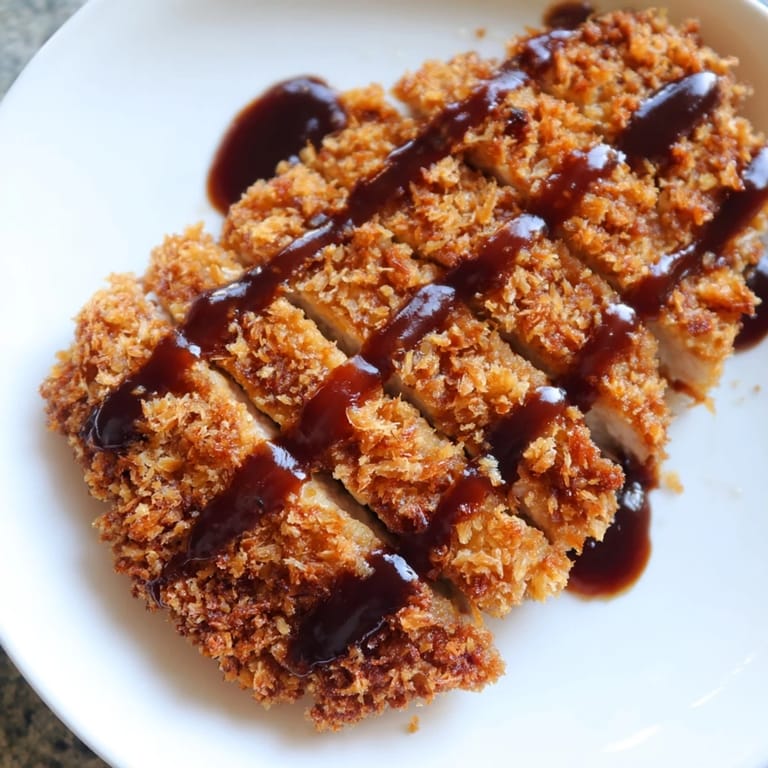
- Slice each cutlet into strips and arrange on a plate with shredded cabbage, lemon wedges, and steamed rice if you like. Drizzle the sauce over the top or serve it on the side for dipping.
 Save
Save One rainy Saturday, I made katsu for my kids and they ate every scrap, licking sauce off their fingers. My youngest asked if we could have it again the next night. It's become our go-to comfort meal when the week feels too long.
Making It Ahead
You can bread the chicken up to four hours in advance and keep it covered in the fridge until you're ready to fry. The breading actually sets better after a little rest, so the crust stays put when it hits the oil. Just bring the cutlets back to room temperature for about ten minutes before cooking so they fry evenly.
Storing and Reheating
Leftovers keep in the fridge for up to two days, but the crust won't stay as crispy once it's been stored. Reheat cutlets in a 180-degree Celsius oven for about ten minutes to bring back some of that crunch, or slice them cold over rice with fresh sauce for a quick katsu don bowl. I've even tucked leftover slices into a sandwich with cabbage and mayo, and it was better than I expected.
Variations and Swaps
Swap the chicken for pork cutlets to make traditional tonkatsu, or try it with turkey breast if that's what you have on hand. You can use regular breadcrumbs in a pinch, but the texture won't be quite as light and airy. If you can't find mirin, a teaspoon of honey thinned with a splash of water works perfectly in the sauce.
- Add a pinch of garlic powder to the panko for extra flavor in the crust.
- Serve katsu over curry rice for a hearty katsu curry that feels like a warm hug.
- Try it with a drizzle of spicy mayo or a squeeze of yuzu if you want to experiment.
 Save
Save This recipe taught me that the best meals don't have to be complicated, just made with a little care. I hope your kitchen smells as good as mine does when these cutlets hit the pan.
Recipe FAQs
- → How do I achieve crispy panko coating?
For maximum crispiness, let your breaded cutlets rest in the refrigerator for 10 minutes before frying. Use fresh panko breadcrumbs and press them gently onto the chicken to ensure full adhesion. Maintain oil temperature around 170°C (340°F) for optimal browning without burning.
- → Can I substitute the chicken with other proteins?
Absolutely. Pork cutlets create traditional tonkatsu. You can also use turkey breast, veal, or even thick-cut fish fillets. Adjust cooking time based on thickness—thinner cuts cook faster. Always pound proteins to even thickness for consistent cooking.
- → What's the best way to make tonkatsu sauce from scratch?
Whisk together ketchup, Worcestershire sauce, soy sauce, mirin, Dijon mustard, and sugar in a small bowl until completely smooth. Mirin adds authentic sweetness, but honey works as a substitute. Make sauce just before serving for best flavor, or prepare ahead and warm gently before plating.
- → How do I know when the oil is the right temperature?
Use a cooking thermometer to reach 170°C (340°F). Without a thermometer, drop a small breadcrumb into the oil—it should sizzle immediately and brown within a few seconds. Oil that's too cool produces greasy cutlets; oil that's too hot burns the coating before cooking the chicken inside.
- → Can I prepare chicken katsu ahead of time?
You can bread the chicken several hours ahead—place breaded cutlets on a parchment-lined tray and refrigerate uncovered. This helps the coating adhere better. Fry them fresh just before serving for optimal crispiness. The sauce keeps refrigerated for up to one week in an airtight container.
- → What beverages pair well with chicken katsu?
Cold Japanese lager or light pilsner complements the crispy, savory dish beautifully. Green tea offers a lighter, traditional pairing that cleanses the palate between bites. Lemon-infused sparkling water also works well for a non-alcoholic option that balances the rich sauce.