 Save
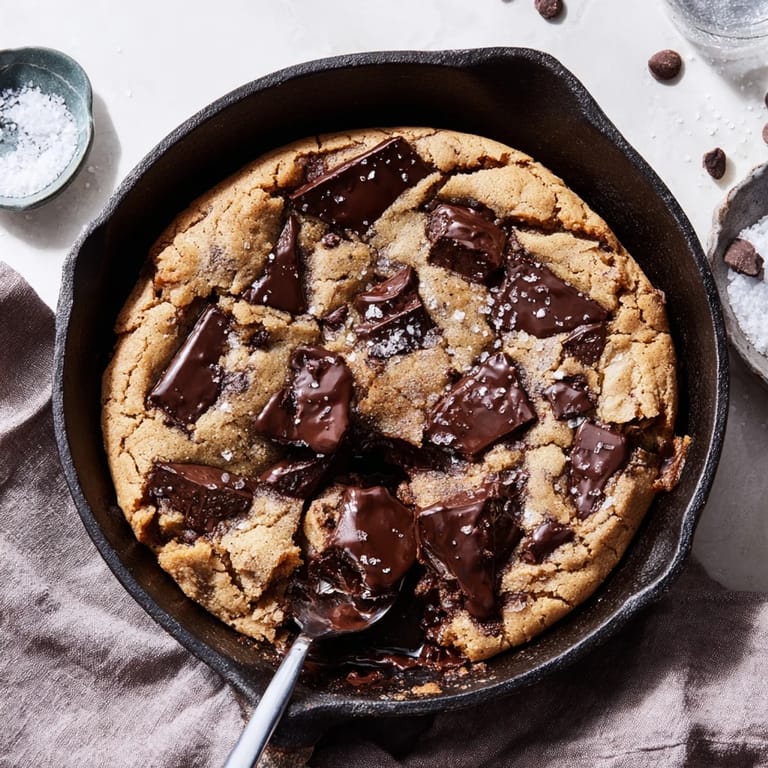
Save I pulled that skillet from the oven on a rainy Tuesday with no plan except to stop craving something warm and sweet. The edges were crisp, the center still wobbly, and the smell of browned butter filled every corner of the kitchen. My roommate wandered in, spoon already in hand, and we ate straight from the pan without a word. That cookie became our unspoken tradition whenever the week felt too long.
The first time I made this for friends, I forgot it was in the oven while we were laughing over something ridiculous. I smelled the edges starting to toast and yanked it out just in time. Everyone insisted it was perfect, and I learned that slightly underdone is exactly where this cookie wants to live. Now I set a timer and ignore it for the last two minutes, trusting the residual heat to finish the job.
Ingredients
- All-purpose flour: The backbone that holds everything together without making it cakey; I spoon it into the cup and level it off so the dough stays tender.
- Baking soda: Just enough to give a slight lift and create those crackly edges that contrast with the gooey center.
- Salt: Balances the sweetness and makes the chocolate taste richer; don't skip it or the cookie will taste flat.
- Unsalted butter, melted: Melting it instead of creaming gives you chewier texture and a hint of toffee flavor if you let it cool slightly before mixing.
- Brown sugar, packed: Adds moisture and a deep molasses note that makes every bite feel indulgent.
- Granulated sugar: Helps the edges crisp up and keeps the sweetness bright.
- Eggs: Room temperature eggs blend more smoothly and create a cohesive dough that spreads evenly in the skillet.
- Pure vanilla extract: Use the real stuff; the warmth it adds is worth the extra dollar at the store.
- Chocolate chunks: Chopped from a bar or bought as chunks, they create melty pockets that chocolate chips just can't match.
- Flaky sea salt: A pinch on top before serving makes the chocolate sing and adds a fancy touch that takes zero effort.
- Vanilla ice cream: Cold, creamy, and the reason this dessert turns into an event instead of just a cookie.
Tired of Takeout? 🥡
Get 10 meals you can make faster than delivery arrives. Seriously.
One email. No spam. Unsubscribe anytime.
Instructions
- Preheat the oven:
- Set it to 350°F (175°C) so it's ready when your dough is. A properly heated oven ensures even baking and those golden edges you're after.
- Mix the dry ingredients:
- Whisk the flour, baking soda, and salt in a medium bowl until there are no clumps. This step takes thirty seconds and prevents streaks of baking soda in your finished cookie.
- Combine the sugars and butter:
- In a large bowl, whisk the melted butter with both sugars until smooth and glossy. The mixture should look like wet sand that's just starting to hold together.
- Add eggs and vanilla:
- Crack in the eggs one at a time, whisking after each until fully incorporated, then stir in the vanilla. The batter will loosen and turn silky, almost like brownie batter.
- Fold in the flour mixture:
- Add the dry ingredients gradually, stirring just until no white streaks remain. Overmixing makes the cookie tough, so stop as soon as it comes together.
- Stir in the chocolate:
- Fold in most of the chocolate chunks, saving a small handful to press on top for that bakery look. The dough will be thick and studded with chocolate.
- Spread into the skillet:
- Press the dough evenly into a greased 10-inch oven-safe skillet, then dot the top with reserved chocolate chunks. Use your fingers or a spatula to smooth it out so it bakes uniformly.
- Bake until golden:
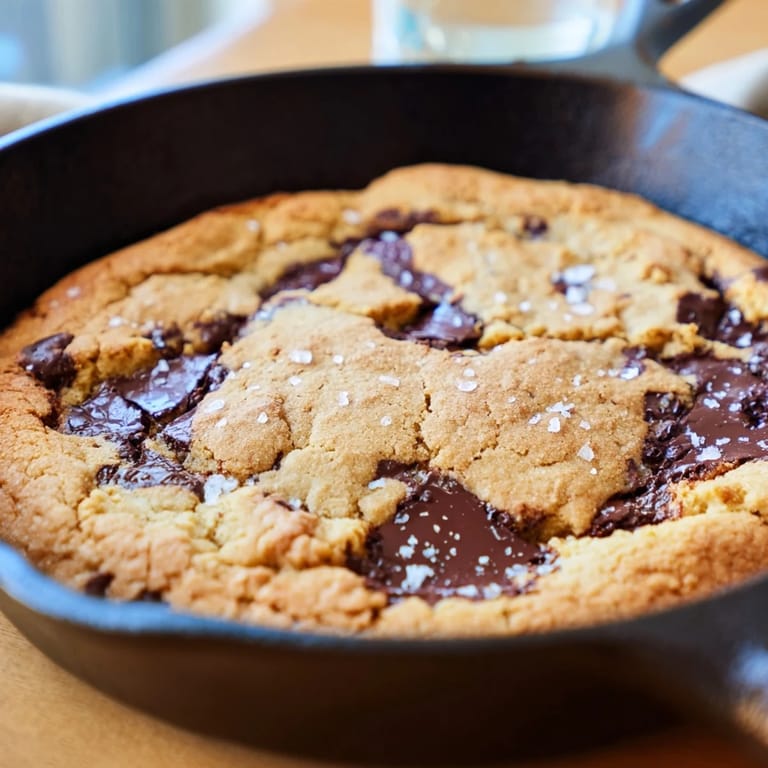
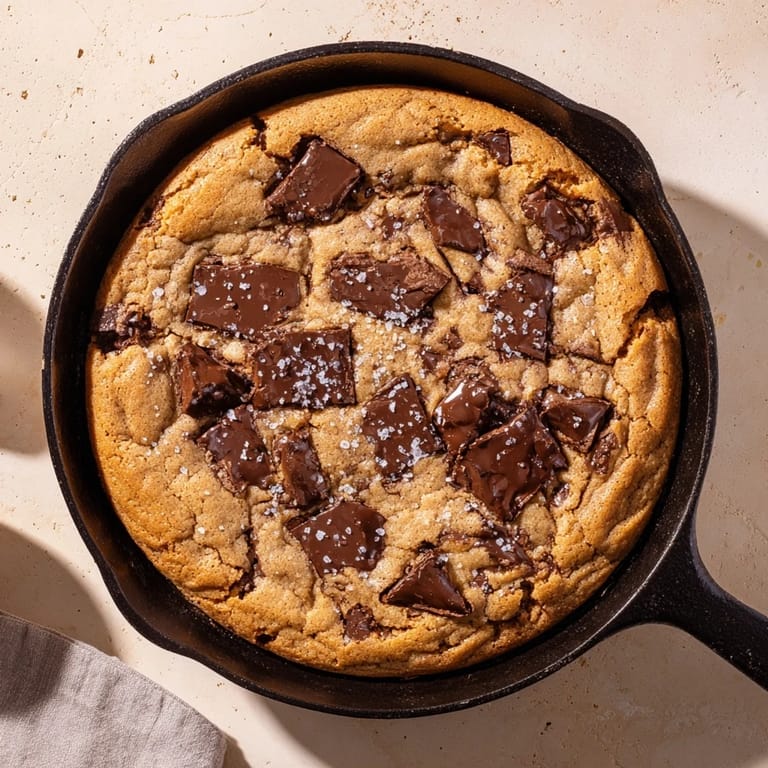
- Slide the skillet into the oven and bake for 22 to 25 minutes, until the edges are set and golden but the center still jiggles slightly. It will firm up as it cools, so don't wait for it to look fully done.
- Cool and serve:
- Let it sit for five minutes, then sprinkle with flaky salt if you like. Serve warm from the skillet with a scoop of vanilla ice cream melting into the cracks.
 Save
Save One night my sister showed up unannounced, stressed about work and looking for distraction. I mixed this up while she talked, and by the time it came out of the oven, her whole mood had shifted. We sat on the floor with two spoons and the skillet between us, and she told me later it was exactly what she needed. Food does that sometimes, if you let it.
Choosing Your Chocolate
I've tried this with every kind of chocolate I could find, and the truth is that chopped bar chocolate melts into puddles better than chips, which hold their shape because of stabilizers. Go for something with at least 60% cacao if you want depth, or mix semi-sweet and dark for balance. The quality matters here because the chocolate is the star, not a supporting act.
Skillet Size and Baking Tips
A 10-inch skillet gives you the ideal ratio of crispy edge to soft center, but I've used a 9-inch in a pinch and just added a couple minutes to the bake time. Cast iron works beautifully because it holds heat and creates an extra-crispy bottom, but any oven-safe skillet will do. If you only have a larger pan, the cookie will spread thinner and bake faster, so keep an eye on it after 18 minutes.
Storing and Reheating
Leftovers are rare, but if you have them, cover the skillet with foil and keep it at room temperature for up to two days. Reheat individual slices in the microwave for 15 seconds or the whole thing in a 300°F oven for 8 minutes to bring back that just-baked texture. Cold skillet cookie straight from the fridge is also surprisingly good, with a fudgy density that's completely different but just as satisfying.
- For a gooier center, pull it out when the middle still looks slightly underbaked and let carryover heat finish it.
- Swap in chopped nuts, toffee bits, or even a swirl of peanut butter before baking for easy variation.
- Sprinkle the sea salt right before serving, not before baking, so it stays crunchy and distinct.
 Save
Save This skillet cookie has pulled me out of bad moods, impressed last-minute guests, and turned ordinary weeknights into small celebrations. I hope it does the same for you.
Recipe FAQs
- → What type of chocolate works best?
Semi-sweet or dark chocolate chunks offer a rich flavor that melts beautifully for gooey pockets throughout.
- → Can I use a different pan than a skillet?
An oven-safe 10-inch skillet is ideal to achieve a crispy edge and soft center, but a similar-size round baking dish can work as an alternative.
- → How do I get a gooier center?
Reduce baking time by 2–3 minutes to maintain a soft, molten center without overcooking.
- → Are there any suggested add-ins?
Chopped nuts or swirls of peanut butter can be added to enhance texture and flavor complexity.
- → What toppings complement this dessert?
Flaky sea salt adds a contrast, while vanilla ice cream or caramel sauce provide creamy, sweet finishes.