 Save
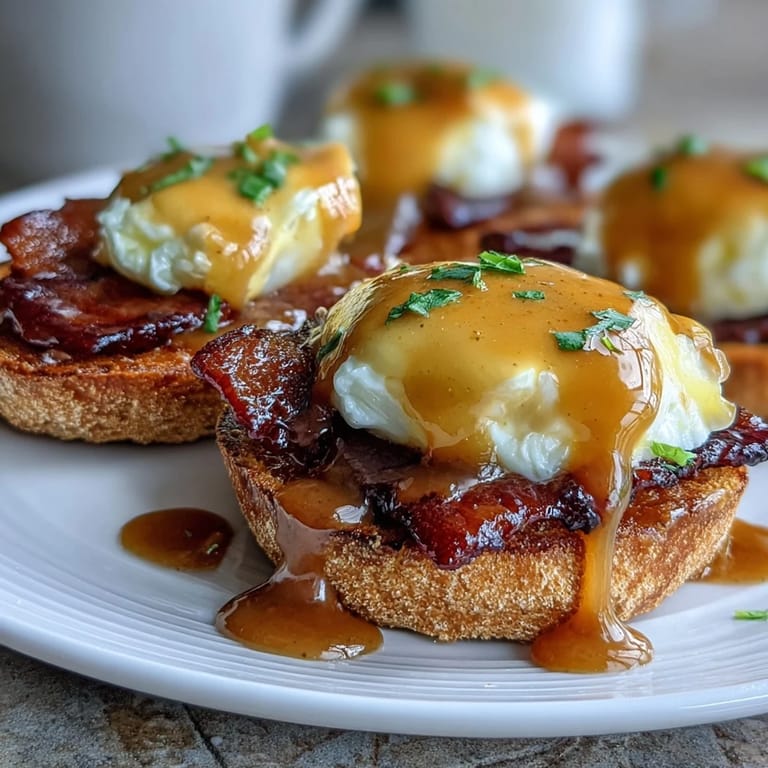
Save My mom called at 7 AM on a random Tuesday asking if I could finally master Eggs Benedict, and honestly, I'd been intimidating myself about hollandaise for years. Something about whisking egg yolks over simmering water felt too finicky, too easy to break, until I stopped overthinking it and just listened to the gentle sizzle beneath the bowl. That first time I saw the sauce transform from loose and separated to silky and thick, I understood why this dish shows up on every special brunch menu—it's not actually complicated, just theatrical in the best way.
Last Mother's Day, I woke up early and made this for my family while everyone was still sleeping, the kitchen quiet except for the hiss of butter melting and the faint clink of my whisk. When my mom walked in and saw four perfectly assembled plates waiting, she actually got teary—not because it was complicated, but because it meant I'd sat with her preferences in mind, poaching eggs to her exact softness and warming her sauce to that specific golden temperature she loves. That's when I realized this dish isn't about showing off technique; it's about showing someone they're worth the small rituals.
Ingredients
- English muffins: Buy the good ones with actual nooks and crannies, because those little pockets catch the hollandaise in ways that matter more than you'd think.
- Canadian bacon: It's meatier and less salty than regular bacon, which is why it doesn't overpower the delicate egg and sauce—don't skip this swap.
- Large eggs: You need fresh ones for poaching, because older eggs spread too much and fall apart in the water; I learned this by making watery eggs one too many times.
- White vinegar: Just a tablespoon helps the egg whites coagulate faster, keeping your poached eggs from turning into ribbons—it's a small addition with a big job.
- Egg yolks for hollandaise: Separate them carefully and leave no trace of white; even a tiny bit can prevent the sauce from emulsifying properly.
- Unsalted butter, melted and warm: Temperature matters here—if it's hot enough to break the yolks but cool enough to incorporate smoothly, you've got it right.
- Lemon juice, freshly squeezed: Bottled juice tastes flat; fresh lemon brightens everything and cuts through the richness in a way that changes the whole dish.
- Cayenne pepper: A pinch is enough—this isn't about heat, it's about adding a whisper of complexity that makes people ask what that subtle something is.
Tired of Takeout? 🥡
Get 10 meals you can make faster than delivery arrives. Seriously.
One email. No spam. Unsubscribe anytime.
Instructions
- Build your setup like you're about to conduct a small orchestra:
- Have everything prepped and within arm's reach before you start cooking anything—melted butter in a small pitcher, eggs in cups ready to go, water simmering in each pan. Once you start, you won't have time to hunt for things.
- Make the hollandaise first, the slowly-does-it part:
- Set your heatproof bowl over simmering water (the bowl shouldn't touch the water), whisk the egg yolks and lemon juice together until they're pale and slightly thickened, about 2 minutes. Drizzle in the warm melted butter drop by drop at first, whisking constantly, then in a thin stream once it starts coming together—this is where patience actually pays off and prevents scrambled-egg disaster.
- Keep that sauce warm without cooking it further:
- Once it's glossy and thick, pull it off the heat, season with salt and cayenne, and cover it loosely so it stays warm but doesn't continue cooking and separate. I usually set it over the turned-off burner where it can stay gentle.
- Brown the Canadian bacon while your water heats:
- Medium heat, 1 to 2 minutes per side until the edges are lightly caramelized and you can smell that savory richness. Set it on a plate and keep it warm—this is the easiest component and the perfect background task.
- Poach your eggs like you're cradling something fragile:
- Bring water to a gentle simmer (not a rolling boil, which breaks eggs apart), add a splash of vinegar, and create a little whirlpool with your spoon. Crack each egg into a small cup first, then slide it into the center of the whirlpool—the swirling water helps the white wrap around the yolk. Cook 3 to 4 minutes until the white is set but the yolk jiggles when you touch it gently with a spoon.
- Assemble on warm plates immediately:
- Two toasted muffin halves per plate, Canadian bacon on each, then your poached egg, then a generous spoonful of hollandaise over the top. Finish with a scatter of fresh chives if you have them, a pinch of salt and pepper, and serve right away while everything is still warm.
 Save
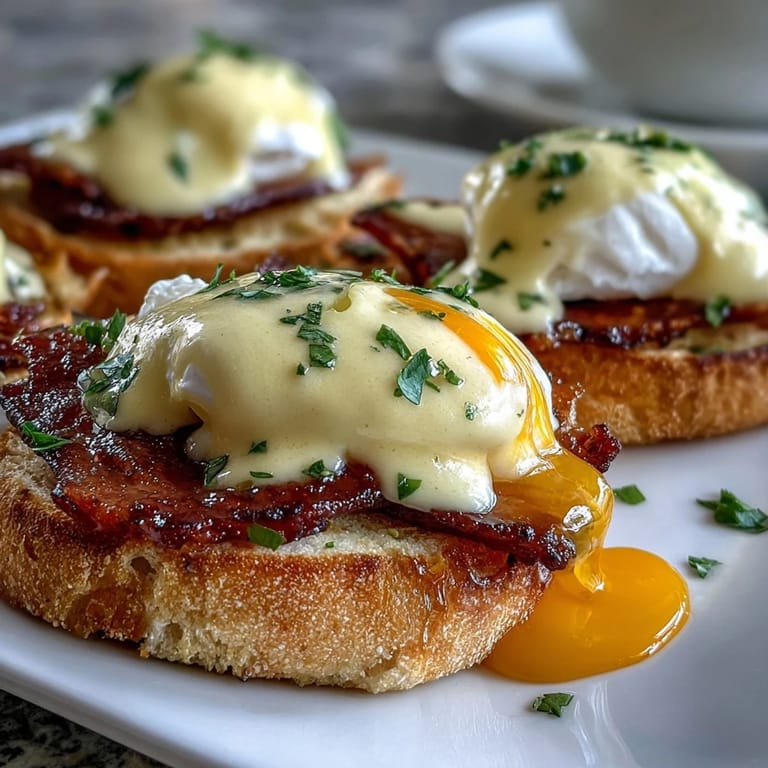
Save There's a moment every time I plate this dish when I spoon that warm hollandaise over the soft yolk and watch it cascade down the sides, and I think about how food becomes memory through the senses. The golden sauce pooling on the plate, the steam rising with butter and lemon, the way someone's eyes light up when they cut into that perfectly poached egg—that's when brunch stops being a meal and becomes a small celebration.
The Hollandaise Science (Or Why It Feels Like Magic)
Hollandaise is just egg yolks emulsified with warm butter, which sounds simple until you realize you're basically creating a suspension that can fall apart if you breathe on it wrong. The key is temperature—the bowl needs to be warm enough from the simmering water to gently cook the yolks without scrambling them, and the butter needs to be warm enough to incorporate but not so hot it breaks everything apart. I spent one afternoon reading about emulsions and realizing that hollandaise is actually the same science as mayonnaise, just warm instead of cold, which made me feel less afraid of it.
Timing: The Secret Weapon
The reason restaurant kitchens make this dish look effortless is because they've practiced timing everything to finish within 30 seconds of each other. The muffins should be toasted and warm, the bacon ready to go on the plate, the hollandaise keeping gently warm off-heat, and the eggs sliding from the poaching water to the plate right as you're assembling. I used to cook each component separately and wait, which meant cold muffins or broken hollandaise by the time the eggs were ready—now I think backwards from the moment I want to serve it, and everything comes together like a small miracle.
Beyond the Classic: How This Dish Changes
Once you've made traditional Eggs Benedict a few times, you realize the structure is infinitely flexible—I've made it with sautéed spinach underneath the egg (Eggs Florentine), with thin avocado slices, with smoked salmon, even once with caramelized tomato and basil because that's what I had. The magic is the combination of warm poached egg, crispy toasted bread, and silky hollandaise, which means you can swap the middle protein and it still tastes like celebration.
- Try it with fresh spinach wilted down and squeezed dry, which makes it feel lighter but still incredibly rich.
- Smoked salmon transforms it into something more elegant and a little bit fancy without actually being harder to make.
- For vegetarians, thin avocado slices or roasted asparagus tucked underneath the egg creates something that's different but equally crave-worthy.
 Save
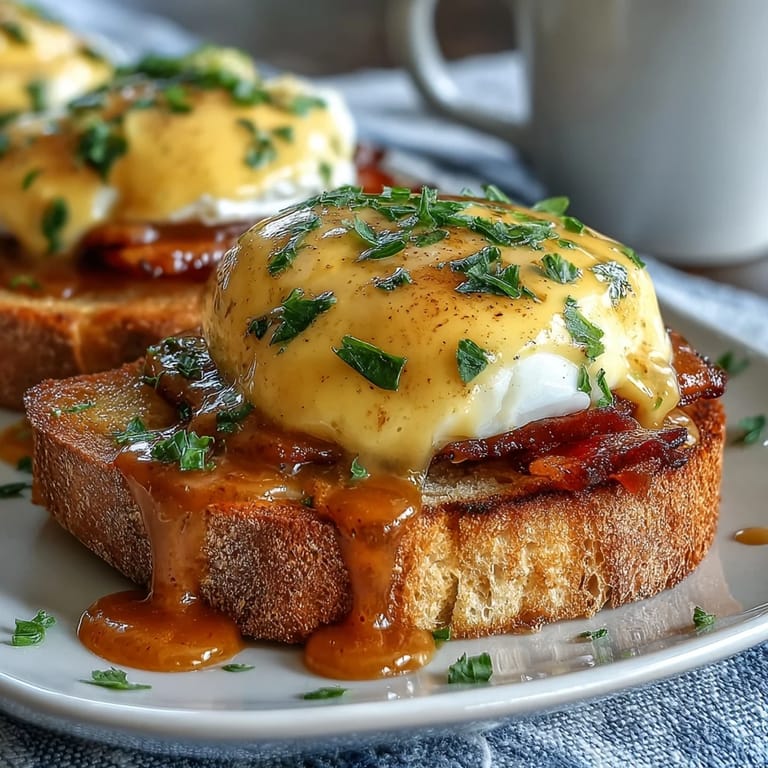
Save This dish taught me that brunch is less about feeding people and more about giving them a reason to sit down together, and that sometimes the most elegant thing you can do in a kitchen is slow down and pay attention. Every time someone takes that first bite and tastes the way butter and lemon and soft egg yolk work together, I remember why I was ever intimidated in the first place.
Recipe FAQs
- → How do you achieve perfectly poached eggs?
Use simmering water with added vinegar to help coagulate the egg whites quickly. Crack eggs into a bowl, create a gentle whirlpool in the water, then gently slide eggs in. Poach for 3-4 minutes until whites are set but yolks remain soft.
- → What’s key to a smooth hollandaise sauce?
Whisk egg yolks and lemon juice over simmering water until slightly thickened. Slowly drizzle in warm melted butter while whisking constantly to form an emulsion. Season with salt and cayenne for a balanced flavor.
- → Can I substitute Canadian bacon for a vegetarian option?
Yes, sautéed spinach or avocado slices make excellent vegetarian alternatives, providing different textures and complementary flavors.
- → How to keep hollandaise sauce warm without curdling?
Keep the sauce covered and in a warm spot, away from direct heat. Avoid reheating over direct heat to prevent separation or curdling.
- → What sides complement this dish?
Fresh fruit, mixed greens, or a light white wine such as Sauvignon Blanc pair wonderfully, balancing the rich flavors.